Guide to Choosing Auto Stripper Circular Knitting Machines
May 19, 2026
The global textile industry continues to evolve rapidly as manufacturers seek higher productivity, improved fabric quality, and greater design flexibility. Among the most important innovations in modern textile production is the auto stripper circular knitting machine. Designed for efficient striped fabric manufacturing, this advanced knitting equipment has become essential for apparel manufacturers producing fashion garments, sportswear, casual wear, socks, underwear, and various knitted textile products.
As consumer demand for colorful, customized, and high-quality fabrics continues to increase, textile manufacturers require machinery capable of delivering both speed and precision. Traditional knitting methods often involve complex manual adjustments and limited pattern flexibility. In contrast, auto stripper circular knitting machines automate stripe creation and yarn feeding processes, improving production efficiency while reducing labor requirements.
Modern auto stripper knitting machines integrate advanced electronic controls, intelligent yarn management systems, and computerized pattern programming to produce highly consistent striped fabrics with minimal downtime. These machines are widely used in textile factories worldwide due to their ability to handle multiple yarn colors, various fabric structures, and large-scale production requirements.
The increasing adoption of automation in textile manufacturing has further accelerated the popularity of auto stripper circular knitting machines. Smart software systems, high-speed operation, and precision engineering allow manufacturers to improve productivity, reduce material waste, and maintain stable fabric quality across long production cycles.
This article explores the working principles, advantages, applications, and key selection considerations of auto stripper circular knitting machines, while also examining future trends shaping the modern knitting industry.
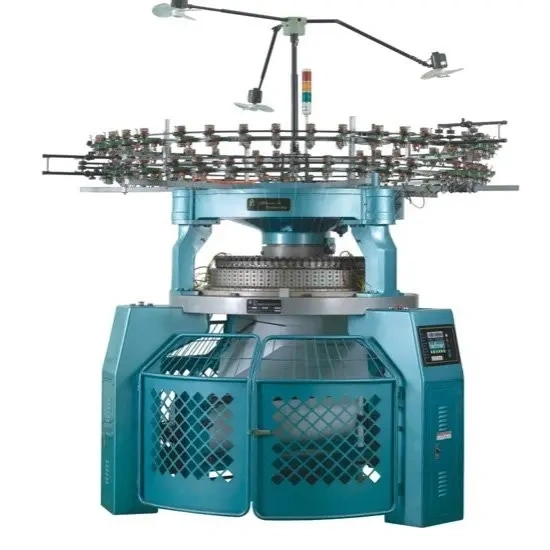
An auto stripper circular knitting machine is a specialized textile machine designed to automatically produce striped knitted fabrics using multiple yarn feeders and automated color-changing systems.
Unlike conventional circular knitting machines that may require manual yarn replacement, an auto stripper machine can automatically switch between yarn colors according to programmed fabric patterns. This automation enables efficient production of complex striped designs with high consistency and precision.
The machine operates through a rotating cylinder equipped with knitting needles arranged in a circular configuration. As yarn feeds into the machine, loops are formed continuously to create tubular knitted fabrics. The automated striping mechanism controls yarn selection and feeding sequences to generate stripes of different colors, widths, and patterns.
Modern auto stripper knitting machines are commonly used for producing:
- T-shirts
- Polo shirts
- Sportswear
- Fashion garments
- Hosiery
- Underwear
- Sweaters
- Rib fabrics
- Jacquard fabrics
- Casual knitwear
These machines support various fabric types and knitting structures while enabling high-speed production for commercial textile manufacturing.
The working process of an auto stripper circular knitting machine combines mechanical precision with computerized automation.
The machine uses multiple yarn feeders to supply different colored yarns into the knitting zone. Automated yarn selection mechanisms control which yarn enters the knitting needles at specific intervals.
This allows the machine to create striped patterns automatically without stopping production.
The rotating cylinder contains hundreds or thousands of knitting needles depending on machine diameter and gauge.
As the cylinder rotates:
- Needles rise and fall
- Yarn loops are formed
- Fabric structure develops continuously
- Pattern sequences follow programmed instructions
The synchronization between yarn feeding and needle movement is critical for maintaining stripe consistency and fabric quality.
Modern machines use computerized control systems to manage stripe sequences, color transitions, and fabric designs.
Operators can program:
- Stripe width
- Color combinations
- Repetition patterns
- Fabric structures
- Yarn feeding timing
Electronic control greatly improves flexibility and production efficiency compared to manual systems.
One of the biggest advantages of auto stripper knitting machines is their high production speed.
Automated yarn switching eliminates manual intervention and reduces machine downtime, enabling continuous operation for large-scale textile manufacturing.
High-speed operation helps manufacturers:
- Increase daily output
- Reduce labor costs
- Improve delivery times
- Enhance factory productivity
Modern machines are engineered for stable operation even during intensive production cycles.
Consistent stripe quality is essential in textile production.
Auto stripper systems ensure accurate yarn selection and uniform stripe placement throughout the fabric. This precision improves product appearance and reduces quality defects.
Benefits include:
- Uniform color transitions
- Consistent stripe widths
- Reduced fabric defects
- Improved product quality
- Better customer satisfaction
Modern computerized knitting systems provide exceptional design flexibility.
Manufacturers can easily create:
- Multi-color stripes
- Variable stripe widths
- Complex repeating patterns
- Fashion-oriented designs
- Customized fabric structures
Software-based programming allows rapid pattern adjustments without extensive mechanical modifications.
Automation significantly reduces manual workload.
Traditional stripe knitting often requires frequent yarn replacement and machine adjustment, increasing labor intensity and production interruptions.
Auto stripper knitting machines streamline operations by automating these processes, improving overall manufacturing efficiency.
Advanced yarn control systems help reduce yarn waste during production.
Efficient yarn feeding and precise color switching minimize material loss, contributing to lower production costs and improved sustainability.
Auto stripper knitting machines are widely used across various textile manufacturing sectors.
Striped fabrics remain highly popular in fashion design.
Manufacturers use these machines to produce fabrics for:
- Casual clothing
- Designer fashion collections
- Children's wear
- Seasonal garments
- Trend-based apparel
The ability to quickly change patterns allows factories to respond rapidly to fashion trends.
Sportswear manufacturers require durable, flexible, and visually attractive knitted fabrics.
Auto stripper machines support the production of:
- Athletic shirts
- Training apparel
- Performance wear
- Compression garments
- Team uniforms
High-speed production capabilities help meet large commercial orders.
Striped socks and hosiery products require precise color transitions and consistent fabric structures.
Auto stripper knitting technology ensures high-quality results for:
- Athletic socks
- Fashion socks
- Compression hosiery
- Functional knitwear
Soft, lightweight striped fabrics are commonly used in underwear manufacturing.
These machines produce comfortable knitted materials suitable for:
- Undergarments
- Sleepwear
- Loungewear
- Stretch fabrics
Home Textile Applications
Striped knitted fabrics are also used in home textile products such as:
- Cushion covers
- Decorative fabrics
- Mattress covers
- Upholstery materials
The versatility of circular knitting machines supports various textile applications beyond apparel production.
Selecting the right auto stripper circular knitting machine is essential for achieving optimal production efficiency, fabric quality, and long-term operational reliability.
Several important factors should be carefully evaluated before purchasing a machine.
Knitting speed is one of the most important performance indicators in textile production.
The knitting speed determines how quickly the machine can produce striped fabrics. Faster production speeds help manufacturers meet large orders and reduce lead times.
However, excessive speed without proper stability may compromise fabric quality.
The ideal machine should balance:
- Production efficiency
- Fabric consistency
- Mechanical stability
- Yarn handling precision
Factories with high production volumes may require machines capable of operating continuously at high rotational speeds.
Smaller manufacturers focusing on customized fabrics may prioritize flexibility and precision over maximum speed.
Selecting the appropriate speed capacity ensures efficient operation without unnecessary energy consumption or equipment strain.
The number of knitting heads significantly influences the machine's striping capabilities.
Machines with more knitting heads can handle multiple yarn colors simultaneously, allowing more complex stripe patterns.
Benefits include:
- Greater design flexibility
- Faster color transitions
- Reduced production interruptions
- Improved pattern complexity
For large-scale textile factories producing diverse striped fabrics, machines with additional knitting heads provide better productivity and versatility.
Smaller operations may prefer simpler configurations that reduce maintenance complexity and operating costs.
Choosing the correct number of knitting heads depends on:
- Product variety
- Pattern complexity
- Production volume
- Budget requirements
Gauge is another critical factor in knitting machine selection.
Gauge refers to the distance between needles within the knitting cylinder.
Different gauge configurations produce fabrics with varying:
- Thickness
- Density
- Texture
- Elasticity
Low-gauge machines typically produce thicker fabrics suitable for:
- Sweaters
- Heavy knitwear
- Winter garments
High-gauge machines create finer fabrics ideal for:
- Lightweight apparel
- Underwear
- Sportswear
- Fashion garments
Selecting compatible gauge options ensures the machine can produce the desired fabric types efficiently.
Modern auto stripper circular knitting machines increasingly rely on intelligent software systems.
The software controls:
- Pattern programming
- Yarn feeding sequences
- Color transitions
- Production monitoring
- Machine diagnostics
Advanced software improves both operational efficiency and design flexibility.
Operators benefit from software that offers:
- Easy pattern editing
- Intuitive controls
- Real-time monitoring
- Error detection
- Production data analysis
Simplified software reduces training requirements and improves workflow management.
Many modern machines support Industry 4.0 integration through:
- Remote monitoring
- Data collection
- Predictive maintenance
- Production analytics
- Cloud connectivity
These features help manufacturers improve productivity and reduce downtime.
Reliable machine operation is essential for maintaining stable textile production.
Routine maintenance helps prevent:
- Needle damage
- Yarn feeding problems
- Mechanical wear
- Production interruptions
Key maintenance practices include:
- Lubrication
- Cleaning
- Needle inspection
- Belt adjustment
- Software updates
Manufacturers should also consider the availability of spare parts and technical support when selecting a machine supplier.
Reliable after-sales service helps minimize downtime and maintain long-term productivity.
Energy consumption is becoming increasingly important in textile manufacturing.
Modern auto stripper circular knitting machines incorporate energy-saving technologies such as:
- High-efficiency motors
- Intelligent speed control
- Optimized yarn feeding systems
- Low-friction mechanical components
Reducing energy usage helps manufacturers lower operating costs while supporting environmental sustainability goals.
The textile industry is rapidly embracing automation and smart manufacturing technologies.
Auto stripper circular knitting machines now integrate advanced features such as:
- Touchscreen control systems
- AI-assisted monitoring
- Automatic fault detection
- Production optimization software
- Remote technical diagnostics
These innovations improve production stability and support highly efficient factory operations.
The future of textile manufacturing will continue to emphasize automation, customization, and sustainability.
Several emerging trends are shaping the next generation of knitting machinery.
Increased Automation
Future machines will feature greater automation capabilities to reduce labor dependency and improve production consistency.
Artificial Intelligence Integration
AI systems may optimize machine settings automatically based on fabric requirements and production conditions.
Sustainable Manufacturing
Manufacturers are increasingly focusing on reducing waste, energy consumption, and environmental impact.
Future knitting machines may incorporate:
- Recycled yarn compatibility
- Energy recovery systems
- Eco-friendly production technologies
Digital Textile Design
Advanced digital platforms will enable faster design development and seamless integration between fashion design and production systems.
Enhanced Connectivity
Smart factories will increasingly rely on connected machinery capable of sharing production data across integrated manufacturing networks.
Despite technological advancements, textile manufacturers still face several industry challenges.
Rising Production Costs
Labor, energy, and raw material costs continue to increase globally.
Skilled Operator Shortages
Advanced machinery requires trained technicians and experienced operators.
Rapid Fashion Changes
Manufacturers must respond quickly to changing market trends and customer demands.
Sustainability Pressures
Environmental regulations and consumer expectations are pushing the industry toward greener manufacturing practices.
Auto stripper circular knitting machines help address many of these challenges by improving efficiency, automation, and production flexibility.
The auto stripper circular knitting machine has become an essential technology in modern textile manufacturing. By combining automated yarn selection, high-speed production, computerized pattern control, and advanced software integration, these machines enable manufacturers to produce high-quality striped fabrics efficiently and consistently.
From fashion apparel and sportswear to hosiery and home textiles, auto stripper knitting machines support a wide range of applications across the global textile industry. Their ability to improve productivity, reduce labor requirements, and enhance design flexibility makes them a valuable investment for textile manufacturers seeking competitive advantages in today's fast-changing market.
When selecting an auto stripper circular knitting machine, manufacturers should carefully evaluate factors such as knitting speed, number of knitting heads, gauge options, software capabilities, maintenance requirements, and future scalability.
As automation, smart manufacturing, and sustainable production technologies continue to evolve, the future of circular knitting machinery will become even more intelligent, efficient, and environmentally friendly. Auto stripper circular knitting machines will remain a key driver of innovation and productivity within the global textile industry.
Next: Choosing The Best Circular Knitting Machine For Jersey, Rib, And Interlock Fabrics
Previous: High-Efficiency Single Terry Circular Knitting Machine for Knitting Industry

We have been committed to manufacturing all types of circular knitting machines with great quality and reasonable price for a long time. Our professional team is highly specialized and problem-solving oriented. We put the most effort into meeting your knitting demands, achieving a win-win situation.