Working Principle of Interlock Circular Knitting Machines: A Comprehensive Guide
Feb 25, 2026
The interlock circular knitting machine is a specialized type of double jersey circular knitting machine that produces high-quality interlock fabrics widely used in fashion, sportswear, home textiles, and technical textiles. Unlike single jersey or rib knitting machines, the interlock circular knitting machine is equipped with two sets of needles, positioned in a unique interlocking arrangement on both the cylinder and the dial. This arrangement allows the machine to create fabrics that are thicker, smoother, and more stable, with both sides of the fabric appearing identical, resulting in a reversible, uniform surface that is highly desirable in modern textile applications.
Interlock fabrics are prized for their elasticity, durability, and soft hand feel, making them ideal for t-shirts, polo shirts, activewear, and knitwear products. Understanding the working principle of an interlock circular knitting machine is essential for textile engineers, machine operators, and fabric designers to optimize production, troubleshoot defects, and improve fabric quality.
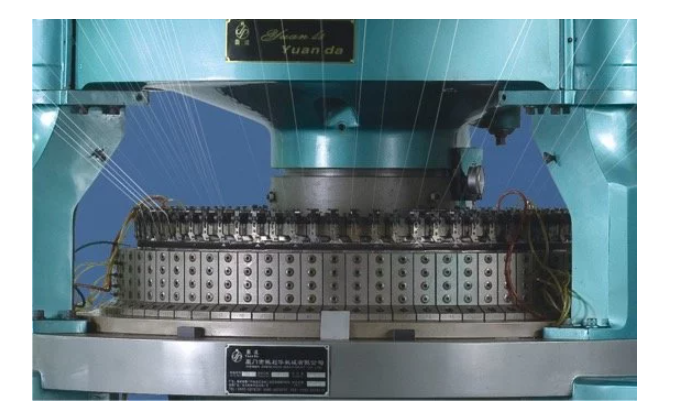
The efficiency and precision of interlock knitting rely on the careful design of its main components. Each part contributes to the synchronized interlocking action that distinguishes interlock fabrics from other knitted structures. Below are the essential parts of the machine:
The cylinder is the vertical core of the machine, housing the vertical latch needles. These needles are positioned in alternating grooves or tricks, which are designed to securely hold the loops of yarn as they are formed. The cylinder needles are responsible for knitting the front loops of the fabric, and their movement is controlled by cams, ensuring accurate timing and stitch formation.
Situated horizontally above the cylinder, the dial contains a second set of horizontal latch needles. These needles are positioned opposite the cylinder needles in such a way that they can interlock the loops formed by the cylinder needles. The dial needles create the back loops of the interlock fabric. The combination of cylinder and dial needles is what gives interlock fabric its double-faced structure and thickness.
The cam system controls the vertical motion of both the cylinder and dial needles. Upper and lower cams are precisely timed to ensure that needles move alternately rather than simultaneously. This precise control is critical to forming the interlock structure, as any mistiming can cause skipped stitches, uneven loops, or fabric defects. The cams also regulate loop size and stitch density, directly affecting the weight, stretch, and appearance of the finished fabric.
Sinkers are flat, movable components that assist the needles during loop formation. Their primary functions include holding down loops, guiding the yarn, and preventing loop distortion. Sinkers also help maintain uniform stitch formation across the fabric width, ensuring consistent fabric quality.
Yarn feeders supply the yarn to both the cylinder and dial needles alternately. Proper yarn feeding is essential to maintain consistent tension, prevent yarn breakage, and ensure uniform stitches. Some modern interlock circular knitting machines have multiple yarn feeders per needle, allowing the production of complex patterns, jacquards, or multi-colored interlock fabrics.
The take-down mechanism continuously draws the knitted fabric downward as it is formed, maintaining consistent tension throughout the knitting process. It also prevents fabric sagging, puckering, or distortion, which is crucial for achieving a smooth, even, and high-quality interlock fabric.
Modern interlock circular knitting machines incorporate sophisticated drive and control systems that synchronize the movement between the cylinder and dial needles. These systems may include mechanical cams, electronic controls, or servo motors. Proper synchronization ensures that the interlocking loops are perfectly aligned, producing a stable, double-faced fabric.
The interlock structure is formed through the coordinated action of the cylinder and dial needles. Here is a detailed explanation of the knitting process:
Two Needle Beds: The machine has two sets of needles—one on the cylinder and one on the dial. Each bed has its own needle tracks that operate in perfect synchronization but never knit simultaneously.
Alternate Knitting Action: The cylinder needles knit the front loops while the dial needles knit the back loops. By alternating the action of these two needle beds, each loop formed on the front is interlocked with a corresponding loop on the back.
Loop Formation:
- Yarn is fed alternately to the cylinder and dial needles.
- The cylinder needle rises, catches the yarn, and forms a loop.
- The dial needle, positioned opposite the cylinder needle, catches the loop from the front bed and locks it with a new loop from the yarn.
Interlocked Fabric Structure: The result is a compact, double-faced fabric with loops interlocked on both sides. This gives the fabric greater thickness, higher stability, and improved elasticity compared to single jersey or rib fabrics.
Continuous Operation: The take-down mechanism draws the fabric downward as new loops are formed, allowing for continuous production of uniform fabric. Modern machines also adjust stitch density and tension automatically, based on yarn type and desired fabric characteristics.
Interlock circular knitting machines offer several advantages over other knitting methods:
The alternating cylinder and dial action produces a double-faced fabric that looks identical on both sides, making it reversible and aesthetically versatile for fashion and home textiles.
Interlock fabrics are thicker and more stable than single jersey or rib fabrics, offering enhanced insulation, durability, and strength suitable for garments that require long-lasting wear.
The tight interlocking of loops produces a smooth, flat surface, minimizing curling and puckering at the edges. This improves both appearance and wear comfort.
Interlock machines can handle different yarn types including cotton, polyester, and blended yarns. Advanced machines allow jacquard patterns, stripes, and multi-colored designs without compromising fabric quality.
Continuous, synchronized operation enables rapid production of consistent, high-quality interlock fabric, making these machines ideal for commercial and industrial knitting operations.
Interlock fabrics produced by circular knitting machines are widely used in various sectors:
- Apparel Industry: T-shirts, polo shirts, sportswear, leggings, and knit dresses.
- Children's Wear: Soft, durable, and reversible fabrics for baby clothing.
- Home Textiles: Cushion covers, blankets, and bed linens.
- Technical Textiles: Interlock fabrics are used in protective garments, uniforms, and industrial textiles due to their strength and stability.
To ensure the smooth working of interlock circular knitting machines, operators must pay attention to the following:
- Needle Inspection: Regularly check for bent or worn needles to prevent skipped stitches.
- Cam Maintenance: Ensure cams are properly lubricated and timed to avoid stitch defects.
- Sinker Adjustment: Proper alignment is essential for uniform loop formation.
- Yarn Tension Control: Maintain consistent yarn feed to avoid broken threads or uneven loops.
- Take-Down Mechanism: Check for smooth operation to prevent puckering or fabric distortion.
Proper maintenance prolongs machine life, improves fabric quality, and reduces downtime in production.
Modern interlock circular knitting machines incorporate several innovations:
- Electronic Jacquard Systems: Enable complex patterns and multi-colored fabrics.
- Servo Motor Drives: Provide precise control over needle and take-down movements.
- Automated Yarn Feeding: Reduces human error and ensures uniform tension.
- Smart Monitoring Systems: Track machine performance, stitch formation, and fabric defects in real-time.
- Energy Efficiency Improvements: Modern machines consume less power and produce less noise, reducing operational costs.
These advancements make interlock circular knitting machines more versatile, efficient, and capable of producing high-quality fabrics for competitive markets.
Despite precision engineering, defects can occur due to machine or process issues:
- Dropped or Missed Stitches: Often caused by bent needles, worn cams, or yarn tension problems.
- Uneven Fabric Density: May result from inconsistent yarn feed or take-down tension.
- Curling or Edge Distortion: Usually caused by improper synchronization of cylinder and dial needles.
- Yarn Breakage: Can occur with fragile or high-tension yarns; requires proper feeding and tension control.
Understanding the working principle helps operators identify and correct these issues efficiently, minimizing production loss.
The interlock circular knitting machine is a highly specialized textile machine that produces double-faced, reversible fabrics with superior thickness, stability, and elasticity. Its design—featuring cylinder and dial needles, cams, sinkers, yarn feeders, and synchronized drive systems—enables precise, continuous loop formation, producing high-quality interlock fabrics for apparel, home textiles, and technical applications. Modern innovations like electronic jacquard, servo drives, and automated monitoring further enhance production efficiency and fabric versatility. Understanding the working principle and maintenance requirements is essential for operators and engineers to optimize performance, reduce defects, and meet the growing demand for premium knitted fabrics in the global textile market.
Next: Electronic Single Terry Circular Knitting Machine: Specifications, Functions, and Applications
Previous: Jacquard Knitting Machine Maintenance: Essential Tips for Efficiency and Longevity

We have been committed to manufacturing all types of circular knitting machines with great quality and reasonable price for a long time. Our professional team is highly specialized and problem-solving oriented. We put the most effort into meeting your knitting demands, achieving a win-win situation.