Working Principle of Circular Knitting Machine Explained
May 26, 2026
Circular knitting machines are essential equipment in the modern textile and garment manufacturing industry, designed to produce high-quality knitted fabrics in a continuous tubular form. With their high-speed operation, excellent efficiency, and stable fabric quality, these machines are widely used in producing T-shirts, sportswear, underwear, socks, sweaters, rib fabrics, interlock fabrics, and various technical textiles.
Unlike flat knitting machines, circular knitting machines use a circular arrangement of needles installed on one or more needle beds. Through synchronized needle movement and continuous yarn feeding, the machine forms interlocking loops that create seamless cylindrical fabrics. This continuous knitting process enables uninterrupted production, making circular knitting machines highly suitable for large-scale industrial textile manufacturing.
With advancements in textile engineering, modern circular knitting machines are now equipped with computerized control systems, automatic yarn feeders, electronic pattern selection, intelligent monitoring, and automatic lubrication systems. These innovations significantly enhance production efficiency, fabric precision, machine stability, and energy savings.
Circular knitting machines are generally divided into single jersey and double jersey types, each offering different fabric structures and applications. Understanding their working principles is essential for optimizing production performance, improving fabric quality, and supporting innovation in textile manufacturing.
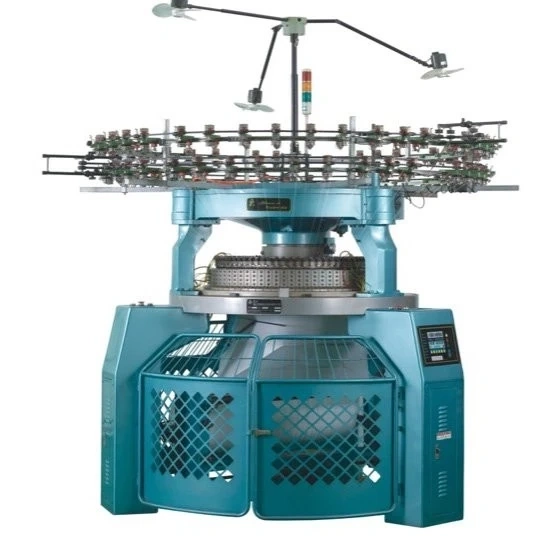
A circular knitting machine is a textile machine designed to produce knitted fabrics using a circular needle arrangement. The needles are mounted on a rotating cylinder or dial, allowing the machine to continuously knit loops of yarn into tubular fabric.
The machine operates through synchronized interaction between needles, cams, yarn feeders, sinkers, and take-down systems. As the cylinder rotates, the needles move vertically along cam tracks, capturing yarn and forming loops in a continuous process.
Circular knitting machines are capable of producing various fabric structures, including:
- Single jersey
- Rib fabrics
- Interlock fabrics
- Pique fabrics
- Fleece fabrics
- Jacquard fabrics
- Mesh fabrics
- Elastic knitted fabrics
Their high production speed and flexibility make them essential equipment in modern textile manufacturing.
To understand the working principle, it is important to first understand the major machine components.
The needle cylinder is the primary rotating component that holds the knitting needles in vertical grooves. As the cylinder rotates, the needles move according to the cam profile to form knitted loops.
The cylinder diameter determines the fabric tube size and machine capacity.
Knitting needles are the key loop-forming elements in circular knitting machines. Modern machines typically use latch needles.
Functions of Needles
- Receive yarn
- Form loops
- Release old loops
- Interlock new loops
The precise movement of needles directly influences fabric quality and knitting performance.
Cams control needle movement during knitting operations. Different cam profiles determine how the needles rise and fall during loop formation.
Common cam types include:
- Raising cams
- Stitch cams
- Clearing cams
- Guard cams
The interaction between cams and needles creates the knitting action.
Yarn feeders supply yarn continuously to the needles during machine operation.
Modern yarn feeding systems ensure:
- Consistent yarn tension
- Stable yarn delivery
- Reduced yarn breakage
- Uniform fabric quality
Multiple yarn feeders allow higher production speeds and complex fabric patterns.
Sinkers assist in loop formation and fabric holding during knitting.
Their functions include:
- Holding down the fabric
- Assisting loop knocking-over
- Supporting stitch formation
Sinkers play a critical role in maintaining stitch consistency.
In double jersey machines, an additional needle bed called the dial is positioned horizontally above the cylinder.
The dial contains needles that work together with cylinder needles to produce double-knit fabrics.
The take-down system pulls the knitted fabric downward from the knitting zone.
Its functions include:
- Maintaining fabric tension
- Controlling fabric density
- Supporting continuous production
Improper take-down tension may affect fabric uniformity.
The yarn creel holds yarn packages or cones that supply yarn to the knitting machine.
Large circular knitting machines may contain hundreds of yarn packages for multi-feed production.
The working principle of a circular knitting machine is based on continuous loop formation through coordinated movement of needles, cams, and yarn feeding systems.
The process generally involves:
- Yarn feeding
- Needle lifting
- Yarn catching
- Loop formation
- Knock-over
- Fabric take-down
As the cylinder rotates continuously, the needles move upward and downward along cam tracks, repeatedly forming loops that interlock to create knitted fabric.
Yarn is supplied from yarn packages mounted on the creel. The yarn passes through tension devices, yarn guides, and feeders before reaching the knitting zone.
Proper yarn feeding is essential for maintaining:
- Uniform stitch length
- Stable fabric structure
- Consistent fabric appearance
As the cylinder rotates, the needles follow the cam profile and rise upward.
The old loop previously formed moves below the needle latch.
This upward motion prepares the needle to receive new yarn.
The yarn feeder presents yarn to the raised needle.
The needle hook catches the yarn while the latch remains open.
This stage determines proper yarn placement for loop formation.
After catching the yarn, the needle begins moving downward along the cam track.
The old loop closes the latch, trapping the new yarn inside the hook.
As the needle continues downward, the old loop slides over the latch and is released.
A new loop is then formed on the needle.
The old loop is cast off from the needle during the knock-over stage.
This process interlocks the new loop with the previous loops, creating the knitted fabric structure.
The completed fabric is continuously pulled downward through the take-down rollers.
The fabric is then wound into rolls for further processing.
Continuous rotation allows uninterrupted tubular fabric production.
Single jersey circular knitting machines use only one needle bed, typically located in the cylinder.
These machines produce fabrics with:
- Smooth face side
- Looped back side
- Lightweight structure
- Good elasticity
Single jersey fabrics are widely used in:
- T-shirts
- Sportswear
- Casual garments
- Underwear
In single jersey machines, all needles are mounted in a single cylinder.
Knitting Process
- Yarn is fed into the knitting zone
- Needles rise through cam action
- Yarn is captured by needle hooks
- Loops are formed continuously
- Fabric is pulled downward
The loops interlock horizontally and vertically to create the knitted structure.
Single jersey machines are known for:
- High production speed
- Simple structure
- Lower maintenance requirements
- Cost-effective operation
Double jersey knitting machines use two needle beds:
- Cylinder needles
- Dial needles
Both needle sets work together to produce double-knit fabrics.
Double jersey fabrics are thicker, denser, and more stable than single jersey fabrics.
The double jersey machine operates using synchronized movement between cylinder and dial needles.
Fabric Formation
Both needle sets alternately knit loops on opposite fabric sides.
The loops interlock together, producing:
- Rib structures
- Interlock fabrics
- Double-knit fabrics
This dual-needle operation creates fabric with improved:
- Thickness
- Stability
- Elasticity
- Durability
Rib fabrics are produced by alternating knit loops between cylinder and dial needles.
Characteristics
- Excellent elasticity
- High stretch recovery
- Vertical rib appearance
Applications include:
- Collars
- Cuffs
- Waistbands
- Sweaters
Interlock fabrics are formed using carefully synchronized cylinder and dial needle action.
Advantages
- Smooth surfaces on both sides
- Excellent dimensional stability
- Higher fabric density
- Improved durability
Interlock fabrics are widely used in premium garments and sportswear.
The cam system is the mechanical control center of the knitting process.
Different cams control:
- Needle raising
- Needle lowering
- Stitch length
- Loop clearing
Precise cam design directly influences:
- Fabric structure
- Stitch quality
- Production speed
Modern machines often use adjustable cams for greater flexibility.
Stitch formation is the fundamental process in knitting technology.
Each stitch is formed when:
- The needle catches new yarn
- The old loop slides over the latch
- The old loop is released
- The new loop remains on the needle
Continuous repetition creates the knitted fabric structure.
Modern circular knitting machines use advanced yarn feeding technologies.
Positive Yarn Feeders
Positive feeders provide controlled yarn delivery independent of yarn tension changes.
Advantages include:
- Uniform stitch length
- Reduced yarn breakage
- Improved fabric consistency
Modern machines often include electronic yarn monitoring systems that detect:
- Yarn breakage
- Yarn tension variations
- Missing yarn feeds
Automatic stop functions help reduce fabric defects.
Gauge refers to the number of needles per inch on the machine cylinder.
Fine Gauge Machines
Used for lightweight fabrics with smooth textures.
Coarse Gauge Machines
Used for thicker fabrics with larger stitches.
Machine gauge directly affects:
- Fabric density
- Fabric texture
- Fabric weight
The drive system powers cylinder rotation and machine operation.
Modern machines commonly use:
- Electric motors
- Variable frequency drives (VFD)
- Servo motors
Advanced drive systems improve:
- Speed control
- Energy efficiency
- Operational stability
Proper lubrication is essential for reducing friction and extending machine life.
Automatic lubrication systems supply oil to:
- Needles
- Cams
- Cylinder components
- Moving mechanisms
Efficient lubrication reduces wear and maintenance costs.
The take-down system controls fabric tension and rolling speed.
Proper take-down adjustment ensures:
- Uniform stitch density
- Reduced fabric distortion
- Smooth fabric winding
Modern systems use electronic tension control for higher precision.
Modern circular knitting machines increasingly use computerized control systems.
Features
- Touchscreen interfaces
- Automatic pattern control
- Electronic needle selection
- Real-time monitoring
- Fault diagnosis
Computerization significantly improves productivity and flexibility.
Jacquard systems allow complex fabric patterns and designs.
Electronic jacquard technology enables:
- Multi-color knitting
- Intricate patterns
- Selective needle control
- Applications include:
- Fashion fabrics
- Sportswear
- Decorative textiles
High Production Efficiency
Continuous rotary operation enables high-speed fabric production.
Seamless Fabric Production
Tubular knitting reduces fabric waste and sewing requirements.
Wide Fabric Variety
Circular knitting machines can produce numerous fabric structures and patterns.
Excellent Fabric Elasticity
Knitted fabrics provide flexibility and comfort.
Lower Production Costs
High automation reduces labor costs and improves efficiency.
Circular knitting machines are widely used across the textile industry.
Apparel Industry
Production of:
- T-shirts
- Sportswear
- Underwear
- Socks
- Sweaters
Medical Textiles
Used for:
- Compression garments
- Bandages
- Medical support fabrics
Automotive Textiles
Knitted fabrics are used in:
- Seat covers
- Interior materials
- Technical fabrics
Home Textiles
Applications include:
- Mattress covers
- Upholstery fabrics
- Decorative textiles
Despite their advantages, circular knitting machines face several operational challenges.
Yarn Breakage
Improper yarn tension may cause machine stoppages.
Needle Wear
Worn needles affect fabric quality and increase defects.
Fabric Defects
Common defects include:
- Vertical lines
- Holes
- Uneven stitches
- Oil stains
Machine Maintenance
High-speed operation requires regular inspection and maintenance.
Regular maintenance ensures reliable operation and long machine life.
Preventive Maintenance Tasks
- Needle inspection
- Cam cleaning
- Lubrication checks
- Yarn feeder calibration
- Drive system inspection
Scheduled maintenance reduces downtime and production losses.
The textile industry continues advancing toward smarter and more sustainable manufacturing.
Smart Manufacturing
IoT-enabled machines provide real-time monitoring and predictive maintenance.
Automation
Automated yarn handling and fabric inspection improve efficiency.
Sustainable Textile Production
Energy-efficient machines reduce environmental impact.
AI-Based Monitoring
Artificial intelligence helps optimize machine settings and reduce defects.
Circular knitting machines are essential textile manufacturing systems that enable high-speed production of seamless knitted fabrics with excellent efficiency and versatility. Their working principle is based on the continuous interaction between needles, cams, yarn feeders, sinkers, and take-down systems, forming interlocking loops that create various knitted fabric structures.
Single jersey and double jersey circular knitting machines each offer unique capabilities for producing different fabric types, ranging from lightweight apparel fabrics to dense rib and interlock structures. Advances in computerized controls, electronic jacquard systems, smart sensors, and automation technologies have significantly improved machine performance, fabric quality, and production efficiency.
Today, circular knitting machines play a vital role in apparel manufacturing, technical textiles, medical fabrics, automotive materials, and smart textile production. As textile technology continues evolving, modern circular knitting machines will become increasingly intelligent, energy-efficient, automated, and environmentally sustainable, supporting the future growth of the global textile industry.
Next: Step-by-Step Guide to Jacquard Pattern Change in Circular Knitting Machines
Previous: Choosing The Best Circular Knitting Machine For Jersey, Rib, And Interlock Fabrics

We have been committed to manufacturing all types of circular knitting machines with great quality and reasonable price for a long time. Our professional team is highly specialized and problem-solving oriented. We put the most effort into meeting your knitting demands, achieving a win-win situation.