Types of Double Jersey Circular Knitting Machines: A Comprehensive Industry Overview
Mar 18, 2026
In the modern textile industry, double jersey circular knitting machines play a vital role in producing versatile, high-quality fabrics. Unlike single jersey machines, which knit only one side of the fabric, double jersey machines can produce fabrics on both sides simultaneously. This capability allows for more complex patterns, improved elasticity, and superior durability, making them ideal for garments like T-shirts, polo shirts, sportswear, sweaters, and more.
Double jersey machines are widely used in textile factories due to their efficiency, flexibility, and adaptability to various fabric types. They allow manufacturers to meet the growing demands for diverse patterns, textures, and colors while maintaining high production speeds.
Selecting the right type of double jersey circular knitting machine is crucial for achieving the desired fabric quality and production efficiency. Various machine types, such as rib knitting machines, ordinary double jersey machines, and Jacquard double jersey machines, serve different purposes and production needs. Understanding their features, capabilities, and limitations helps textile professionals make informed decisions and optimize operations.
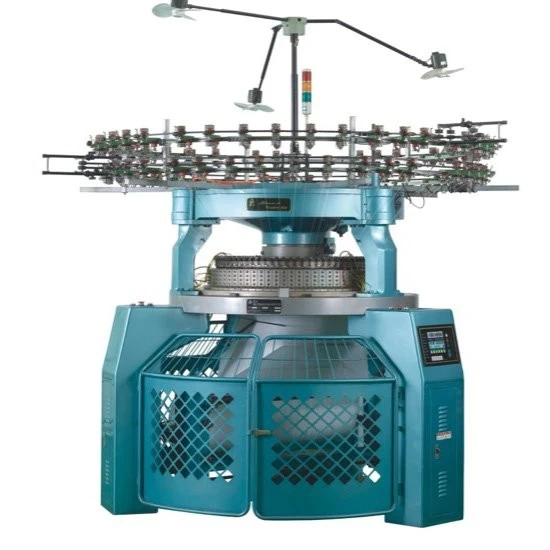
The rib knitting machine is a specialized form of double-sided large circular knitting machine designed to produce fabrics with enhanced elasticity and structural integrity. Rib fabrics are commonly used in cuffs, collars, waistbands, and garments that require stretch and recovery.
Rib knitting machines feature several needle track configurations:
- (1+1) needle track: One needle on the dial and one on the cylinder, ideal for lightweight rib fabrics.
- (2+2) needle track: Provides a balanced rib structure suitable for medium-weight fabrics.
- (2+4) needle track and (4+4) needle track: Used for complex patterns and heavy fabrics with enhanced texture.
The combination of triangles, needle arrangements, and yarn placement determines the final fabric design. By adjusting the needle selection and stitch formation, manufacturers can produce a wide range of rib fabrics, including single rib, double rib, half-cardigan, and full-cardigan structures.
Rib knitting machines are highly versatile and used in:
- Garments with elastic edges, such as cuffs and collars
- Sportswear and activewear for enhanced comfort
- High-quality fashion fabrics that require stretch without deformation
The rib machine's ability to produce elastic fabrics with precise stitch control makes it an essential asset for modern textile production.
Ordinary double jersey circular knitting machines, sometimes referred to as cotton wool machines, multi-function machines, or universal knitting machines, are the backbone of many textile factories. They are designed for general-purpose double-sided fabric production and can handle a wide range of patterns and yarn types.
Similar to rib machines, ordinary double jersey machines also feature:
- (1+1) needle track for lightweight fabrics
- (2+2) needle track for standard applications
- (2+4) and (4+4) needle tracks for more complex designs
Modern ordinary double jersey machines often utilize the (2+4) needle track as a standard due to its versatility. This configuration allows for an extensive range of colors and patterns, enabling textile manufacturers to meet contemporary fashion demands.
- Versatility: Capable of producing multiple fabric types and patterns, from plain to textured fabrics.
- Efficiency: Suitable for large-scale production, balancing speed and fabric quality.
- Cost-effectiveness: Ideal for manufacturers needing general-purpose double-sided fabrics without the complexity of Jacquard systems.
Ordinary double jersey machines are widely preferred for mass production of apparel fabrics, including sweaters, T-shirts, polo shirts, and casual wear. Their robust construction, combined with multi-functional capabilities, ensures consistent output over prolonged production cycles.
The Jacquard double jersey circular knitting machine represents the pinnacle of knitting complexity, allowing the production of intricate patterns, logos, and multicolor fabrics. These machines use computer-controlled or punch-card systems to selectively engage needles, creating detailed designs with precision.
Small Jacquard machines operate similarly to single jersey Jacquard machines but are adapted for double-sided production. Key features include:
- Ordinary rib Jacquard: Produces simple two-color or textured patterns.
- Double-sided Jacquard: Creates patterns visible on both sides of the fabric.
- Loop transfer functions: Enable innovative stitch formations and textured effects.
These machines are ideal for lightweight to medium fabrics, such as fashion apparel, sportswear, and decorative textiles.
Large Jacquard machines expand the capabilities of small Jacquard systems to accommodate wider fabrics, higher speeds, and more complex patterns. Features include:
- Large double-sided Jacquard capabilities for intricate patterns
- Advanced loop transfer options for textured and layered fabrics
- Multi-color knitting systems for detailed design reproduction
Large Jacquard double jersey machines are extensively used in high-end fashion, industrial textiles, and specialized fabric production, where complexity, precision, and pattern variety are critical.
Selecting the right double jersey circular knitting machine involves assessing several crucial factors:
The needle system is fundamental to stitch formation. Machines that allow versatile needle selection can produce a broader range of patterns and textures. Check whether the machine accommodates different needle sizes, as this flexibility is vital for achieving high-quality fabrics across various yarn types.
Speed directly impacts productivity, but higher speed does not always guarantee superior quality. High-speed machines can increase output by 20%, while slower speeds allow finer details in complex designs, especially on Jacquard machines. Balancing speed and precision is essential to maintain both quality and efficiency.
Modern machines come with digital control panels that simplify operation. User-friendly interfaces reduce training time, facilitate design changes, and minimize errors during production. Advanced systems may include programmable design patterns, real-time monitoring, and automated maintenance alerts.
Machines with flexible needle systems and advanced Jacquard functions can create multi-color, textured, and patterned fabrics. Consider whether the machine can handle your target fabric types, from ribbed cuffs to decorative Jacquard designs.
Durability and ease of maintenance are critical for sustained production. Machines constructed with high-quality materials, reinforced structures, and reliable parts ensure long-term performance and reduced downtime.
Double jersey machines are widely used across multiple segments of the textile industry:
- Fashion and Apparel: T-shirts, polo shirts, sweaters, and casual wear benefit from double-sided construction for enhanced durability and appearance.
- Sportswear and Activewear: Rib and Jacquard patterns provide elasticity, comfort, and moisture-wicking capabilities.
- Home Textiles: Fabrics for upholstery, bedding, and blankets leverage double jersey machines for strength and uniform texture.
- Industrial Textiles: Protective clothing, uniforms, and functional fabrics require precise patterning and structural integrity achievable with Jacquard systems.
The industry is witnessing significant advancements in double jersey circular knitting machines:
- Automation: Modern machines integrate computer-controlled Jacquard systems, improving precision and reducing manual intervention.
- Energy Efficiency: Improved motor systems and optimized yarn feeding reduce energy consumption.
- Multi-Yarn Capabilities: Machines now accommodate multiple yarn types simultaneously, enabling complex patterns and fabric blends.
- Enhanced Safety Features: Sensors and automated shutdown systems protect operators and machines during malfunctions.
- Sustainability: Efficient yarn usage and waste reduction contribute to eco-friendly production practices.
These trends ensure that manufacturers can produce high-quality fabrics efficiently, cost-effectively, and sustainably.
Proper installation and operation are crucial for ensuring optimal performance, longevity, and consistent fabric quality in double jersey circular knitting machines. One of the first considerations is floor leveling and stabilization. Machines should be installed on a level, reinforced surface to minimize vibrations during operation, as even slight instability can affect stitch uniformity and overall fabric quality.
Environmental conditions also play a significant role. Maintaining a controlled temperature and humidity environment helps prevent yarn tension issues, fabric distortion, and machine wear. Fluctuations in environmental conditions can lead to inconsistent stitching and reduced production efficiency.
Routine lubrication and maintenance are essential to keep all moving parts functioning smoothly. Regularly lubricate the needle beds, cams, and bearings following the manufacturer's guidelines to prevent wear, reduce downtime, and extend machine life.
Operator training is another key factor. Skilled operators can optimize machine settings, select appropriate needles, program patterns efficiently, and troubleshoot minor issues quickly, significantly improving output quality and reducing operational delays.
Finally, yarn management is critical for consistent production. Using tensioned yarn feeding systems prevents yarn breakage, ensures even stitch formation, and supports complex patterns, especially on Jacquard machines. Proper installation, environmental control, maintenance, training, and yarn management together ensure reliable, high-quality, and efficient knitting operations.
Double jersey circular knitting machines are indispensable for modern textile production, offering flexibility, durability, and the ability to produce complex fabrics. From rib knitting machines for elastic fabrics to ordinary double jersey machines for general-purpose applications, and Jacquard machines for intricate patterns, selecting the right machine is critical to meet production goals.
By considering factors such as needle versatility, operating speed, fabric quality, and maintenance requirements, textile manufacturers can optimize output, reduce downtime, and produce high-quality fabrics that meet industry standards. With continuous technological advancements, these machines remain central to innovation in fabric design and production efficiency.
Next: The Essential Role of Circular and Interlock Knitting Machines in Modern Textile Manufacturing
Previous: Double Jacquard Circular Knitting Machine: High-Efficiency Solution for Complex Fabric Designs

We have been committed to manufacturing all types of circular knitting machines with great quality and reasonable price for a long time. Our professional team is highly specialized and problem-solving oriented. We put the most effort into meeting your knitting demands, achieving a win-win situation.