The Essential Role of Circular and Interlock Knitting Machines in Modern Textile Manufacturing
Mar 20, 2026
In today's competitive textile industry, manufacturers face constant pressure to improve production efficiency, maintain fabric consistency, and deliver high-quality materials that meet both aesthetic and functional requirements. Among the most crucial technologies supporting these goals are circular knitting machines and their specialized variant, the interlock machine. These machines form the backbone of many modern textile factories, offering reliable, high-speed, and precise fabric production capabilities.
Circular and interlock knitting machines are not only tools for mass production—they are sophisticated systems engineered to balance speed, accuracy, and durability. For textile manufacturers, investing in these machines can have a direct impact on product quality, operational efficiency, and long-term profitability. In this article, we explore the key features, advantages, and applications of circular and interlock knitting machines, highlighting how they remain indispensable in contemporary knitting operations.
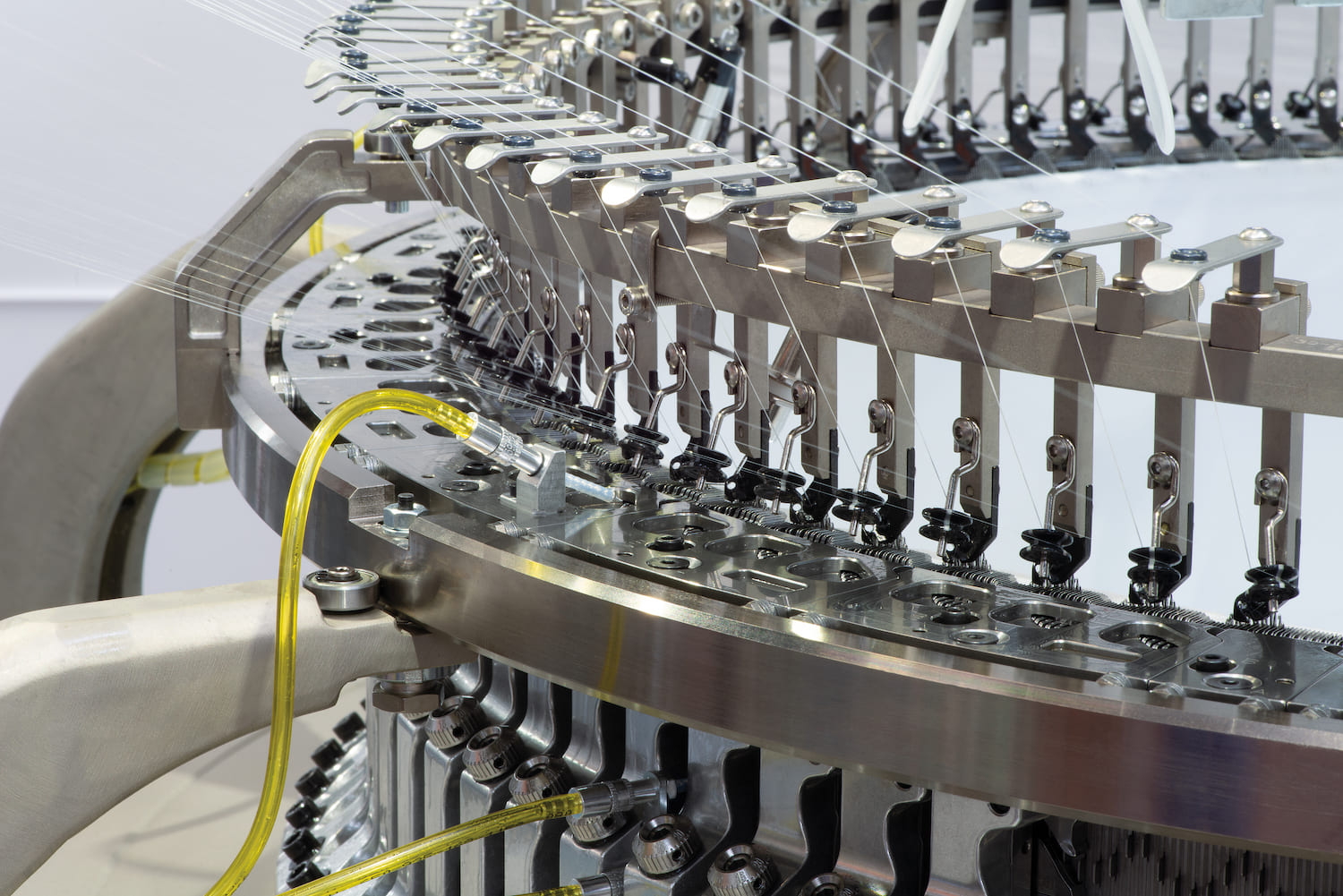
Textile manufacturing requires a delicate balance between machine performance and fabric quality. Any fluctuations in yarn tension, needle alignment, or loop formation can result in defects, uneven texture, or reduced durability. Circular knitting machines are designed to minimize these variables by providing stable, continuous operation with consistent fabric output.
Machine stability is essential for:
- Maintaining precise needle movement during high-speed knitting
- Ensuring consistent loop formation for uniform fabric density
- Reducing downtime caused by mechanical adjustments or yarn feed irregularities
High-quality circular machines incorporate advanced cam systems, robust frame structures, and carefully selected components to deliver long-term operational reliability. These features ensure that production schedules are maintained, defects are minimized, and fabric properties remain consistent across large runs—an essential factor for apparel, sportswear, and functional textile products.
Circular knitting machines are widely used for producing tubular fabrics in a continuous manner. Unlike flat knitting systems, circular machines knit fabrics in a cylindrical form, allowing for high-speed production and versatility in fabric structures.
Key features of circular knitting machines include:
- Multiple needle beds: Depending on the design, machines may have one or two needle beds, enabling single jersey, double jersey, or specialized structures such as interlock or rib fabrics.
- Adjustable stitch length: Operators can control fabric density, elasticity, and thickness by fine-tuning stitch parameters.
- Efficient yarn feeding systems: Automated or precision-controlled yarn feeders maintain consistent tension and prevent yarn breakage.
- High-speed operation: Modern circular machines can achieve speeds exceeding 1,500 revolutions per minute, drastically increasing productivity.
These machines are versatile, supporting a wide range of fabric types from lightweight single jerseys to thick double-knit structures. Their ability to operate continuously with minimal interruptions makes them a cornerstone of modern knitting factories.
Among circular knitting technologies, the interlock machine holds a special place due to its ability to produce high-quality double-faced fabrics with exceptional dimensional stability. Interlock fabrics consist of two layers of loops knitted together, resulting in a smooth, uniform surface on both sides. This structure enhances elasticity, reduces curling at the fabric edges, and provides superior strength compared to single jersey fabrics.
Interlock machines are essentially double jersey circular knitting machines with two synchronized needle beds. These needle beds work in perfect coordination, allowing loops from the front and back beds to interlock seamlessly. The result is a dense, balanced fabric that exhibits:
- Excellent elasticity: Ideal for garments that require stretch and recovery, such as underwear, activewear, and baby clothing
- Reduced edge curling: Provides finished-looking fabric straight from the machine
- Uniform surface appearance: Ensures consistent quality for printing, dyeing, or finishing
- Enhanced fabric strength: Suitable for long-lasting apparel and functional textile applications
By carefully controlling the interaction between the two needle beds, interlock machines allow manufacturers to produce fabrics with precise texture, weight, and mechanical properties tailored to specific end uses.
Interlock fabrics produced by advanced circular machines offer several advantages:
- Dimensional Stability: The balanced structure prevents unwanted stretching or distortion, maintaining the intended garment fit.
- Enhanced Comfort: Smooth surfaces on both sides provide a soft, comfortable feel against the skin.
- Versatility: Suitable for a wide range of applications, from casual wear to technical textiles requiring high-performance characteristics.
- Durability: Double-faced construction ensures greater resistance to wear and tear, extending the lifespan of finished garments.
- Efficient Production: Modern interlock machines enable high-speed operation without compromising fabric quality, increasing overall factory output.
These benefits explain why interlock fabrics are particularly favored in sportswear, undergarments, loungewear, and functional textiles such as compression or medical garments.
The performance of circular and interlock machines is heavily dependent on mechanical design and engineering precision. Key factors include:
- Cam system design: Ensures precise needle movement and consistent stitch formation
- Frame structure and stability: Minimizes vibration at high speeds and supports accurate loop alignment
- Component quality: High-grade metals, bearings, and yarn feeders extend machine lifespan and reduce maintenance requirements
- Assembly accuracy: Careful alignment and calibration during assembly guarantee smooth, reliable operation from the first use
By optimizing these elements, manufacturers like YUANDA produce circular and interlock machines capable of continuous, high-speed operation while maintaining consistent fabric quality.
A clean and controlled production environment is crucial for ensuring that each machine performs at its best. Before delivery, machines undergo rigorous inspection and testing to confirm:
- Needle alignment precision
- Cam system functionality
- Yarn feeding stability
- Overall mechanical performance
These quality assurance steps ensure that customers receive machines that are ready for real-world factory conditions. As a result, manufacturers can maintain stable production output and consistent fabric characteristics without frequent adjustments or downtime.
Modern interlock machines incorporate several design improvements that enhance factory efficiency:
- High-speed needle movement: Reduces cycle time without sacrificing fabric quality
- Automated yarn tension control: Maintains consistent loop formation even with different yarn types
- Enhanced elasticity management: Provides better control over stretch properties for functional textiles
- User-friendly operation: Simplifies setup, monitoring, and troubleshooting for operators
By integrating these features, circular and interlock machines allow textile manufacturers to achieve high throughput while delivering fabrics that meet strict quality standards.
Circular and interlock machines serve a diverse range of applications:
- Apparel Manufacturing: Producing soft, durable fabrics for t-shirts, underwear, loungewear, and sportswear
- Functional Textiles: Creating fabrics for medical garments, compression wear, or thermal clothing
- Home Textiles: Manufacturing pillowcases, sheets, and knit blankets with uniform quality
- Specialty Fabrics: Supporting innovative knit structures for fashion, performance, and technical textiles
The flexibility of circular and interlock knitting systems ensures that manufacturers can adapt quickly to market demands and produce fabrics with specific mechanical or aesthetic properties.
YUANDA is recognized for developing circular and interlock knitting machines that combine mechanical accuracy, durability, and practical factory performance. Their engineering approach emphasizes:
- Robust design: Machines built to withstand long-term, high-speed production
- Precision components: High-quality needle beds, cam systems, and yarn feeders
- Factory-ready calibration: Machines undergo thorough testing to ensure reliable operation upon delivery
- Focus on productivity: Optimized for high throughput while maintaining consistent fabric quality
This holistic approach ensures that customers can rely on YUANDA machines for stable, efficient, and high-quality fabric production.
The textile industry continues to evolve, and circular and interlock machines are adapting to new trends:
- Automation and IoT Integration: Smart sensors and digital monitoring improve efficiency, predict maintenance needs, and reduce downtime
- Sustainable Production: Machines designed to optimize energy use and minimize waste align with growing environmental standards
- Advanced Yarn Compatibility: Modern machines handle a wider variety of yarns, including blends, recycled fibers, and performance materials
- Customization and Flexibility: Manufacturers can switch between different knit structures, fabric weights, and patterns with minimal setup time
By embracing these advancements, textile factories can stay competitive while meeting rising consumer and regulatory demands for quality, sustainability, and innovation.
Circular and interlock knitting machines remain indispensable tools for modern textile manufacturing. They combine high-speed production capabilities with precision engineering to deliver consistent, high-quality fabrics suitable for a wide range of applications.
Interlock machines, in particular, offer unique advantages for double-faced fabrics, providing superior elasticity, dimensional stability, and surface uniformity. When designed and built with precision—like those developed by YUANDA—these machines support continuous operation, minimize downtime, and enhance overall factory productivity.
As the textile industry evolves, circular and interlock machines continue to play a pivotal role in enabling manufacturers to meet growing market demands, maintain fabric quality, and achieve operational excellence. For companies seeking reliable, high-performance knitting solutions, investing in advanced circular and interlock machines is not just a choice—it is a strategic imperative.
Next: How Double Jersey Open Width Circular Knitting Machines Transform Modern Textile Production
Previous: Types of Double Jersey Circular Knitting Machines: A Comprehensive Industry Overview

We have been committed to manufacturing all types of circular knitting machines with great quality and reasonable price for a long time. Our professional team is highly specialized and problem-solving oriented. We put the most effort into meeting your knitting demands, achieving a win-win situation.