How Double Jersey Open Width Circular Knitting Machines Transform Modern Textile Production
Mar 24, 2026
In today's global textile market, manufacturers face unprecedented pressure to increase productivity, enhance fabric quality, and reduce operational costs—all while adapting quickly to shifting fashion trends and diversified consumer demands. As the textile industry continues to evolve, advanced knitting technologies have become essential for enhancing product consistency, production flexibility, and overall efficiency. One such innovation is the Double Jersey Open Width Circular Knitting Machine, a versatile and high-efficiency solution engineered to meet the rigorous requirements of large-scale fabric production.
This advanced circular knitting machine integrates precision engineering, intelligent design concepts, and energy-saving technology, offering textile factories unparalleled value and performance. From producing high-quality double jersey fabrics to enabling rapid product switching, the machine sets new benchmarks for open width fabric manufacturing. This industry news report explores the machine's core features, technical advantages, application benefits, and its growing relevance within the modern textile landscape.
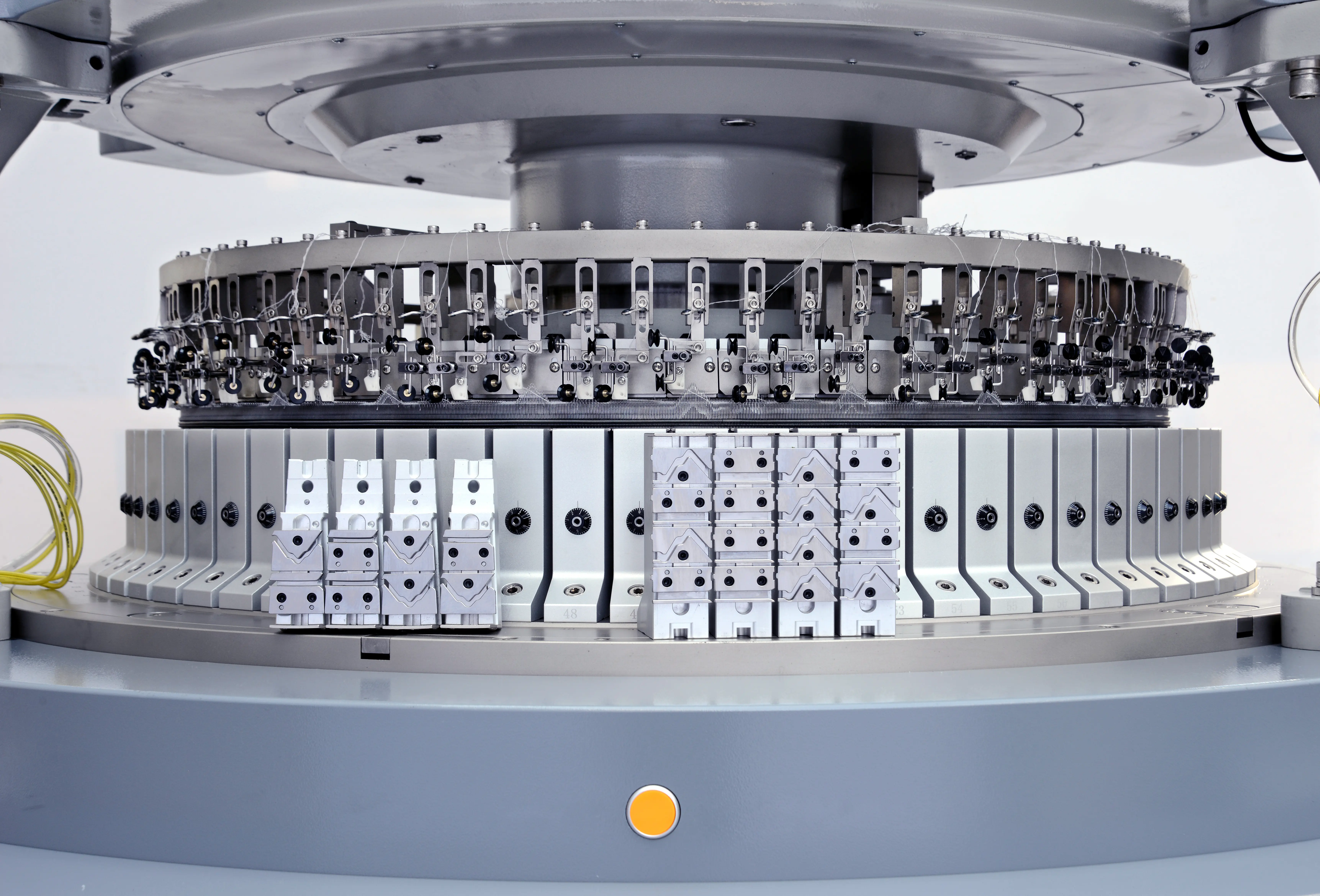
In the era of fast fashion and performance textiles, manufacturers are under increasing pressure to deliver large volumes of fabric without compromising quality. Traditional knitting technologies often struggle to meet today's demands due to limitations such as:
- Inefficient fabric take-down systems
- High energy consumption
- Inconsistent fabric tension
- Limited compatibility with stretch or high-performance materials
- Lengthy adjustment times when switching between orders
The Double Jersey Open Width Circular Knitting Machine addresses these challenges directly. With its advanced mechanical design, multi-feed system, synchronized take-down, and precision alignment technology, it stands out as a powerful tool for factories seeking high capacity, reliable output, and long-term operational value.
A hallmark feature of this machine is its multi-feed system, engineered specifically to increase knitting efficiency and output. In double jersey knitting, uniform feeding is critical to maintaining consistent loop structure and fabric stability. The multi-feed system ensures:
- Stable yarn input
- Uniform stitch length
- Reduced fabric defects
- Optimized production speed
This system significantly boosts hourly output while maintaining precision, making it ideal for large, continuous orders typical in sportswear, fashion, underwear, and industrial textile applications. As production volumes rise globally, machines that can deliver high throughput without excessive energy consumption offer significant economic advantages.
Open width knitting eliminates the tubular process, delivering fabric in a flat, ready-to-finish form. This machine is engineered to produce high-quality open width double jersey fabrics with exceptional consistency. Benefits include:
- Improved dimensional stability
- Reduced fabric spirality
- Cleaner appearance and fewer shading issues
- Higher yield during dyeing and finishing
The machine ensures accurate fabric geometry, minimizing the risk of folding marks, side lines, and other common defects that impact the quality of finished garments. As customer expectations for premium fabric quality continue to rise, this capability becomes a major competitive advantage.
A standout aspect of the Double Jersey Open Width Circular Knitting Machine is its durable mechanical and material construction. The incorporation of high-quality wire race bearings, wear-resistant plate structures, and a precision transmission mechanism ensures long-term operational stability. Key benefits include:
- Extended equipment lifespan
- Lower mechanical stress during high-speed operation
- Reduced maintenance costs
- Enhanced resistance to wear and deformation
The machine's rigid frame and balanced weight distribution help maintain smooth operation, even at high speeds, reducing vibration and minimizing the risk of fabric defects. For textile manufacturers, durability is directly tied to long-term return on investment, making these features invaluable.
Double jersey knitting relies on the coordination of upper and lower needle sets, requiring precise alignment and flawless mechanical synchronization. The machine's accurate double jersey structure design ensures:
- Perfect coordination between cylinder needles and dial needles
- Reduction of cross-bar shading issues
- Higher fabric uniformity
- Improved overall product quality
Cross-bar shading—commonly seen in double jersey fabrics—can significantly degrade appearance. Precision alignment technology reduces this risk, making the machine especially suitable for high-end fashion fabrics and premium-quality apparel.
The Sinker Triangle and Needle Triangle systems significantly influence the loop formation and overall fabric smoothness. This machine incorporates an innovative triangle design, uniquely optimized to reduce resistance and support fine-gauge fabric production. Advantages include:
- Clearer fabric texture
- Better elasticity
- Stable loop formation
- Reduced machine friction and heat generation
Both upper and lower triangles feature closed track designs and wide sinker structures, improving machine durability and consistency. Additionally, the integration of loop, tuck, and float triangle configurations allows greater flexibility for fabric diversification.
This adaptability is crucial for textile manufacturers as global demand shifts toward multi-functional fabrics such as:
- Stretch double knits
- Jacquard double jerseys
- Performance sportswear fabrics
- Thermal and functional textiles
With this advanced triangle system, manufacturers can explore countless fabric possibilities with minimal mechanical adjustment.
One of the defining features of the Double Jersey Open Width Circular Knitting Machine is its synchronized cutting and rolling mechanism. This system includes:
- An electronic blade cutting machine
- Integrated open width take-down
- Automatic synchronized rolling
The result is a highly stable and uniform fabric tension throughout the production process. Benefits include:
- Reduced surface defects
- Smoother fabric edges
- Enhanced uniformity in finished rolls
- Seamless adaptation to fabrics with different thicknesses and textures
With 160 selectable gear ratios, the machine can finely adjust tension levels to match the specific properties of various fabrics. This flexibility makes it suitable for both standard double jersey fabrics and more complex materials requiring precise control.
As global textile trends change rapidly, manufacturers need machines that can adapt quickly to new specifications. The user-centered design of this machine supports:
- Quick replacement of cylinders and sinkers
- Fast needle type adjustments
- Easy operational control
- Minimal downtime during product changeover
These features significantly enhance operational flexibility. Factories can efficiently transition from one product category to another—such as shifting from sportswear fabrics to rib structures or high-elasticity materials—without extended machine downtime.
The integration of an optional Elastane OP Device expands production capabilities dramatically. With elastane becoming a standard requirement in modern textiles—including sportswear, casual wear, athleisure, and functional garments—this feature allows manufacturers to produce:
- Stretch double-sided fabrics
- High-elasticity fashion fabrics
- Functional compression fabrics
- Performance-oriented textiles
The OP device ensures the elastic yarn is fed with precise tension, improving:
- Stretch recovery
- Fabric comfort
- Durability
- Dimensional stability
In today's market where stretch fabrics dominate consumer preferences, this feature positions manufacturers ahead of competitors with machines that can handle diverse material requirements.
With energy costs rising globally and sustainability becoming a top priority, textile manufacturers increasingly seek machines that reduce carbon emissions and operational costs. This Double Jersey Open Width Circular Knitting Machine is designed to:
- Reduce power consumption
- Optimize mechanical movement
- Minimize friction-related energy loss
- Deliver high output with lower operational input
Its low-energy consumption design contributes to:
- Lower greenhouse gas emissions
- Reduced heat output in factory environments
- Less strain on electrical systems
- More sustainable production processes
As the industry moves toward greener manufacturing standards, energy-efficient machinery like this plays a key role in supporting responsible production models.
The machine's multi-functional structure allows it to produce a wide range of fabrics, making it ideal for diverse applications, including:
- Double jersey fabrics
- Rib structures
- Structured knits
- Fine-gauge luxury textiles
- Elastic sports fabrics
- Moisture-wicking materials
- High-stretch fabrics
- Compression textiles
- Mattress fabrics
- Upholstery knits
- Technical double-layer fabrics
This versatility enables manufacturers to expand their product offerings and respond to new market trends efficiently.
Modern knitting factories rely heavily on stable production and predictable machine performance. The feature set of this knitting machine—precision mechanics, synchronized rolling, advanced triangle systems, and durable components—reduces production risks such as:
- Yarn breakages
- Loop irregularities
- Machine vibration
- Unplanned downtime
- Fabric inconsistencies
This empowers factories to achieve:
- Higher first-pass yield
- Reduced fabric waste
- More consistent delivery schedules
- Improved long-term profitability
The textile industry is shifting toward automation, sustainability, and digital monitoring. The Double Jersey Open Width Circular Knitting Machine aligns with these trends through its:
- Mechanically optimized systems
- Enhanced durability
- Low maintenance requirements
- Compatibility with future electronic monitoring upgrades
Its forward-compatible platform allows manufacturers to incorporate advanced monitoring systems, fabric inspection technologies, and smart factory integrations as needed.
The Double Jersey Open Width Circular Knitting Machine represents a significant advancement in textile production technology. With its high-efficiency multi-feed system, precision double jersey structure, innovative triangle design, synchronized cutting and rolling system, and user-friendly configurability, it delivers unmatched performance in productivity, fabric quality, and operational flexibility.
As the textile industry continues to evolve, manufacturers require machines that support rapid product innovation, high-volume output, and cost-efficient operation. This machine fulfills those needs while providing long-term durability and energy-efficient performance. From fashion and sportswear to industrial textiles, it opens new possibilities for fabric development, enabling manufacturers to stay competitive in a demanding global market.
Next: Advanced Single Jersey Circular Knitting Machines Transform Production in Ecuador
Previous: The Essential Role of Circular and Interlock Knitting Machines in Modern Textile Manufacturing

We have been committed to manufacturing all types of circular knitting machines with great quality and reasonable price for a long time. Our professional team is highly specialized and problem-solving oriented. We put the most effort into meeting your knitting demands, achieving a win-win situation.