Types of Circular Knitting Machines and Their Applications in Textile Manufacturing
May 12, 2026
The textile manufacturing industry has undergone tremendous technological advancement over the past several decades, with circular knitting machines becoming one of the most important innovations in fabric production. These machines are widely used to manufacture knitted fabrics for apparel, sportswear, underwear, home textiles, medical textiles, automotive interiors, and industrial applications.
Circular knitting machines are designed to produce seamless tubular fabrics at high speed and with exceptional efficiency. Compared with traditional flat knitting or weaving methods, circular knitting technology offers advantages such as higher productivity, reduced labor requirements, enhanced fabric elasticity, and greater design flexibility.
As global demand for comfortable, stretchable, and functional fabrics continues to rise, textile manufacturers are increasingly investing in advanced circular knitting technologies. Modern machines now integrate computerized controls, automated yarn feeding systems, jacquard patterning technology, and smart monitoring systems to improve productivity and fabric quality.
This industry news article explores the major types of circular knitting machines, including single jersey, double jersey, open-width, and jacquard knitting machines. It also examines their working principles, applications, advantages, technological innovations, and future market trends.
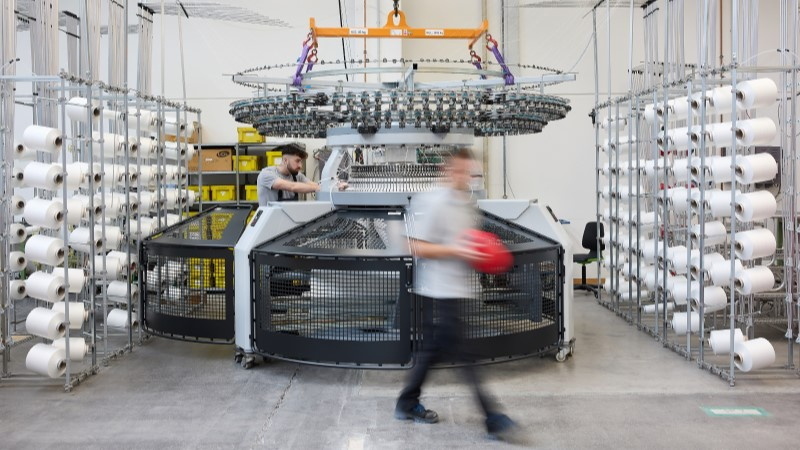
A circular knitting machine is a textile production machine that uses circularly arranged needles to create knitted fabrics. Unlike flat knitting machines, circular knitting systems produce continuous tubular fabrics through rotational knitting operations.
The machine works by interlocking yarn loops using needles mounted on a rotating cylinder or dial. As the yarn feeds through the knitting zone, loops are formed continuously, producing stretchable and durable knitted materials.
Circular knitting machines are known for:
- High-speed fabric production
- Seamless fabric manufacturing
- Excellent elasticity and comfort
- Versatility in fabric structures
- Efficient mass production capability
These machines are widely used in modern textile factories due to their ability to meet large-scale production demands while maintaining consistent quality.
Circular knitting technology has become essential for textile manufacturers worldwide. The rising popularity of athleisure, sportswear, and comfortable fashion has increased demand for knitted fabrics significantly.
Modern consumers prefer garments that offer:
- Softness
- Breathability
- Stretchability
- Lightweight performance
- Moisture management
Circular knitting machines help manufacturers produce fabrics that meet these requirements efficiently.
Additionally, the growth of technical textiles and smart fabrics has expanded the role of circular knitting technology into sectors such as:
- Medical textiles
- Automotive textiles
- Industrial filtration materials
- Compression garments
- Wearable technology
A single jersey circular knitting machine is one of the most widely used textile manufacturing systems in the knitting industry. It uses a single set of needles mounted on a cylinder to produce single jersey fabrics.
Single jersey fabric is lightweight, stretchable, and comfortable, making it ideal for a wide range of apparel applications.
These machines are highly efficient and capable of producing large quantities of fabric continuously at high speed.
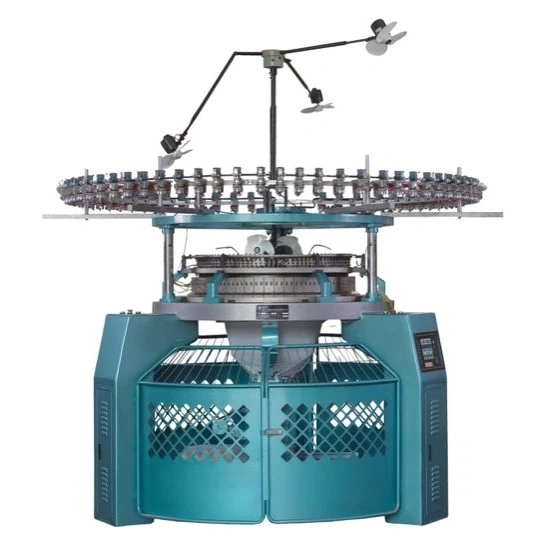
The machine operates by feeding yarn into rotating circular needles. As the cylinder rotates, the needles interlock yarn loops to create knitted fabric.
The resulting structure has:
- Smooth face side
- Looped back side
- Excellent elasticity
- Soft texture
Because only one needle bed is used, the fabric structure is relatively lightweight and flexible.
Single jersey circular knitting machines are commonly used for manufacturing:
- T-shirts
- Polo shirts
- Vests
- Sportswear
- Underwear
- Casual fashion garments
- Functional activewear
These fabrics are popular because they offer comfort, breathability, and freedom of movement.
1. High Production Efficiency
Single jersey machines can operate at very high rotational speeds, enabling mass production of fabrics.
2. Lightweight Fabric Production
The fabric produced is soft, breathable, and ideal for warm-weather garments.
3. Flexible Fabric Design
Manufacturers can adjust:
- Stitch density
- Yarn type
- Fabric weight
- Knitting patterns
This flexibility supports various fashion and technical textile requirements.
4. Durable Machine Structure
Modern single jersey machines are often constructed with high-strength cast iron frames, ensuring:
- Structural stability
- Reduced vibration
- Long service life
Today's single jersey machines often include:
- Automatic lubrication systems
- Computerized control panels
- Yarn break detectors
- Smart tension control systems
- Energy-efficient motors
These features improve productivity while reducing downtime and operational costs.
A double jersey circular knitting machine is designed with two needle beds: a cylinder and a dial. This configuration allows the machine to produce thicker and more stable knitted fabrics.
Double jersey fabrics are widely used in garments requiring better shape retention, insulation, and durability.
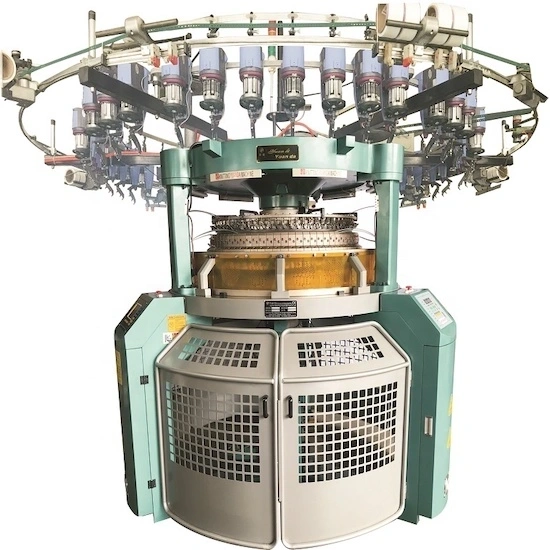
Unlike single jersey systems, double jersey machines use two sets of needles operating simultaneously.
This enables the production of:
- Interlock fabrics
- Rib fabrics
- Double-knit structures
The interaction between dial and cylinder needles creates more complex fabric structures with enhanced performance characteristics.
Double jersey fabrics are commonly used for:
- Sweatshirts
- Jackets
- Winter garments
- Sportswear
- Rib cuffs and collars
- Leggings
- Compression garments
These fabrics provide improved thickness and dimensional stability.
1. Enhanced Fabric Stability
Double jersey fabrics are less likely to curl or distort compared with single jersey fabrics.
2. Improved Stretch and Recovery
The fabric structure offers excellent elasticity and shape retention.
3. Versatile Fabric Structures
Manufacturers can produce a wide range of fabric types with varying textures and compressibility.
4. Efficient Machine Operation
Modern double jersey machines feature:
- Adjustable yarn feeding systems
- Precision needle control
- Stable tripod support structures
These components improve machine stability and operational efficiency.
The growing popularity of sportswear and athleisure has significantly increased demand for double jersey knitting machines.
Consumers increasingly prefer garments offering:
- Comfort
- Flexibility
- Thermal insulation
- Compression support
This trend continues to drive investment in advanced double jersey knitting technology.
An open-width circular knitting machine is designed to produce knitted fabrics in open form rather than tubular form.
Traditional circular knitting machines produce tubular fabric that must later be cut open. Open-width systems eliminate this step, improving fabric quality and production efficiency.
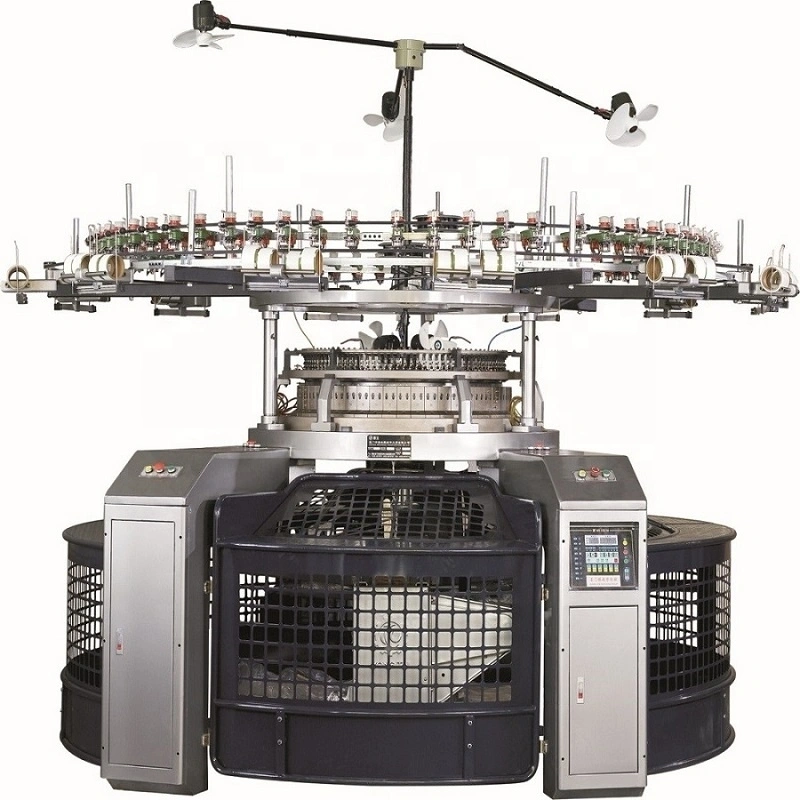
The machine includes specialized cutting and spreading mechanisms that open the tubular fabric during production.
This process:
- Reduces fabric tension
- Minimizes edge curling
- Improves dimensional stability
- Simplifies downstream processing
The fabric is wound directly into open-width rolls for dyeing and finishing.
Open-width circular knitting machines are commonly used for:
- Fashion fabrics
- Home textiles
- Sportswear fabrics
- Technical textiles
- Large-width garment materials
1. Reduced Fabric Distortion
Because the fabric is opened immediately, there is less stress and deformation.
2. Improved Fabric Quality
Open-width systems help maintain:
- Uniform width
- Better surface appearance
- Consistent fabric tension
3. Higher Production Efficiency
The elimination of secondary cutting operations reduces labor and processing time.
4. Better Finishing Performance
Open-width fabrics perform better during:
- Dyeing
- Printing
- Heat setting
- Finishing operations
Modern open-width knitting machines often include:
- Automated fabric spreading systems
- Smart tension control
- Electronic yarn feeders
- Servo motor drives
- Real-time monitoring systems
These technologies improve operational precision and reduce waste.
A jacquard circular knitting machine is an advanced knitting system designed to produce complex patterns, textures, and decorative fabric designs.
The jacquard mechanism allows individual needle selection, enabling intricate designs directly during knitting production.
These machines are widely used for premium textiles and fashion applications.
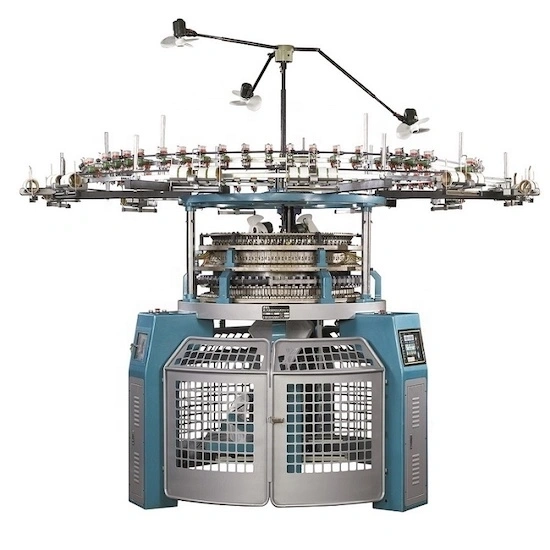
Jacquard systems use computerized needle selection technology to control knitting patterns.
By selectively activating needles, the machine can create:
- Geometric patterns
- Floral designs
- Logos and graphics
- Textured surfaces
- Multi-color effects
The process is fully automated and highly precise.
Jacquard fabrics are used in:
- High-end fashion garments
- Luxury sportswear
- Decorative textiles
- Upholstery fabrics
- Mattress covers
- Automotive interiors
These fabrics provide both functional and aesthetic value.
1. Advanced Pattern Capability
Manufacturers can create highly detailed and customized designs.
2. Production Flexibility
Computerized controls allow rapid pattern changes without replacing mechanical components.
3. High Fabric Value
Jacquard fabrics are considered premium products due to their appearance and complexity.
4. Efficient Mass Production
Modern jacquard systems can produce intricate fabrics at industrial-scale production speeds.
Today's jacquard knitting machines often include:
- CAD pattern programming
- Digital control interfaces
- AI-assisted defect detection
- Automatic yarn monitoring
- Remote diagnostics systems
These innovations improve efficiency and reduce production errors.
The textile industry is rapidly adopting Industry 4.0 technologies, and circular knitting machines are becoming increasingly intelligent.
Modern knitting factories now use:
- IoT-enabled monitoring systems
- Automated yarn feeding
- AI quality inspection
- Cloud-based production management
- Predictive maintenance software
These technologies help manufacturers:
- Reduce downtime
- Improve product consistency
- Lower labor costs
- Increase energy efficiency
Smart knitting systems also enable real-time production tracking and remote machine management.
Sustainability has become a major priority for textile manufacturers and global fashion brands.
Modern circular knitting machines support sustainability through:
- Reduced fabric waste
- Energy-efficient motors
- Lower water consumption
- Optimized yarn utilization
- Recycling-compatible production systems
Manufacturers are increasingly using recycled fibers and eco-friendly yarns in circular knitting operations.
Additionally, seamless knitting technology helps reduce garment waste during apparel manufacturing.
The global circular knitting machine market continues to expand due to rising demand for:
- Sportswear
- Athleisure apparel
- Functional textiles
- Smart fabrics
- Sustainable clothing
Asia remains the largest manufacturing hub, with strong production activity in:
- China
- India
- Bangladesh
- Vietnam
Technological innovation and automation are expected to drive future market growth further.
Despite strong growth, the industry faces several challenges:
- Rising raw material costs
- Skilled labor shortages
- Increasing energy prices
- High investment costs for advanced machinery
- Global supply chain disruptions
Manufacturers are responding by investing in automation, digitalization, and energy-efficient technologies.
The future of circular knitting machines is expected to focus on:
- AI-driven automation
- Smart textile production
- Sustainable manufacturing
- Fully digitalized knitting systems
- Advanced technical textile applications
As consumer demand evolves, textile manufacturers will continue adopting more flexible and intelligent knitting technologies to remain competitive.
Future circular knitting machines may include:
- Self-optimizing knitting parameters
- Fully autonomous production systems
- Real-time defect correction
- Integrated sustainability analytics
These developments will further transform the textile manufacturing industry.
Circular knitting machines have become indispensable in modern textile manufacturing. From single jersey and double jersey machines to open-width and jacquard systems, each type serves specific production requirements and fabric applications.
Advancements in automation, digital control, and smart manufacturing technologies are significantly improving productivity, fabric quality, and operational efficiency. At the same time, sustainability initiatives are driving the development of energy-efficient and environmentally responsible knitting solutions.
As the global textile industry continues to evolve, circular knitting machines will remain at the center of innovation, supporting the production of comfortable, functional, fashionable, and high-performance fabrics for markets around the world.
Next: High-Efficiency Single Terry Circular Knitting Machine for Knitting Industry
Previous: How Circular Knitting Machines Work: Structure, Process, and Key Components

We have been committed to manufacturing all types of circular knitting machines with great quality and reasonable price for a long time. Our professional team is highly specialized and problem-solving oriented. We put the most effort into meeting your knitting demands, achieving a win-win situation.