How Circular Knitting Machines Work: Structure, Process, and Key Components
May 07, 2026
The circular knitting machine is one of the most important and widely used pieces of equipment in the global textile industry. It plays a critical role in converting yarn into knitted fabrics efficiently, continuously, and at high speed. Unlike flat knitting systems, circular knitting machines produce tubular fabrics in a seamless structure, making them ideal for mass production of apparel, home textiles, technical fabrics, and industrial materials.
With the rapid development of the textile industry and increasing demand for comfortable, lightweight, and functional fabrics, circular knitting technology has continuously evolved. Modern machines are now equipped with advanced electronic controls, automated yarn feeding systems, precision mechanical components, and smart monitoring systems, significantly improving production efficiency and fabric quality.
Today, circular knitting machines are widely used in both small workshops and large industrial factories. They support a broad range of applications, from basic cotton T-shirts to high-performance sportswear, medical textiles, and fashion garments. Understanding how these machines operate, their structural components, and their different types is essential for manufacturers aiming to optimize production and remain competitive in the textile market.
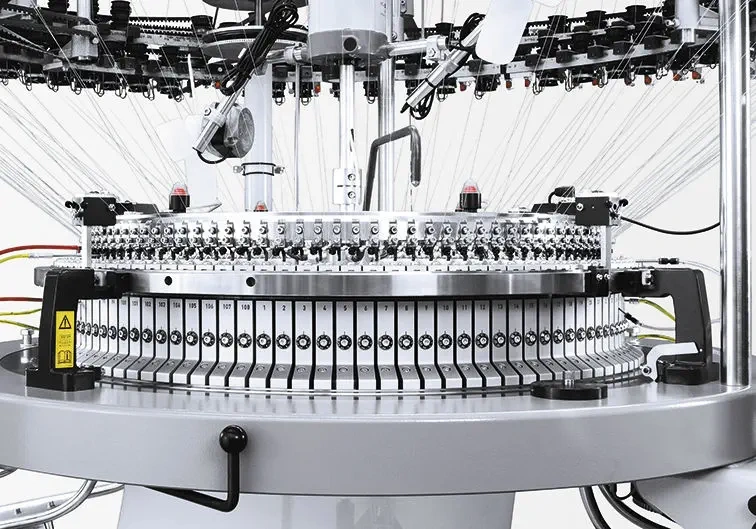
The working principle of a circular knitting machine is based on continuous loop formation using a rotating needle system. Yarn is fed into the machine, formed into loops by needles, and then interconnected to create fabric.
The entire process is highly synchronized and depends on precise coordination between multiple mechanical and electronic components.
The main steps include:
- Yarn feeding from the creel system
- Yarn tension control through feeders
- Loop formation using needles
- Fabric shaping with sinkers
- Pattern and motion control via cam systems
- Continuous fabric output in tubular form
This continuous process allows circular knitting machines to achieve high production speed while maintaining consistent fabric structure.
The yarn feeding system is the starting point of the entire knitting process. Its role is to ensure that yarn is supplied continuously, evenly, and at controlled tension to the knitting zone.
The creel is where yarn cones are stored and organized. It allows multiple yarn sources to be fed simultaneously into the machine, supporting multi-yarn or multi-color production when required.
Yarn passes from the creel into guiding tubes, typically made of aluminum or other low-friction materials, which help reduce resistance and prevent damage during transportation.
One of the most critical components in modern circular knitting machines is the positive feeder. This device ensures that yarn is delivered at a consistent rate regardless of cone tension variations.
Key functions include:
- Maintaining uniform yarn delivery speed
- Controlling yarn length per stitch
- Reducing tension fluctuations
- Improving fabric consistency
Without a stable feeder system, fabric defects such as uneven texture, holes, or irregular patterns may occur.
To ensure maximum stability and quality, modern machines include several additional yarn control mechanisms:
Knot Detection Systems
These systems detect yarn irregularities such as knots or thick sections and reduce their impact on fabric quality.
Magnetic Tensioners
Magnetic tensioners regulate yarn tension dynamically during production, ensuring smooth and stable feeding conditions.
Yarn Break Sensors
These sensors detect yarn breakage instantly and stop the machine to prevent fabric defects.
Together, these systems ensure that yarn enters the knitting zone in optimal condition, ready for precise loop formation.
The needle system is the heart of the circular knitting machine. It is responsible for forming loops, which are the basic building blocks of knitted fabric.
Needles are arranged in a circular cylinder and operate in a continuous rotational motion. Each needle performs a series of actions including receiving yarn, forming loops, and releasing completed stitches.
The cam system plays a vital role in controlling needle movement. It converts rotational energy into precise mechanical motion, guiding the needles through different stages of the knitting cycle.
Functions of Cams
- Controlling needle lifting and lowering
- Determining stitch formation timing
- Regulating fabric density
- Ensuring synchronization across all needles
Cams act like a mechanical programming system, ensuring that every needle performs its task at the correct moment.
Sinkers are essential components that work alongside needles. While needles form loops, sinkers help stabilize and shape them.
Main Functions of Sinkers
- Holding loops in position during formation
- Assisting in loop transfer
- Supporting fabric structure
- Preventing yarn distortion
The interaction between needles and sinkers ensures precise stitch formation and consistent fabric quality.
The stitch formation process in a circular knitting machine is continuous and highly coordinated.
Step-by-step process:
- Yarn is delivered from the creel through the feeder system
- The yarn enters the knitting zone
- Needles rise and catch the yarn
- Loops are formed as needles move downward
- Sinkers hold and shape the loops
- Completed stitches are pulled downward
- Fabric is continuously produced in tubular form
This process repeats thousands of times per minute in high-speed machines, enabling large-scale production.
Circular knitting machines are available in various configurations depending on fabric type, production needs, and design complexity.
Single jersey machines are the most commonly used type in the textile industry due to their simplicity and versatility.
Characteristics
- Single needle bed system
- Produces lightweight fabrics
- Smooth front surface and textured back
- High elasticity and softness
Applications
- T-shirts
- Casual wear
- Innerwear
- Lightweight sportswear
These machines are ideal for producing breathable and comfortable fabrics.
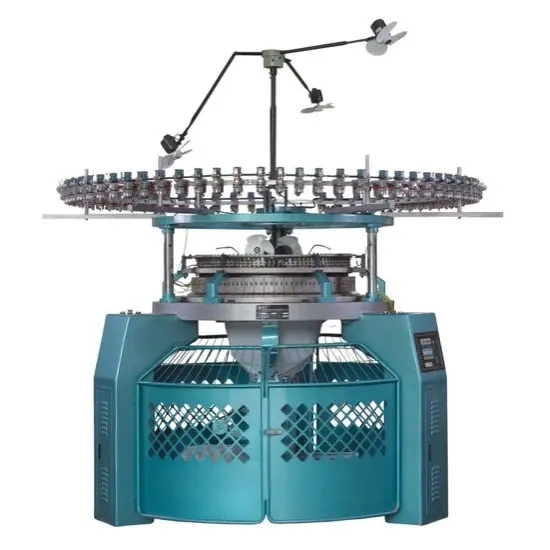
Double jersey machines are more advanced and use both cylinder and dial needles.
Characteristics
- Two needle systems
- Thicker and more stable fabrics
- Improved structural integrity
- Better dimensional stability
Applications
- Interlock fabrics
- Rib structures
- Outerwear
- High-end garments
Double jersey fabrics are widely used in premium textile applications.
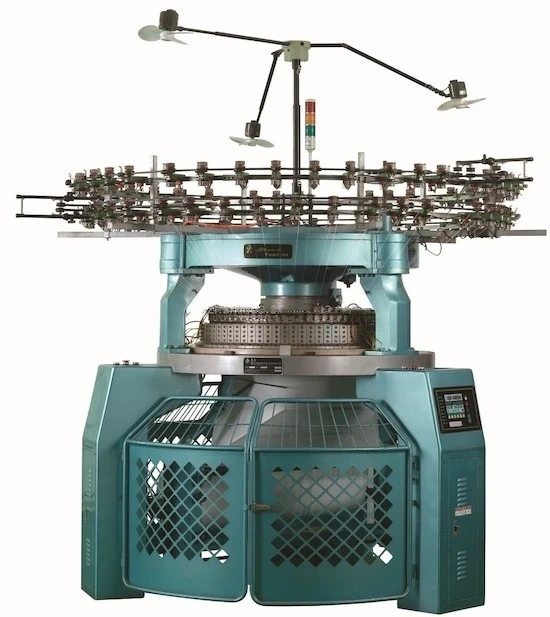
Rib machines are designed to produce highly elastic fabrics by alternating knit and purl stitches.
Features
- High stretchability
- Excellent recovery properties
- Soft and flexible texture
Applications
- Collar edges
- Cuffs
- Waistbands
- Fitted garments
Rib fabrics are essential in apparel requiring elasticity and comfort.
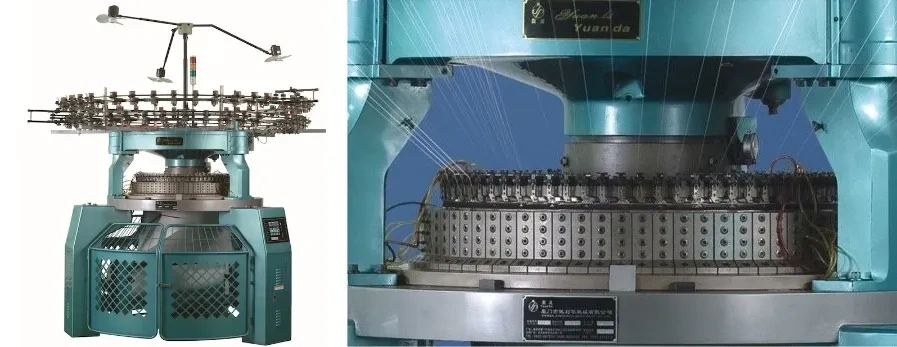
Interlock machines produce double-layered fabrics simultaneously.
Features
- Smooth both sides
- Dense structure
- High durability
- Soft feel
Applications
- Baby clothing
- Sportswear
- Premium garments
- Medical textiles
Interlock fabrics combine comfort and strength effectively.
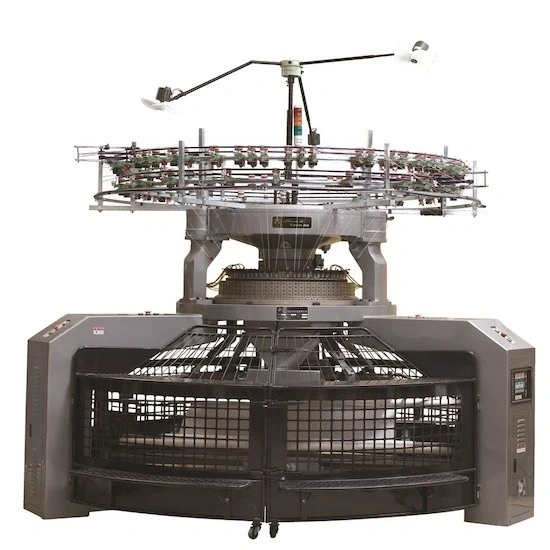
Jacquard machines represent advanced knitting technology capable of producing complex patterns.
Features
- Electronic needle selection
- Pattern programming capability
- High design flexibility
- Multi-color fabric production
Applications
- Fashion garments
- Branded textiles
- Decorative fabrics
- Designer clothing
Jacquard machines are widely used in high-end textile manufacturing.
High-speed machines are designed for large-scale industrial production with maximum efficiency.
Features
- High rotational speed
- Automated control systems
- Reduced vibration
- Advanced yarn monitoring
Benefits
- High productivity
- Reduced labor cost
- Consistent fabric quality
- Efficient mass production
These machines are essential for modern textile factories.
Circular knitting machines provide several significant advantages:
Continuous Production Capability
They allow uninterrupted fabric production, increasing efficiency.
High Production Speed
Modern machines can operate at extremely high speeds, producing large quantities of fabric.
Versatility
They support a wide range of fabric types and designs.
Cost Efficiency
Reduced labor and material waste lower overall production costs.
Fabric Quality Stability
Precision engineering ensures uniform stitch formation.
Circular knitted fabrics are widely used across industries:
Apparel Industry
- Sportswear
- T-shirts
- Underwear
- Fashion clothing
Home Textiles
- Bedding
- Curtains
- Upholstery
Medical Sector
- Compression garments
- Bandages
- Surgical textiles
Industrial Applications
- Filter fabrics
- Technical textiles
- Protective materials
The textile industry is undergoing rapid technological transformation.
Automation Systems
Modern machines include automated controls for:
- Yarn feeding
- Stitch regulation
- Fault detection
- Production monitoring
Smart Manufacturing Integration
Machines are now integrated into smart factories using:
- IoT connectivity
- Remote monitoring
- Data analytics
- Predictive maintenance
- Energy Efficiency Improvements
New designs reduce power consumption and improve sustainability.
Digital Pattern Control
Computerized systems allow precise fabric design and customization.
Despite their advantages, several challenges remain:
- Yarn breakage during high-speed operation
- Machine wear and maintenance requirements
- High initial investment costs
- Complexity in advanced pattern design
- Energy consumption in large-scale production
The future of circular knitting machines will focus on:
- Higher automation levels
- AI-based production optimization
- Sustainable manufacturing systems
- Ultra-high-speed knitting technology
- Lightweight and compact machine designs
- Integration with renewable energy systems
These innovations will further improve efficiency and sustainability in textile production.
Circular knitting machines remain a cornerstone of the modern textile industry, enabling efficient, high-speed, and versatile fabric production. Through precise coordination of yarn feeding systems, needle mechanisms, cam controls, and sinkers, these machines transform raw yarn into high-quality knitted fabrics used worldwide.
With continuous advancements in automation, digital control, and smart manufacturing technologies, circular knitting machines are becoming more efficient, intelligent, and environmentally friendly. Their role in supporting global textile demand will continue to expand as the industry moves toward higher productivity and innovation-driven production systems.
As a result, circular knitting technology will remain essential for the future of textile manufacturing, supporting both traditional apparel production and emerging technical textile applications.
Next: Types of Circular Knitting Machines and Their Applications in Textile Manufacturing
Previous: Best Double Cylinder Circular Knitting Machine for Fabric Manufacturing

We have been committed to manufacturing all types of circular knitting machines with great quality and reasonable price for a long time. Our professional team is highly specialized and problem-solving oriented. We put the most effort into meeting your knitting demands, achieving a win-win situation.