Best Double Cylinder Circular Knitting Machine for Fabric Manufacturing
May 01, 2026
The global textile manufacturing industry is undergoing rapid modernization as producers seek higher efficiency, greater flexibility, improved fabric quality, and faster response to changing market demand. Among the many advanced knitting technologies used today, the Double Cylinder Circular Knitting Machine has become one of the most important solutions for producing ribbed, interlock, jacquard, elastic, and specialty knitted fabrics.
Known for its dual-cylinder structure and multi-functional design, the double cylinder circular knitting machine offers manufacturers the ability to create complex fabric structures with high productivity and consistent quality. It is widely used in the production of socks, cuffs, collars, sportswear, underwear, seamless garments, fashion knitwear, and industrial textile products.
As demand rises for diversified textile products, colorful designs, comfortable stretch fabrics, and quick production cycles, double cylinder knitting technology is becoming a preferred choice for modern knitting mills worldwide.
A Double Cylinder Circular Knitting Machine is a specialized circular knitting system equipped with two needle cylinders—typically an upper cylinder and a lower cylinder—that work together to interlock loops and create complex fabric constructions.
Unlike single jersey machines that mainly knit one-sided fabrics, double cylinder machines can produce:
- Rib fabrics
- Interlock fabrics
- Double-face structures
- Elastic tubular fabrics
- Jacquard patterns
- Transfer stitch fabrics
- Multi-color knitted designs
Because knitting needles operate in two separate cylinders, the machine can create stronger, thicker, and more dimensional textiles with excellent elasticity and appearance.
This makes double cylinder circular knitting machines highly valuable in markets that require durability, comfort, and fashionable textures.
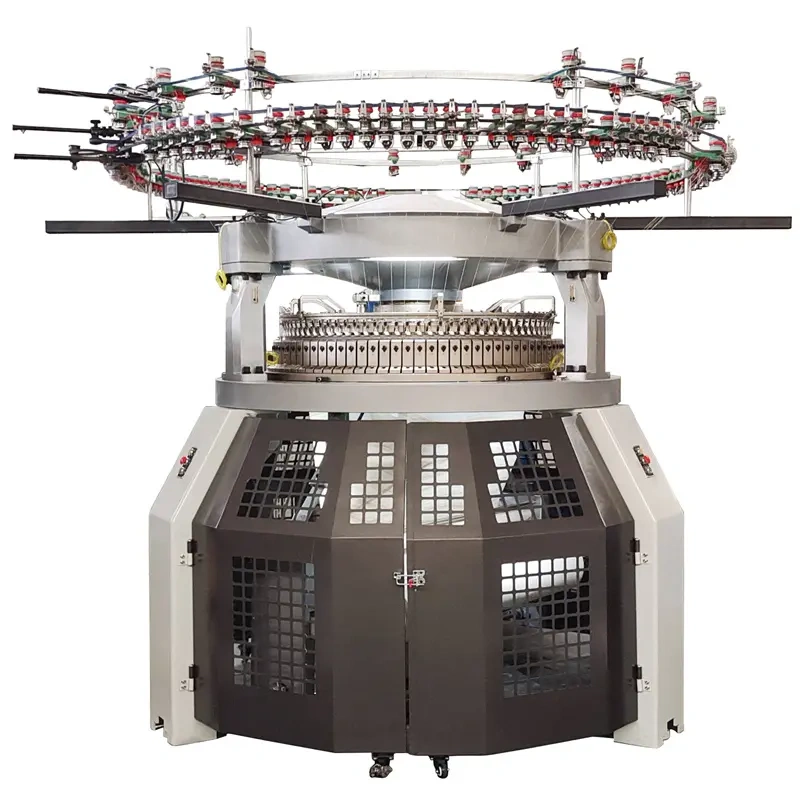
Modern double cylinder knitting machines are designed with a robust frame, precision mechanical components, and smart electronic control systems.
Main Structural Components Include:
- Upper needle cylinder
- Lower needle cylinder
- Cam box systems
- Needle selection mechanism
- Yarn feeders
- Fabric take-down system
- Main transmission shaft
- Gear drive assembly
- Inverter-controlled motor
- Safety door and protective covers
- Circular support table
- Stable three-leg or reinforced base frame
The upper and lower cylinder design allows coordinated needle movement for advanced knitting patterns that are difficult to achieve on single cylinder systems.
Many modern double cylinder circular knitting machines adopt:
- Upper two-section systems
- Upper three-section systems
- Lower four-section systems
These multi-section arrangements increase knitting flexibility and expand design capability.
Benefits Include:
- More colorful fabrics
- Better pattern definition
- Increased yarn feeding combinations
- Improved jacquard capability
- Higher production diversity
- Stronger market adaptability
Manufacturers can create sophisticated fabric styles while maintaining efficient mass production.
One of the most valuable advantages of the double cylinder circular knitting machine is its multi-functional capability.
Through replacement of cams, sinkers, heart tissue components, or knitting elements, one machine can often be converted to perform different fabric functions.
Common Conversions Include:
- Double cylinder machine to rib machine
- Rib knitting to interlock knitting
- Elastic fabric production
- Special collar and cuff production
- Decorative structure knitting
This flexibility allows textile factories to respond quickly to customer orders without purchasing multiple machines.
Consumer demand for attractive and fashionable textiles continues to rise. Double cylinder machines support creative production through:
- Multi-feed yarn systems
- Contrasting yarn placement
- Stripe knitting
- Jacquard color arrangement
- Pattern repeat design
- Technical stitch placement
By adjusting yarn feeders and needle selection programs, manufacturers can produce eye-catching fabrics for fashion and sportswear markets.
This makes double cylinder circular knitting technology highly competitive in premium apparel manufacturing.
Mechanical stability is critical for circular knitting precision. Modern double cylinder machines are built with durable support frames that reduce vibration during high-speed operation.
Common Base Design Includes:
- Three lower support legs
- Circular working table
- Reinforced steel frame
- Balanced weight distribution
- Shock-resistant mounting system
The bottom of the support structure is typically fixed with strong anchoring feet or prongs to ensure machine stability.
Benefits of Stable Frame Construction:
- Lower vibration
- Reduced needle wear
- Better stitch consistency
- Longer machine lifespan
- Improved operator safety
- Lower maintenance costs
Modern textile factories prioritize operator safety. Double cylinder circular knitting machines often include:
- Safety access doors
- Transparent protective panels
- Emergency stop systems
- Yarn break sensors
- Motor overload protection
- Automatic stop alarms
The protective door is commonly installed between lower support legs or operator access zones.
Many manufacturers now allow custom door colors and machine appearance customization to match factory branding or operator preference.
A major advancement in circular knitting machines is the use of frequency inverter motor control systems.
Instead of fixed-speed operation, inverter systems allow accurate speed adjustment and smoother machine control.
Advantages Include:
- Energy savings
- Smooth acceleration and deceleration
- Reduced mechanical shock
- Better yarn tension control
- Lower noise levels
- Improved production efficiency
This technology is especially useful when switching between different fabric types or yarn materials.
The transmission mechanism of a double cylinder circular knitting machine is engineered for precision and durability.
Typically:
- Motor drives toothed timing belt
- Belt transfers power to main shaft
- Main shaft drives large plate gear
- Plate gear rotates needle cylinders
- Needles perform synchronized knitting motion
Benefits of Toothed Belt Drive:
- Accurate synchronization
- Low slip risk
- Reduced maintenance
- Quiet operation
- Smooth power transmission
This ensures reliable knitting performance even at high production speeds.
Modern double cylinder circular knitting machines are designed for continuous industrial production.
Depending on diameter, gauge, fabric type, and yarn quality, machines can operate at high rotational speeds while maintaining stable stitch quality.
Production Benefits:
- High daily fabric output
- Reduced labor cost per meter
- Faster order completion
- Improved factory productivity
- Better competitiveness in export markets
This makes the machine ideal for large-scale textile operations.
These machines are widely used for producing numerous textile categories.
Common Fabric Applications:
Rib Fabrics
Used for:
- T-shirts cuffs
- Waistbands
- Sweater edges
- Sportswear trims
Interlock Fabrics
Used for:
- Premium underwear
- Babywear
- Activewear
- Soft fashion garments
Elastic Fabrics
Used for:
- Leggings
- Compression garments
- Support wear
Decorative Textiles
Used for:
- Jacquard knitwear
- Patterned fashion garments
- Color stripe products
Double cylinder circular knitting machines are essential in modern garment manufacturing.
Main Apparel Uses:
- Underwear production
- Socks and hosiery
- Sportswear
- Fashion knitwear
- Casual wear
- Children's garments
- Seamless wear
- Outerwear trims
As consumer demand shifts toward stretch comfort and attractive texture, these machines remain highly valuable.
Modern machines can process a wide range of yarn materials:
- Cotton
- Organic cotton
- Polyester
- Recycled polyester
- Nylon
- Spandex blends
- Bamboo fiber
- Viscose
- Wool blends
- Functional yarns
This material flexibility supports both fashion and technical textile markets.
Needles are among the most important components in any knitting machine.
Double cylinder systems use precision-engineered needles for:
- Accurate loop formation
- Smooth yarn handling
- Reduced breakage
- Consistent stitch density
- Long service life
High-quality needle systems significantly improve fabric appearance and machine uptime.
New-generation double cylinder circular knitting machines increasingly feature digital systems.
Smart Features Include:
- Touchscreen control panels
- Speed memory settings
- Fault diagnosis systems
- Production counters
- Pattern memory storage
- Automatic lubrication
- Remote maintenance support
These technologies reduce manual setup time and improve factory management efficiency.
Textile manufacturers are under pressure to reduce energy use and carbon emissions.
Modern double cylinder knitting machines help through:
- Inverter energy control
- Low-friction drive systems
- Efficient motors
- Reduced yarn waste
- Faster production cycles
- Longer component life
Combined with recycled yarn usage, these machines support greener textile manufacturing.
Compared with older knitting systems, modern double cylinder machines offer:
- More fabric structures
- Better elasticity control
- Higher speed
- Lower labor dependence
- Greater automation
- Improved product diversity
- Better ROI for factories
For manufacturers seeking flexible growth, the machine offers strong long-term value.
Demand for double cylinder circular knitting machines continues to grow in:
- China
- India
- Bangladesh
- Vietnam
- Turkey
- Pakistan
- Indonesia
- Europe
- Latin America
Growth is supported by expanding apparel exports, rising automation investment, and demand for premium knitted products.
Despite strong demand, the industry faces several challenges:
- Rising raw material costs
- Skilled technician shortages
- International competition
- Energy prices
- Fast-changing fashion cycles
- Spare parts management
Manufacturers that invest in smart, flexible machinery are better positioned to overcome these pressures.
The next generation of machines is expected to focus on:
AI Production Optimization
Automatic speed and tension adjustment based on yarn behavior.
Industry 4.0 Connectivity
Real-time monitoring across multiple machines in a factory.
Predictive Maintenance
Sensors detect wear before breakdown occurs.
Faster Pattern Switching
Digital systems shorten changeover time.
Sustainable Textile Production
Machines optimized for recycled and eco-friendly fibers.
When selecting a machine, buyers should consider:
- Machine diameter
- Gauge range
- Number of feeders
- Fabric types required
- Production capacity
- Motor efficiency
- Spare parts availability
- Technical support
- Automation level
- Brand reputation
Choosing the right configuration can significantly improve profitability.
The Double Cylinder Circular Knitting Machine has become a key technology in the modern textile industry, offering manufacturers outstanding versatility, efficiency, and fabric quality. With its upper and lower cylinder structure, multi-functional conversion capability, colorful pattern production, stable frame design, and inverter-controlled transmission system, it provides a powerful solution for today's competitive apparel market.
From rib fabrics and interlock garments to sportswear, underwear, and premium knitwear, these machines support a broad range of production needs. As automation, sustainability, and smart manufacturing continue to shape the future of textiles, double cylinder circular knitting machines will remain at the center of high-performance knitting innovation.
For textile mills seeking productivity, flexibility, and long-term competitiveness, investing in advanced double cylinder knitting technology is an important step toward future success.
Next: How Circular Knitting Machines Work: Structure, Process, and Key Components
Previous: Efficient Textile Manufacturing with Computerized Rib Jacquard Knitting Machines

We have been committed to manufacturing all types of circular knitting machines with great quality and reasonable price for a long time. Our professional team is highly specialized and problem-solving oriented. We put the most effort into meeting your knitting demands, achieving a win-win situation.