Efficient Textile Manufacturing with Computerized Rib Jacquard Knitting Machines
The global textile industry is undergoing a significant transformation driven by automation, digitalization, and the increasing demand for high-quality, customized fabrics. Among the most impactful innovations in knitting technology is the computerized rib jacquard circular knitting machine. Designed to produce complex rib structures with intricate jacquard patterns, these machines combine precision engineering with advanced control systems, enabling manufacturers to meet evolving market requirements efficiently.
From fashion apparel to technical textiles, rib jacquard fabrics are valued for their elasticity, durability, and aesthetic versatility. As consumer preferences shift toward personalized and high-performance garments, textile producers are investing heavily in advanced machinery capable of delivering both quality and productivity. This article explores the working principles, structural features, technological advantages, applications, and future trends of computerized rib jacquard circular knitting machines, highlighting their critical role in modern textile production.
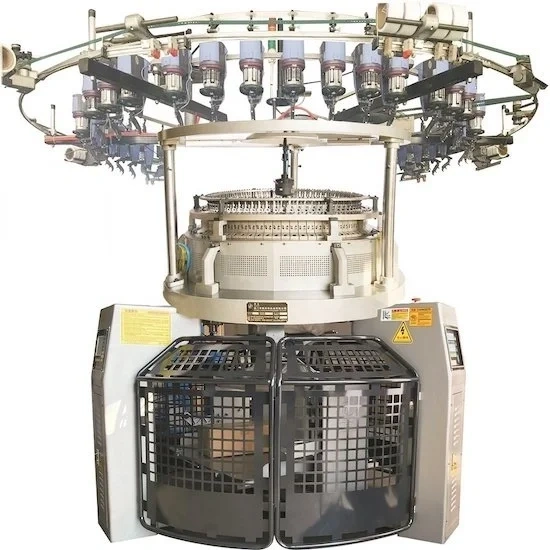
A computerized rib jacquard circular knitting machine is a specialized knitting system designed to produce rib-knit fabrics with integrated jacquard patterns. Unlike traditional knitting machines, which rely on mechanical patterning, these machines use computer-controlled selection systems to manipulate individual needles or needle groups, allowing for highly detailed and programmable designs.
The "rib" structure refers to a fabric formed by alternating knit and purl stitches, typically produced using two needle beds arranged at right angles. This structure provides excellent elasticity and recovery, making it ideal for cuffs, collars, waistbands, and stretchable garments. The “jacquard” capability allows for the creation of complex patterns, logos, and textures directly within the fabric, eliminating the need for additional processing such as printing or embroidery.
By integrating computerized control systems, manufacturers can easily modify patterns, adjust machine parameters, and optimize production processes, significantly enhancing flexibility and efficiency.
The operation of a computerized rib jacquard circular knitting machine is based on synchronized mechanical motion and digital control. At its core, the machine consists of a rotating cylinder and dial, each equipped with needles that interlock yarns to form fabric loops.
The knitting process begins with yarn feeding through precision feeders, which ensure consistent tension and supply. The computerized control system then activates needle selection mechanisms, such as electronic jacquard actuators or piezoelectric selectors, to determine which needles will knit, tuck, or miss during each cycle. This selective operation enables the formation of intricate jacquard patterns within the rib structure.
The rib configuration is achieved by coordinating the movement of cylinder and dial needles, producing alternating knit and purl stitches. The fabric is continuously drawn downward by a take-down system, while the machine maintains uniform loop formation and pattern accuracy.
Modern machines incorporate advanced sensors and monitoring systems to detect yarn breakage, needle faults, and tension variations, ensuring stable operation and minimizing downtime.
Computerized rib jacquard circular knitting machines are composed of several critical components that work together to ensure precision and reliability:
The cylinder and dial house the needles responsible for forming rib structures. Their precise alignment and synchronization are essential for producing consistent fabric quality.
This system is the core of jacquard functionality. Electronic selectors control individual needles based on programmed patterns, enabling high-resolution designs and complex textures.
Advanced yarn feeders regulate yarn tension and delivery, ensuring uniform loop formation and preventing defects. Multiple feeders allow for the use of different yarn types and colors.
The computerized interface allows operators to input patterns, adjust machine settings, and monitor production in real time. Many systems support CAD integration for seamless design transfer.
This component controls fabric tension and winding, ensuring smooth output and preventing distortion of the knitted structure.
Automated lubrication systems reduce wear and extend machine lifespan, while modular designs simplify maintenance and part replacement.
The adoption of computerized rib jacquard circular knitting machines offers numerous advantages over conventional knitting equipment:
With digital control, manufacturers can produce intricate patterns, multi-color designs, and customized textures without changing mechanical components. This flexibility is particularly valuable for fashion brands seeking unique and rapidly changing designs.
Automation reduces manual intervention, allowing for continuous operation at high speeds. Modern machines can achieve significantly higher output compared to traditional systems, improving overall productivity.
Precise needle selection and yarn control ensure consistent loop formation, reducing defects and enhancing fabric uniformity. The result is high-quality textiles with excellent appearance and performance.
Accurate control of yarn usage minimizes waste, contributing to cost savings and sustainability. Integrated monitoring systems further optimize resource utilization.
User-friendly interfaces and programmable settings simplify machine operation, reducing the need for highly specialized skills and enabling faster training of operators.
Computerized rib jacquard circular knitting machines are widely used across various sectors of the textile industry:
These machines are extensively used to produce garments such as sweaters, T-shirts, sportswear, and underwear. Rib jacquard fabrics provide elasticity, comfort, and aesthetic appeal, making them ideal for fashion applications.
The demand for functional and stylish sportswear has increased significantly. Rib jacquard fabrics offer breathability, flexibility, and durability, meeting the requirements of modern activewear.
In addition to apparel, these machines are used to produce decorative fabrics, upholstery materials, and bedding products with intricate patterns and textures.
Advanced knitting machines are also employed in the production of technical textiles, including medical fabrics, automotive materials, and industrial applications where specific performance characteristics are required.
The global market for circular knitting machines is experiencing steady growth, driven by increasing demand for high-quality textiles and the adoption of advanced manufacturing technologies.
Consumers are increasingly seeking personalized products, prompting manufacturers to invest in flexible production systems. Computerized rib jacquard machines enable rapid design changes and small-batch production, aligning with this trend.
The integration of Industry 4.0 technologies, such as IoT and data analytics, is transforming textile manufacturing. Smart knitting machines can collect and analyze production data, enabling predictive maintenance and process optimization.
Environmental concerns are driving the adoption of energy-efficient machines and sustainable production practices. Modern knitting machines are designed to reduce energy consumption and minimize waste, supporting eco-friendly manufacturing.
Developing regions are investing in advanced textile machinery to enhance production capabilities and compete in global markets. This trend is expected to further boost demand for computerized knitting machines.
Despite their advantages, the adoption of computerized rib jacquard circular knitting machines presents certain challenges:
High Initial Investment
Advanced knitting machines require significant capital investment, which may be a barrier for small and medium-sized enterprises.
Technical Complexity
The operation and maintenance of computerized systems require skilled personnel and ongoing training.
Maintenance Requirements
Regular maintenance is essential to ensure optimal performance and prevent downtime. Manufacturers must establish effective maintenance programs and access to spare parts.
Proper maintenance is essential to ensure stable performance, high fabric quality, and long service life of computerized rib jacquard circular knitting machines. A well-maintained machine not only reduces downtime but also improves productivity and minimizes costly repairs.
First, daily cleaning is critical. Operators should remove lint, dust, and yarn residues from the needle bed, feeders, and sinker area after each production shift. Accumulated debris can affect needle movement and cause fabric defects.
Second, regular lubrication must be strictly followed. Key moving parts such as cams, needles, and bearings require high-quality textile machine oil to reduce friction and prevent wear. Automatic lubrication systems should be checked frequently to ensure proper oil distribution.
Third, needle and sinker inspection is necessary. Worn, bent, or damaged needles should be replaced immediately to avoid pattern distortion or fabric holes. Preventive replacement schedules are recommended for high-volume production environments.
Fourth, yarn feeding system maintenance is essential. Tension devices, yarn guides, and feeders should be calibrated regularly to maintain consistent yarn flow and avoid breakage or uneven fabric structure.
Fifth, electronic system checks should be performed periodically. Control panels, sensors, and jacquard selection systems must be kept free from dust and moisture. Software updates should be installed to ensure optimal machine performance and pattern accuracy.
Finally, professional inspection and servicing should be scheduled at least twice a year. Trained technicians can detect hidden mechanical issues early and extend machine lifespan significantly.
By following these maintenance practices, manufacturers can ensure stable operation, reduce downtime, and maintain consistent high-quality fabric production.
The future of computerized rib jacquard circular knitting machines is promising, with ongoing advancements expected to further enhance their capabilities:
- Higher knitting speeds and improved efficiency through advanced mechanical design.
- Enhanced automation with artificial intelligence for process optimization and quality control.
- Greater integration with digital design tools and cloud-based systems for remote monitoring and management.
- Sustainable innovations, including energy-saving technologies and recyclable materials.
As the textile industry continues to evolve, these machines will play a crucial role in enabling manufacturers to meet the demands of a dynamic and competitive market.
Computerized rib jacquard circular knitting machines represent a significant advancement in textile manufacturing technology. By combining precision engineering with digital control, they offer unparalleled flexibility, efficiency, and quality in fabric production.
From apparel and sportswear to technical textiles, these machines are transforming the way fabrics are designed and manufactured. While challenges such as high investment and technical complexity remain, the benefits far outweigh the limitations, making them an essential component of modern textile production.
As innovation continues to drive the industry forward, computerized rib jacquard circular knitting machines will remain at the forefront, shaping the future of textile manufacturing and enabling new possibilities in fabric design and performance.