Three-Thread Fleece Knitting Machine: Enhancing Performance and Versatility in Modern Textile Production
In today's highly competitive textile industry, manufacturers continuously seek advanced technologies that can deliver superior fabric quality, production efficiency, and versatility. Among these innovations, the three-thread fleece knitting machine has emerged as a critical solution for producing high-performance fleece fabrics widely used in apparel, home textiles, and industrial applications.
Fleece fabrics are valued for their softness, warmth, and lightweight characteristics, making them a preferred choice for garments such as hoodies, sweatshirts, jackets, and blankets. The ability to mass-produce such fabrics while maintaining consistent quality is largely dependent on the efficiency and precision of the knitting equipment. The three-thread fleece knitting machine addresses these requirements through a specialized knitting structure that integrates three different yarns into a single, cohesive fabric.
This article explores the structure, working principles, fabric characteristics, technological advancements, operational benefits, and broader industry significance of three-thread fleece knitting machines, providing a comprehensive overview for textile professionals and manufacturers.
A three-thread fleece knitting machine is a specialized circular knitting machine designed to produce fleece fabric using three distinct yarn systems. Unlike conventional knitting machines that rely on one or two yarns, this machine integrates loop yarn, ground yarn, and tie yarn to create a multi-layered textile structure.
The machine is engineered to perform complex knitting operations in a single process, ensuring that the resulting fabric achieves the desired balance of softness, insulation, and durability. Its ability to control loop formation and yarn binding with high precision makes it particularly suitable for producing fleece fabrics with consistent pile height and texture.
These machines are commonly used in large-scale textile manufacturing facilities due to their high productivity, adaptability, and ability to meet diverse market demands.
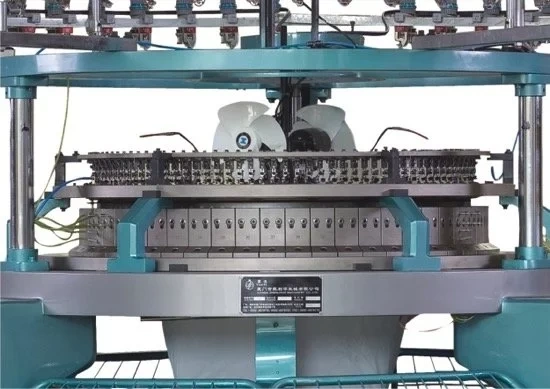
The defining feature of this machine lies in its three-thread system, where each yarn contributes to the overall performance and structure of the fabric.
The loop yarn forms the outer surface loops that are later processed to create the fleece texture. This yarn is typically softer and finer, as it directly influences the tactile properties of the fabric. After knitting, the loops are brushed or sheared to produce a raised, fluffy surface.
The density and uniformity of the loop yarn determine the visual appeal and comfort level of the finished fleece fabric. High-quality loop yarn results in a smoother and more luxurious texture.
The ground yarn acts as the backbone of the fabric, forming the base structure that supports the loops. It provides strength, dimensional stability, and resistance to deformation. This yarn must be strong enough to withstand mechanical stress during both production and end-use.
In many applications, the ground yarn is selected for its durability and ability to maintain fabric integrity after repeated washing and wearing.
The tie yarn plays a crucial role in binding the loop yarn to the ground structure. It ensures that the loops remain securely attached, preventing shedding and maintaining the fabric's long-term performance.
Without the tie yarn, the loop structure would be unstable, leading to reduced durability and compromised fabric quality. Its proper integration is essential for achieving a balanced and reliable fleece material.
The operation of a three-thread fleece knitting machine involves a complex yet highly coordinated process. The machine uses multiple components, including needles, sinkers, and yarn feeders, to interlock the three yarns into a cohesive fabric structure.
During the knitting cycle:
- The ground yarn is fed into the needles to create the base loops.
- The loop yarn is introduced to form extended loops on one side of the fabric.
- The tie yarn interlocks with both the ground and loop yarns, securing the loops in place.
This process occurs simultaneously and continuously, requiring precise synchronization of machine components. Modern machines are equipped with advanced control systems that regulate stitch length, yarn tension, and loop formation in real time.
The result is a uniform fabric with a consistent structure, ready for subsequent finishing processes.
After the knitting process, the fabric undergoes finishing treatments to achieve its characteristic fleece texture. These processes are essential for enhancing both the appearance and performance of the material.
Brushing involves passing the fabric over rotating rollers covered with fine wires or bristles. This action raises the loop yarn fibers, creating a soft and voluminous surface.
The intensity of brushing can be adjusted to achieve different levels of softness and thickness, depending on the intended application.
Following brushing, the fabric is sheared to trim the raised fibers to a uniform height. This step improves the fabric's appearance, consistency, and overall quality.
Shearing also helps reduce pilling and ensures a cleaner surface finish, making the fabric more suitable for high-end applications.
The unique construction of three-thread fleece fabric results in a combination of desirable properties that make it widely used across industries.
The brushed loop surface provides a plush and comfortable feel, making fleece fabrics ideal for garments worn close to the skin.
The raised fibers trap air within the fabric, creating an insulating layer that helps retain body heat. This makes fleece particularly suitable for cold-weather clothing.
Despite its insulating properties, fleece fabric allows air circulation, preventing overheating and ensuring wearer comfort.
The integration of ground and tie yarns enhances the fabric's structural integrity, enabling it to withstand repeated use and washing without significant degradation.
Fleece fabrics offer warmth without excessive weight, providing a balance between comfort and functionality.
The versatility of three-thread fleece fabrics has led to their widespread use in various sectors.
Fleece is extensively used in casual wear, sportswear, and outdoor clothing. Products include hoodies, sweatshirts, jogging suits, thermal layers, and jackets. Its combination of comfort and performance makes it a preferred material for both everyday wear and athletic apparel.
Fleece fabrics are commonly used in blankets, throws, bed linens, and cushions. Their softness and warmth enhance comfort in residential settings.
Outdoor enthusiasts rely on fleece garments for insulation and mobility. The fabric's lightweight and breathable nature makes it ideal for activities such as hiking, camping, and skiing.
In cold working environments, fleece-lined garments provide additional insulation, improving worker comfort and productivity.
Modern three-thread fleece knitting machines have evolved significantly, incorporating advanced technologies that improve efficiency, precision, and sustainability.
Computerized Control Systems
Digital control panels allow operators to monitor and adjust machine parameters with high accuracy. This ensures consistent fabric quality and reduces the likelihood of defects.
High-Speed Production Capability
Enhanced mechanical designs and optimized yarn feeding systems enable faster production rates without compromising fabric integrity.
Automation and Smart Monitoring
Integration with automated systems allows for real-time performance tracking, predictive maintenance, and reduced manual intervention.
Energy Efficiency
New-generation machines are designed to consume less energy, contributing to lower operational costs and reduced environmental impact.
The choice of yarn plays a critical role in determining the final properties of fleece fabric. Common materials include:
- Cotton: Offers natural softness, breathability, and comfort.
- Polyester: Provides durability, moisture resistance, and quick-drying properties.
- Blended Fibers: Combine the advantages of different materials to achieve balanced performance.
Manufacturers often customize yarn combinations to meet specific product requirements, such as enhanced warmth, stretchability, or moisture management.
The adoption of three-thread fleece knitting machines provides several key benefits for textile producers:
High Production Efficiency
These machines are capable of producing large volumes of fabric in a relatively short time, improving overall productivity.
Consistent Quality Output
Advanced control systems ensure uniform fabric structure, minimizing defects and reducing waste.
Flexibility in Fabric Design
Manufacturers can adjust machine settings to produce different fleece textures, densities, and thicknesses, catering to diverse market needs.
Cost Optimization
Efficient material utilization and reduced downtime contribute to lower production costs and improved profitability.
To ensure optimal performance and longevity, proper maintenance of three-thread fleece knitting machines is essential.
Components such as needles, sinkers, and yarn feeders should be inspected frequently to detect wear and prevent defects.
Proper lubrication of moving parts reduces friction and extends the lifespan of the machine.
Accumulated fibers and dust should be removed regularly to maintain smooth operation and prevent contamination.
Skilled operators are crucial for managing machine settings, troubleshooting issues, and maintaining consistent production quality.
While three-thread fleece knitting machines offer numerous advantages, manufacturers must also address certain challenges:
Capital Investment
The initial cost of acquiring advanced knitting machines can be substantial, particularly for small and medium-sized enterprises.
Technical Complexity
Operating and maintaining these machines requires specialized knowledge and training.
Quality Control
Maintaining consistent yarn quality and machine settings is essential to ensure uniform fabric output.
Sustainability has become a key focus in textile manufacturing, and fleece production is no exception. Manufacturers are increasingly adopting eco-friendly practices, including:
- Using recycled polyester fibers to reduce environmental impact.
- Implementing energy-efficient machinery to lower carbon emissions.
- Reducing water and chemical usage in finishing processes.
- Recycling production waste to minimize resource consumption.
These efforts contribute to a more sustainable and responsible textile industry.
The three-thread fleece knitting machine represents a vital advancement in textile manufacturing technology, enabling the efficient production of high-quality fleece fabrics with superior softness, insulation, and durability. Its innovative three-yarn system, combined with modern automation and precision engineering, allows manufacturers to meet the growing demand for comfortable and functional textiles across various industries.
By leveraging this technology and adhering to best practices in operation and maintenance, textile producers can achieve enhanced productivity, consistent quality, and long-term competitiveness in the global market.
