Rib and Interlock Knitting Machines: Core Technology for High-Quality Knitted Fabrics
Jan 05, 2026
In today’s highly competitive textile and apparel industry, manufacturers are under constant pressure to deliver fabrics that combine comfort, durability, flexibility, and visual appeal. Knitted fabrics, particularly rib and interlock structures, have become essential materials for modern garments due to their superior elasticity and dimensional stability. Behind these fabrics are rib and interlock knitting machines, which play a critical role in ensuring consistent quality and efficient production.
As fashion trends shift toward comfort-oriented clothing such as sportswear, athleisure, underwear, and casual apparel, demand for rib and interlock fabrics continues to rise. At the same time, technological advancements in knitting machinery have enabled higher speeds, better fabric consistency, and improved energy efficiency. This article provides a comprehensive overview of rib and interlock knitting machines, covering their principles, applications, technical features, market trends, and future development.
Rib knitting is a form of double knitting created by alternating knit and purl stitches in vertical columns. Common structures include 1×1 rib, 2×2 rib, and other variations. Rib fabrics are highly elastic, especially in the width direction, and can easily return to their original shape after stretching.
Key characteristics of rib fabrics include:
- Excellent stretch and recovery
- Good body fit and comfort
- Resistance to curling at edges
- Balanced appearance on both fabric sides
These properties make rib fabrics ideal for functional garment components such as cuffs, collars, neckbands, waistbands, and form-fitting apparel.
Interlock knitting is another double-knit structure, produced using two sets of needles working in a precise interlocking arrangement. Unlike rib fabrics, interlock fabrics appear identical on both sides and have a tighter, more compact construction.
Interlock fabrics are known for:
- Superior dimensional stability
- Smooth and even surface
- Increased thickness and durability
- Reduced deformation after washing
Because of these features, interlock fabrics are widely used in high-quality T-shirts, sportswear, underwear, baby clothing, and technical textile applications.
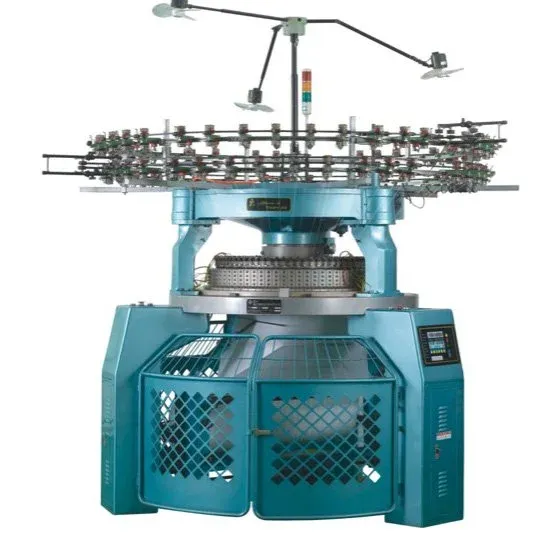
Rib and interlock knitting machines are typically circular knitting machines equipped with a cylinder and a dial. Both components are fitted with needles that operate in a coordinated manner to form complex double-knit structures.
Cylinder needles move vertically to create knit loops.
Dial needles move horizontally and interlock with cylinder needles.
Cam systems control needle movement and loop formation.
By adjusting cam tracks, needle timing, and yarn feeding, operators can produce various rib or interlock patterns. Modern machines allow quick switching between fabric structures, enhancing production flexibility.
Although rib and interlock machines share similar mechanical layouts, they differ in fabric output and operational settings.
Aspect | Rib Knitting Machine | Interlock Knitting Machine |
Fabric Elasticity | Very high | Moderate |
Fabric Thickness | Medium | Higher |
Fabric Surface | Different front and back | Same on both sides |
Primary Use | Cuffs, collars, waistbands | T-shirts, underwear, sportswear |
Stability | Moderate | Excellent |
Many modern machines are designed as rib–interlock convertible machines, allowing manufacturers to respond quickly to changing market demands.
Rib and interlock knitting machines are widely used in apparel manufacturing. Rib fabrics provide elasticity and shape retention for garment edges, while interlock fabrics offer comfort and durability for main body panels.
Typical applications include:
- Casual wear
- Fashion knitwear
- Children’s clothing
- Loungewear and sleepwear
The global growth of sportswear and athleisure has significantly increased demand for rib and interlock fabrics. These fabrics provide:
- Stretch for unrestricted movement
- Breathability and comfort
- Long-term durability under repeated use
Beyond fashion, rib and interlock fabrics are used in:
- Medical textiles
- Protective clothing
- Automotive interior components
- Industrial and functional textiles
Modern rib and interlock knitting machines are increasingly equipped with computerized control systems. Touchscreen interfaces allow operators to:
- Store and recall fabric programs
- Adjust stitch length and yarn tension
- Monitor machine performance in real time
Advances in materials and mechanical design have enabled higher machine speeds while maintaining stitch accuracy. This results in:
- Increased productivity
- Lower cost per unit
- Consistent fabric quality
Energy-efficient motors, optimized cam designs, and lightweight components help reduce power consumption. Many machines are also compatible with recycled and sustainable yarns, supporting environmentally responsible production.
Rib and interlock knitting machines can process a wide range of yarn types, including:
- Cotton and combed cotton
- Polyester and recycled fibers
- Viscose and modal
- Spandex and elastic blends
- Functional and technical yarns
This versatility allows manufacturers to produce diverse fabric styles, from basic everyday garments to high-performance textiles.
Ensuring consistent fabric quality is a primary concern for textile manufacturers, particularly when producing rib and interlock fabrics that demand precision and uniformity. Modern rib and interlock knitting machines are designed with advanced quality control systems that monitor every stage of the knitting process to minimize defects and maintain production standards.
One of the key features is yarn break detection, which immediately alerts operators or stops the machine when a yarn breaks, preventing fabric flaws and material wastage. Needle damage monitoring is another critical function; damaged or bent needles can result in dropped stitches, uneven patterns, or holes, and early detection ensures timely replacement without compromising production. Many machines also include automatic stop systems, which halt operations when abnormalities such as tension irregularities, yarn jams, or mechanical failures are detected, protecting both the machine and the fabric.
Precise tension control is equally important, as consistent yarn tension directly affects stitch uniformity, fabric density, and dimensional stability. By maintaining optimal tension, machines produce smooth, even fabrics with reliable elasticity and minimal variation.
Together, these integrated quality control features allow manufacturers to achieve high production consistency, reduce waste, and maintain superior fabric standards over long production runs, ensuring efficiency, cost-effectiveness, and customer satisfaction.
Effective maintenance is a critical factor in ensuring the long-term performance, reliability, and productivity of rib and interlock knitting machines. Although modern machines are designed for high-speed and precision operation, continuous production and mechanical movement make regular maintenance essential to prevent premature wear and unexpected downtime.
Routine cleaning and lubrication help remove lint, dust, and yarn residues that can accumulate around needles, sinkers, and cam systems. Proper lubrication reduces friction between moving parts, ensuring smooth operation and minimizing mechanical stress. In addition, regular inspection and timely replacement of needles and sinkers are vital, as worn or damaged components can lead to dropped stitches, fabric defects, and reduced machine efficiency.
Operators should also closely monitor cam wear and alignment, since even minor deviations can affect stitch formation and fabric consistency. Periodic adjustment and replacement of worn cams help maintain stable knitting conditions. Furthermore, calibration of electronic control components—including sensors, actuators, and control panels—ensures accurate needle selection, yarn feeding, and pattern execution.
A well-maintained knitting machine operates more smoothly and consistently, significantly reducing unplanned stoppages. This not only improves fabric quality and production efficiency but also lowers long-term maintenance costs, helping manufacturers achieve reliable output and higher overall operational efficiency.
The demand for rib and interlock knitting machines continues to grow due to:
Increasing preference for comfortable clothing
Expansion of global apparel production
Rising demand for high-quality knitted fabrics
Manufacturers are investing in advanced machines to stay competitive, improve efficiency, and meet evolving customer expectations.
Looking ahead, the development of rib and interlock knitting machines will focus on:
Greater automation and smart manufacturing integration
Advanced digital monitoring and predictive maintenance
Higher speeds with reduced energy consumption
Improved adaptability for small-batch and customized production
These innovations will help textile manufacturers respond more quickly to market changes while maintaining high standards of quality and sustainability.
Rib and interlock knitting machines are fundamental to modern textile manufacturing, enabling the production of high-quality, elastic, and durable knitted fabrics. Their ability to meet diverse application needs—from fashion apparel to technical textiles—makes them indispensable equipment for knitting factories worldwide.
With continuous technological advancements and growing market demand, rib and interlock knitting machines will remain a key driver of efficiency, innovation, and quality in the textile industry.
Previous: Computer Control Jacquard Circular Knitting Machine Drives Precision Textile Manufacturing

We have been committed to manufacturing all types of circular knitting machines with great quality and reasonable price for a long time. Our professional team is highly specialized and problem-solving oriented. We put the most effort into meeting your knitting demands, achieving a win-win situation.