Circular Knitting Machines vs. Flat Knitting Machines: Understanding Their Roles in Modern Textile Manufacturing
Nov 25, 2025
In the textile industry, efficiency, versatility, and product quality are key drivers of success. Among the most influential machinery are circular knitting machines and flat knitting machines, each with distinct capabilities, advantages, and applications. While circular knitting machines are renowned for their ability to produce seamless tubular fabrics at high speed, flat knitting machines are celebrated for their flexibility, pattern versatility, and custom design capabilities.
For textile manufacturers, designers, and industry professionals, understanding the differences between these machines is crucial to optimize production, reduce costs, and meet diverse consumer needs. This article explores the operational principles, advantages, limitations, applications, and recent innovations in circular and flat knitting technology, providing an in-depth comparative analysis for informed decision-making.
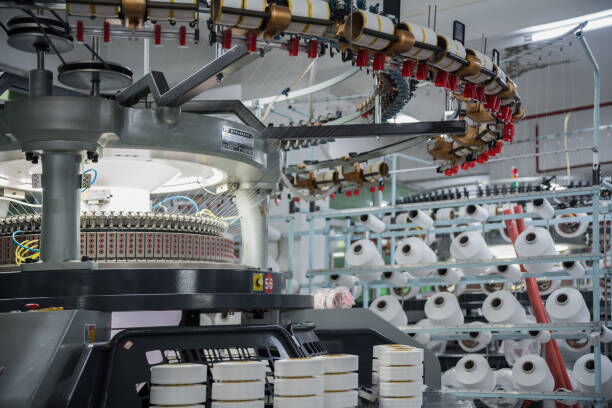
Circular knitting machines have a rich history that dates back to the 16th century, initially used for producing simple hosiery. Over time, they evolved into sophisticated, high-speed machines capable of producing complex tubular fabrics. Early mechanical models have now been replaced with computerized high-speed circular knitting machines, enabling textile manufacturers to achieve higher productivity, better fabric quality, and reduced labor costs.
Circular knitting machines operate on the principle of continuous circular motion. A cylindrical needle bed—referred to as the knitting head—houses multiple needles arranged in a circle. Yarn is fed into the machine through sinkers and yarn guides, and the rotation of the cylinder continuously forms loops to produce a seamless tubular fabric.
The continuous loop design allows for the creation of garments and fabrics without seams, which reduces labor costs and enhances comfort and elasticity. Circular machines can also be equipped with additional features, such as electronic stitch control and automated yarn feeders, further improving efficiency and fabric quality.
Circular knitting machines are widely applied across various textile sectors:
Apparel Industry: T-shirts, sportswear, leggings, and other garments are efficiently produced using circular machines due to their ability to knit elastic fabrics seamlessly.
Socks and Hosiery: The seamless tube design is ideal for socks, tights, and other hosiery items, minimizing manual stitching and improving consistency.
Elastic and Functional Fabrics: Circular machines are used to produce fabrics with specific functional properties, including compression garments, swimwear, and activewear.
Industrial Textiles: Specialized circular machines can produce technical fabrics for automotive interiors, industrial filters, and other non-apparel applications.
Circular knitting machines provide several benefits that make them indispensable in high-volume textile production:
High-Speed Production: Continuous knitting enables rapid output, suitable for large-scale manufacturing.
Seamless Fabric: Eliminating seams enhances comfort, flexibility, and garment appearance.
Uniform Design Patterns: Circular motion facilitates consistent, overall patterns ideal for large fabric runs.
Reduced Manual Labor: Automation reduces dependence on manual stitching and assembly.
Despite their efficiency, circular knitting machines have certain constraints:
Limited Pattern Complexity: They are less suitable for highly intricate designs or multi-dimensional patterns.
Higher Yarn Consumption: Continuous tubular knitting can consume more yarn, potentially increasing material costs.
Less Design Flexibility: Circular machines are mainly suited for tubular garments, limiting customization options for flat or irregular-shaped fabrics.
Flat knitting machines emerged later than circular machines and have played a crucial role in producing custom, patterned, and flat fabrics. These machines have evolved significantly, moving from purely mechanical systems to computer-controlled, fully automated models, allowing precise stitch control, detailed patterns, and complex garment construction.
Flat knitting machines are widely used in fashion, home textiles, and technical fabrics, where intricate patterns, customization, and yarn efficiency are paramount. They are particularly essential in producing designer garments, scarves, sweaters, and home décor fabrics that require precise stitch placement and color variation.
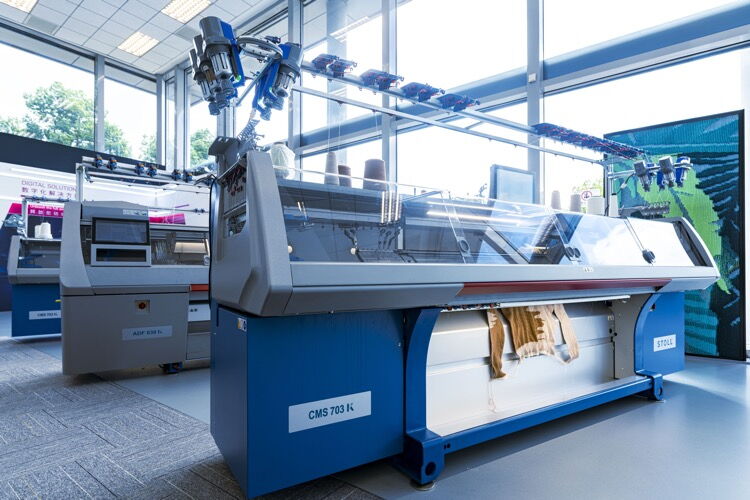
Flat knitting machines create fabric by moving needles horizontally and vertically across a flat needle bed. Each needle is guided by cams or computer-controlled systems to form individual stitches. Yarn is fed through yarn guides to maintain consistency and tension, allowing for the creation of flat panels with complex stitch patterns.
Key components include:
Needle Bed: The base of the machine with grooves to guide the knitting needles.
Carriage: Moves horizontally to manipulate needles for stitch formation.
Yarn Guide: Precisely feeds yarn to the needles for consistent knitting.
Control System: Modern flat machines often integrate computer-assisted design (CAD) software, enabling intricate patterns, variable stitch structures, and automated color changes.
Flat knitting machines are highly versatile, serving various sectors:
Fashion Industry: Sweaters, shawls, scarves, and dresses benefit from intricate patterns and customizable stitch designs.
Home Textiles: Blankets, upholstery fabrics, and decorative items are commonly produced with flat machines due to their ability to incorporate detailed motifs.
Technical and Industrial Fabrics: Flat knitting machines produce textiles for automotive interiors, medical fabrics, and functional textiles requiring precision and performance characteristics.
Custom Garments: Flat machines allow for the creation of custom-fit garments, including seamless construction and three-dimensional shaping.
Flat knitting machines provide several advantages that make them indispensable in design-focused textile production:
Design Flexibility: Capable of producing intricate patterns, multi-dimensional stitch designs, and color variations.
Efficient Yarn Usage: Optimized yarn consumption reduces material waste and production costs.
Customization: Ideal for producing garments and fabrics tailored to specific design requirements.
User-Friendly Operation: Many modern machines are automated and computer-controlled, enabling skilled and less-experienced operators to produce complex fabrics.
Versatility Across Applications: Suitable for apparel, home décor, and technical textiles.
Despite their flexibility, flat knitting machines also have constraints:
Limited Fabric Width: Working width is restricted by the size of the needle bed, making large-scale panels more challenging.
Slower Production Rates: Compared to circular machines, flat knitting is more time-intensive, particularly for large fabric pieces.
Labor-Intensive for Large Panels: Producing wide fabrics may require additional operational oversight, increasing production time.
Feature | Circular Knitting Machines | Flat Knitting Machines |
Fabric Type | Seamless tubular | Flat, customizable |
Production Speed | High | Moderate to low |
Pattern Complexity | Simple, overall designs | Intricate, detailed patterns |
Yarn Efficiency | Moderate | High |
Applications | Socks, hosiery, T-shirts, activewear | Sweaters, scarves, home textiles, technical fabrics |
Flexibility | Limited | High |
Automation & Control | Moderate, can include basic computerization | High, advanced CAD integration available |
This table illustrates the distinct advantages and limitations of each machine type, highlighting that the choice depends on end-use requirements, production volume, design complexity, and material efficiency.
Both circular and flat knitting machines have benefited from technological advancements in automation, digital design, and sustainable manufacturing practices.
Modern flat knitting machines integrate computer-assisted design (CAD) and computerized stitch control, enabling manufacturers to create intricate patterns, color variations, and multi-dimensional designs with minimal human intervention. Circular knitting machines have also adopted electronic controls to improve speed, accuracy, and overall fabric quality.
The emergence of hybrid knitting machines combines the benefits of circular and flat knitting, allowing manufacturers to produce tubular and flat fabrics on the same platform. This innovation enhances flexibility, reduces investment in multiple machine types, and streamlines production for diversified product lines.
Sustainability has become a major focus in textile manufacturing. Both circular and flat machines are now designed to:
Optimize yarn usage and reduce waste.
Operate with energy-efficient motors and mechanisms.
Enable recycled and eco-friendly yarn integration without compromising fabric quality.
Smart factories are increasingly incorporating knitting machines into Industry 4.0 frameworks, connecting them with digital monitoring systems, automated supply chains, and predictive maintenance tools. This integration ensures maximum uptime, quality control, and real-time production optimization.
A leading sportswear manufacturer utilizes high-speed circular knitting machines to produce millions of seamless T-shirts and leggings annually. The ability to knit elastic fabrics continuously allows the company to maintain consistent quality while reducing labor costs.
A luxury knitwear brand uses advanced flat knitting machines to produce limited-edition sweaters with intricate colorwork patterns. Computer-assisted design enables precise stitch placement and complex motifs, giving the garments a premium and unique aesthetic.
An industrial textile manufacturer integrated hybrid knitting machines to simultaneously produce tubular and flat technical fabrics. This investment allowed the company to expand its product range without purchasing additional equipment, reducing capital expenditure while increasing production flexibility.
Circular and flat knitting machines each occupy a crucial position in modern textile production. Circular machines excel in high-volume, seamless, and tubular fabric manufacturing, making them ideal for bulk apparel, hosiery, and elastic textiles. Flat knitting machines, in contrast, shine in versatility, customization, and intricate design capability, producing high-quality garments, home textiles, and technical fabrics with precise patterns and minimal waste.
The choice between circular and flat knitting depends on production volume, design requirements, material efficiency, and end-product specifications. With ongoing innovations, including computerized controls, hybrid solutions, and sustainability-focused technologies, both machine types continue to evolve, ensuring that the textile industry can meet growing demands for quality, efficiency, and creativity.
In conclusion, mastering the selection and application of circular and flat knitting machines allows textile manufacturers to maximize productivity, minimize costs, and deliver high-quality, diverse products to the global market. As digital integration and automation expand, the future of knitting technology promises even greater efficiency, design versatility, and sustainable manufacturing practices.
Next: Double Rib Circular Knitting Machine Sees Strong Demand in Turkey
Previous: How Modern Circular Knitting Machines Transform Polar Fleece Manufacturing

We have been committed to manufacturing all types of circular knitting machines with great quality and reasonable price for a long time. Our professional team is highly specialized and problem-solving oriented. We put the most effort into meeting your knitting demands, achieving a win-win situation.