Understanding the Key Features of Single Jersey Knitting Machines
Dec 17, 2025
The single jersey circular knitting machine is one of the most fundamental and widely used machines in the global textile industry. Known for its versatility, efficiency, and high productivity, this type of knitting machine plays a crucial role in producing lightweight, comfortable, and stretchable fabrics that dominate everyday apparel markets. From basic T-shirts and vests to sportswear, underwear, and casual fashion, single jersey fabrics are an essential part of modern clothing.
At its core, a single jersey knitting machine uses a single set of needles arranged vertically in a circular cylinder to form loops in one direction. This structure creates a fabric with a smooth face and a slightly textured back, offering one-way stretch and excellent drape. Due to its relatively simple structure and high output, the single jersey circular knitting machine has become the backbone of mass garment production worldwide.
As consumer demand shifts toward comfort, functionality, and cost-effective fashion, manufacturers increasingly rely on single jersey machines to deliver consistent quality at scale. This article provides an in-depth overview of single jersey circular knitting machines, their technical characteristics, design principles, fabric applications, and their growing importance in modern textile manufacturing.
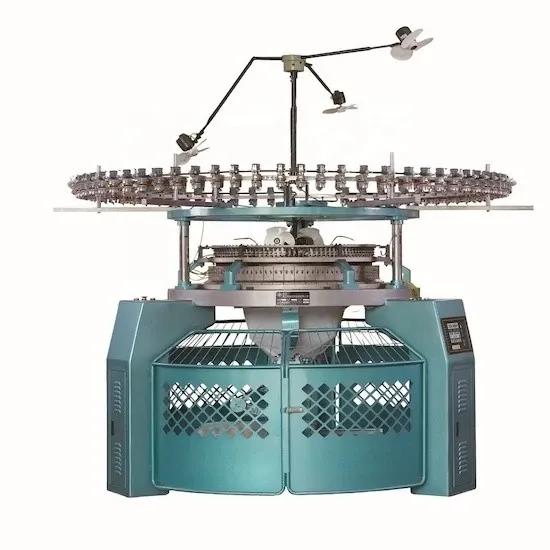
Single jersey circular knitting machines belong to the weft knitting category, where yarn is fed horizontally to form interlocking loops. Unlike double jersey machines, which use two needle beds, single jersey machines operate with only one needle cylinder. This single-cylinder configuration allows for simpler mechanical design, faster speeds, and easier maintenance.
The needles are mounted vertically around the circumference of the cylinder, and yarn is continuously fed as the cylinder rotates. Through the coordinated movement of needles and cam systems (also known as triangles), loops are formed to create a continuous tubular fabric. This fabric can later be cut and processed into various garment pieces.
Because of their efficiency and adaptability, single jersey circular knitting machines are widely used across knitting factories of all sizes, from small workshops to large-scale industrial operations.
Single jersey fabric is the most basic knit structure and serves as the foundation for countless textile products. Its defining characteristics include:
A smooth, flat surface on the front side
A looped or textured appearance on the back side
Lightweight and breathable properties
One-directional stretch, primarily in the width
Good drape and comfort against the skin
These features make single jersey fabric ideal for garments that prioritize comfort, flexibility, and wearability.
Common applications include:
T-shirts and polo shirts
Vests and tank tops
Casual dresses and blouses
Sportswear and activewear
Underwear and sleepwear
Children’s clothing
Inner linings and lightweight fashion fabrics
Due to its adaptability, single jersey fabric can be produced using a wide range of yarns, including cotton, polyester, viscose, modal, spandex blends, and functional fibers.
Ordinary single jersey circular knitting machines typically feature a high number of knitting feeds, often ranging from three to four times the diameter of the needle cylinder. This is commonly expressed as routes per 25.4 mm.
For example:
A 30-inch single jersey machine may have 90 to 120 feeds
A 34-inch single jersey machine may have 102 to 126 feeds
The high feed count allows for faster yarn delivery and increased fabric output, making these machines highly productive. In some regions, especially in China, these machines are often referred to as multi-triangle knitting machines.
Single jersey circular knitting machines can be classified based on the number of needle tracks, which determine fabric complexity and pattern capability. Common configurations include:
Single needle track (one-track)
Two needle tracks (two-track)
Three needle tracks (three-track)
Four needle tracks
Six needle tracks
Among these, four-track single jersey machines are widely used in modern knitting enterprises. These machines utilize a sophisticated arrangement of needles and cam systems to produce a wide variety of fabric structures beyond simple plain jersey.
By adjusting cam positions and needle movements, manufacturers can create textured fabrics, tuck patterns, mesh designs, and functional structures while maintaining high production efficiency.
One of the major advantages of single jersey circular knitting machines is their ability to operate at high speeds while maintaining stable performance. Advanced models can achieve impressive rotational speeds, significantly increasing daily fabric output.
This high-speed operation is especially valuable in large-scale garment manufacturing, where meeting tight delivery schedules and reducing unit costs are critical for competitiveness.
Successful fabric production using single jersey machines requires careful balance between aesthetics, functionality, and economics. Product design must follow the principle of “quality and quantity,” ensuring that fabrics are not only visually appealing but also practical, durable, and cost-effective.
From an aesthetic perspective, designers may be tempted to use finer yarns or longer floats to achieve delicate textures or visual effects. However, excessively thin structures or overly long floats can compromise fabric durability and wear resistance.
A well-designed single jersey fabric should maintain structural integrity, resist deformation, and withstand repeated washing and wearing.
From a functional standpoint, overly thick or weighted fabrics may reduce comfort and negatively impact production efficiency. Thicker fabrics consume more raw materials and may increase manufacturing costs without providing proportional benefits.
Designers must consider end-use requirements, such as breathability, elasticity, and softness, to ensure the fabric meets consumer expectations.
Raw material utilization is a critical factor in knitting production. Efficient use of fibers directly affects manufacturing costs and profitability. Designers and engineers must work closely to optimize yarn selection, stitch density, and machine settings to achieve the best balance between cost and performance.
Thorough market research, close collaboration with trade departments, and strong coordination with production teams are essential to ensure that new fabric designs are commercially viable, easy to manufacture, and supported by sufficient raw material supply.
The textile industry is constantly evolving, shaped by changing fashion trends, consumer preferences, and technological innovation. Single jersey circular knitting machines have established themselves as indispensable tools for manufacturers seeking flexibility, speed, and consistent quality.
In today’s fast-moving fashion market, responsiveness is key. Brands increasingly demand shorter lead times, frequent style updates, and smaller batch production. Single jersey machines enable rapid fabric development and short production cycles, allowing manufacturers to adapt quickly to market changes.
This agility is particularly important for fast fashion, sportswear, and seasonal collections, where trends can shift rapidly.
Consistency is a critical requirement in textile production, especially for large garment orders. Single jersey circular knitting machines are designed to deliver uniform stitch formation, stable fabric density, and consistent surface appearance.
Advanced control systems and precision engineering ensure that fabrics meet strict quality standards required by international apparel brands.
Single jersey machines support a wide range of yarns, from natural fibers to synthetic and blended materials. This versatility allows manufacturers to diversify their product offerings and explore functional fabrics, such as moisture-wicking, antibacterial, UV-resistant, or stretch-enhanced textiles.
By adjusting machine settings and yarn combinations, a single machine can produce multiple fabric variations, maximizing equipment utilization.
Modern single jersey circular knitting machines have evolved significantly from traditional mechanical models. Today’s machines integrate advanced technologies that enhance performance, reliability, and ease of operation.
Key advancements include:
Precision cam systems for smoother needle movement
Improved lubrication and wear-resistant components
Electronic yarn feeders for accurate tension control
Digital monitoring systems for speed, output, and fault detection
Energy-efficient motors and optimized power consumption
These innovations not only improve fabric quality but also reduce downtime, maintenance costs, and energy usage.
Sustainability has become a major focus in the textile industry. Single jersey circular knitting machines contribute to sustainability efforts in several ways:
Efficient yarn utilization reduces material waste
High-speed production lowers energy consumption per unit
Compatibility with recycled and eco-friendly fibers
Reduced fabric waste due to precise knitting control
By supporting sustainable manufacturing practices, single jersey machines help textile producers align with environmental regulations and consumer expectations.
Single jersey circular knitting machines are used worldwide, serving diverse markets such as:
Mass-market apparel production
High-quality fashion brands
Sportswear and athleisure manufacturers
Medical and hygiene textiles
Home textiles and linings
Their adaptability makes them suitable for both emerging markets and advanced textile industries.
The single jersey circular knitting machine remains a cornerstone of modern textile manufacturing. Its simple yet efficient design, high productivity, and exceptional versatility make it indispensable for producing a wide range of knitted fabrics used in everyday apparel.
From basic plain jersey to innovative functional fabrics, these machines enable manufacturers to meet evolving market demands while maintaining consistent quality and cost efficiency. By balancing aesthetics, practicality, and economic considerations, single jersey circular knitting machines continue to support innovation and competitiveness in the global textile industry.
As technology advances and sustainability becomes increasingly important, the role of single jersey circular knitting machines will only grow stronger, ensuring their continued relevance in the future of textile production.
Next: Understanding the Operating Principle of Circular Knitting Machines
Previous: High Frame Circular Knitting Machines: Revolutionizing Modern Textile Manufacturing

We have been committed to manufacturing all types of circular knitting machines with great quality and reasonable price for a long time. Our professional team is highly specialized and problem-solving oriented. We put the most effort into meeting your knitting demands, achieving a win-win situation.