Understanding Circular Knitting Machines: Structure, Components, and Advanced Yarn Feeding Mechanisms
Oct 13, 2025
Circular knitting machines are essential in modern textile manufacturing, offering versatility, precision, and efficiency in producing knitted fabrics for apparel, home textiles, and industrial applications. These machines are widely used in the production of t-shirts, activewear, seamless garments, and high-quality knit fabrics. Their ability to integrate multiple systems, such as mechanical, electrical, and auxiliary devices, allows manufacturers to achieve high production output while maintaining consistent quality.
A typical circular knitting machine consists of a machine frame, yarn supply system, transmission system, lubrication and dust removal system, electrical control system, drawing and winding system, and additional auxiliary devices. Each component plays a critical role in the machine’s performance, productivity, and operational safety.
The machine frame serves as the foundational structure of the circular knitting machine. It ensures stability, supports moving components, and houses auxiliary systems. The frame typically includes three legs—commonly referred to as lower feet—and a circular or square tabletop. The lower feet are fixed with forks to secure the machine in place, while the tabletop, known as the large plate, contains three vertical columns called upper feet or straight feet.
Safety and practicality are embedded in the frame’s design. Protective doors, installed between the lower feet, act as safety barriers. These doors automatically stop the machine and trigger a warning on the control panel if opened during operation, significantly reducing the risk of accidents. Additionally, internal cavities in the lower feet can store tools, spare wires, or yarn accessories, helping maintain a clean workspace and preventing clutter around moving parts. This thoughtful design not only enhances operational safety but also improves maintenance efficiency.
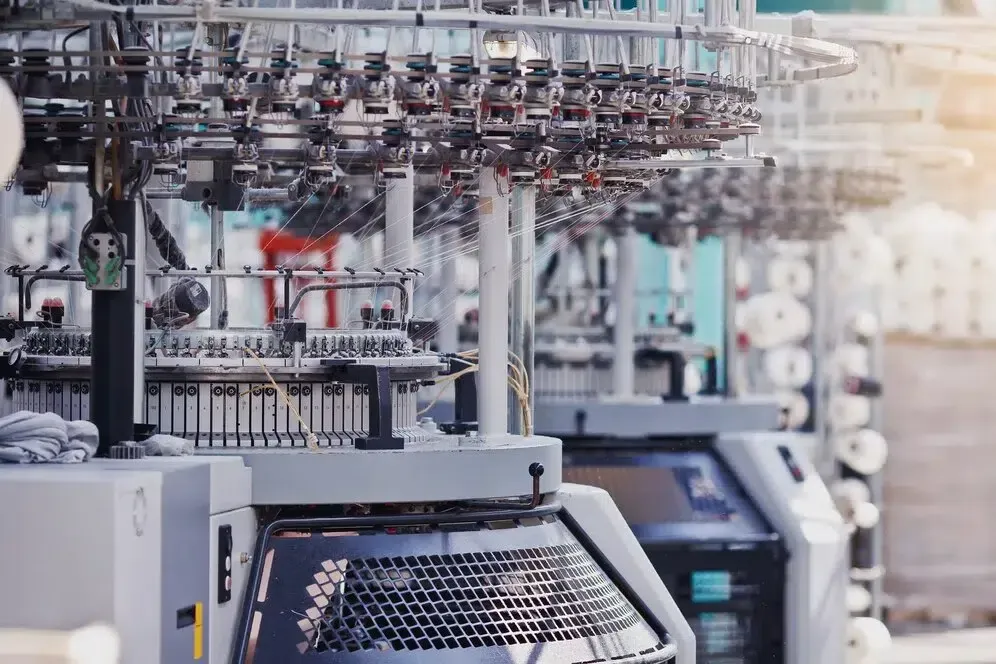
The yarn supply system, also referred to as the yarn feeding mechanism, is one of the most critical aspects of a circular knitting machine. It guarantees continuous yarn delivery to the knitting needles, regulates tension, and supports various fabric types. The yarn supply system consists of multiple components, including:
Yarn racks
Yarn accumulators
Yarn feeder nozzles
Yarn feeding discs
Yarn ring holders
Other auxiliary devices such as sand tables and yarn supports
Yarn racks are storage and distribution units for the yarn. They come in two main configurations:
Umbrella tube rack (top tube rack): Compact and space-saving, this rack is suitable for smaller workshops. However, it offers limited capacity for spare yarn, which may restrict continuous operation in high-volume settings.
Floor tube racks: These include triangular tube racks and wall-mounted tube racks (also called two-piece tube racks). Triangular racks are portable and allow operators to thread yarn conveniently, which is especially beneficial in production lines requiring frequent yarn changes. Wall-mounted racks, on the other hand, provide a clean, organized look but require more floor space, making them ideal for large-scale factories focused on workflow efficiency and aesthetic arrangement.
Yarn accumulators play a critical role in controlling tension during knitting, ensuring uniform stitch formation, and preventing yarn breakage. Accumulators can be classified as:
Standard yarn accumulators for general fabrics
Elastic accumulators for spandex and stretch fiber blends
Electronic gap accumulators, typically used in large jacquard circular machines for precise tension management
Different yarn feeding methods are employed depending on the fabric and production requirements:
Positive feeding: The yarn is wrapped around the accumulator 10–20 times, ensuring high tension and precise control.
Semi-negative feeding: The yarn is wrapped 1–2 times, suitable for fabrics requiring moderate tension.
Negative feeding: The yarn bypasses the accumulator completely, relying on natural feed, typically used in lightweight or specialized fabrics.
The yarn feeder nozzle, also known as the steel shuttle or yarn guide, directs yarn from the storage device to the knitting needles. The design and shape of the nozzle vary to accommodate different yarn types and production requirements. Common configurations include single-hole yarn feeders and double-hole single-slot yarn feeders, each providing varying levels of precision and feed speed.
Additional components, such as the sand table, assist in controlling yarn delivery, while yarn supports stabilize large yarn rings, preventing tangling and ensuring smooth feeding during high-speed knitting.
The transmission system is a vital component that converts the machine’s motor output into coordinated motion for knitting needles and other moving parts. It typically includes gears, shafts, pulleys, and belts, designed to transmit power efficiently and maintain synchronization across the knitting cylinder and dial.
Modern circular knitting machines often incorporate high-precision gear systems to minimize mechanical loss, reduce noise, and increase operational longevity. The choice of transmission system directly impacts fabric quality, as any irregularity in needle motion can result in stitch defects or uneven fabric tension.
Proper lubrication is essential for maintaining smooth movement of mechanical components and reducing wear and tear. Circular knitting machines employ automated lubrication systems that deliver oil to gears, shafts, and other moving parts at controlled intervals, ensuring consistent performance and reducing downtime for manual maintenance.
Dust and fiber particles generated during knitting can interfere with machine operation. Advanced circular knitting machines integrate dust removal systems, which include suction fans, filters, and airflow channels. These systems prevent accumulation of lint, protect sensitive electrical components, and maintain a clean working environment, contributing to both machine longevity and product quality.
The electrical control system is the central brain of the circular knitting machine. It monitors and controls yarn tension, needle speed, fabric patterning, and safety mechanisms. Features often include:
Programmable logic controllers (PLCs) for automated operation
Touchscreen control panels for easy operation and real-time monitoring
Fault detection systems that alert operators to yarn breakages, needle malfunctions, or safety door openings
Advanced electrical systems allow for variable-speed control, enabling manufacturers to adjust knitting speed based on fabric type or production requirements. Integrated sensors ensure consistent stitch density and pattern accuracy, especially in jacquard or multi-yarn knitting applications.
Once the fabric is knitted, the drawing and winding system guides it off the machine, ensures correct tension, and prepares it for subsequent processes such as dyeing or finishing. Proper drawing and winding are crucial to prevent fabric distortion, uneven roll formation, or yarn breakage.
Modern machines include motorized winding units, which adjust tension dynamically and maintain consistent fabric roll diameters. This system also integrates with quality monitoring devices to detect defects in real-time, allowing operators to intervene before production waste accumulates.
Circular knitting machines include a variety of auxiliary devices to optimize production efficiency:
Jacquard patterning systems for complex designs
Splicing units for continuous yarn feeding without downtime
Tension monitoring devices to maintain consistent fabric quality
Tool storage and organization modules to reduce machine downtime during maintenance
These devices collectively enhance the machine’s operational flexibility, enabling manufacturers to produce a wide range of fabrics with varying yarn compositions, stitch patterns, and textures.
Modern circular knitting machines offer numerous benefits to textile manufacturers:
High Efficiency: Continuous yarn feeding, automated tension control, and advanced winding systems increase output while reducing manual intervention.
Fabric Quality: Precise needle motion, consistent yarn tension, and real-time monitoring ensure even stitches and defect-free fabric.
Safety and Reliability: Protective doors, automated lubrication, and fault detection systems minimize accidents and mechanical failures.
Versatility: Machines can handle a wide range of yarn types, from cotton to spandex, and produce fabrics for different applications, including sportswear, casual wear, and technical textiles.
Cost-effectiveness: Reduced downtime, optimized yarn usage, and energy-efficient motors contribute to lower operational costs over time.
Circular knitting machines are integral to diverse textile production lines. They are used in:
Apparel manufacturing: Producing t-shirts, polo shirts, sweaters, and sportswear
Home textiles: Creating knitted fabrics for sheets, blankets, and decorative items
Technical textiles: Manufacturing seamless fabrics, composite textiles, and specialty yarn blends for industrial use
The flexibility of circular knitting machines allows factories to switch between different fabric types and designs with minimal downtime, making them highly valuable in competitive textile markets.
Circular knitting machines are marvels of modern textile engineering, combining mechanical precision, advanced yarn handling, and intelligent automation. From the robust frame with integrated safety systems to the sophisticated yarn feeding, transmission, lubrication, electrical, and winding mechanisms, each component contributes to superior fabric quality and high production efficiency.
By integrating innovative feeding systems, electronic accumulators, and automated controls, modern machines can handle complex fabric designs while maintaining speed, accuracy, and reliability. As textile technology evolves, circular knitting machines continue to adapt, providing manufacturers with the flexibility and performance needed to meet growing consumer demand and market trends.
With their combination of safety, efficiency, versatility, and quality, circular knitting machines remain a cornerstone of the textile industry, powering the production of fabrics that form the backbone of fashion, home textiles, and technical applications worldwide.
Next: How Circular Knitting Machines Are Revolutionizing Sportswear and Yoga Wear Production
Previous: Poly Cotton Interlock Fleece Fabric Round Knitting Machine Gains Ground in Russia’s Textile Market

We have been committed to manufacturing all types of circular knitting machines with great quality and reasonable price for a long time. Our professional team is highly specialized and problem-solving oriented. We put the most effort into meeting your knitting demands, achieving a win-win situation.