Maintenance and Precision Control of Double Jersey Circular Knitting Machines in Textile Manufacturing
In the global textile manufacturing industry, production efficiency and fabric quality have become the two most decisive factors influencing competitiveness. As consumer demand shifts toward high-performance textiles—covering sportswear, technical garments, fashion apparel, and functional home textiles—manufacturers are increasingly relying on advanced knitting technologies capable of delivering both structural strength and aesthetic versatility.
Among these technologies, the double jersey circular knitting machine has emerged as one of the most important pieces of equipment in modern knitting production lines. Known for its ability to produce stable, elastic, and high-density fabrics, this machine plays a central role in large-scale textile operations across Asia, Europe, and South America.
A double jersey circular knitting machine is designed with a dual-needle system, consisting of a vertical cylinder needle bed and a horizontal dial needle bed. This dual arrangement enables synchronized knitting from two needle layers, producing fabrics that are thicker, more durable, and significantly more dimensionally stable than single jersey structures. The machine can generate interlock fabrics, rib structures, and complex double-faced textile patterns with high consistency.
However, as production speed and precision requirements continue to increase, maintaining mechanical accuracy has become more challenging. Even minor deviations in circular geometry, flatness, or transmission alignment can directly impact fabric quality, leading to visible defects such as uneven loops, fabric skewing, or inconsistent elasticity.
For this reason, modern textile engineering places strong emphasis on precision maintenance, structural calibration, and real-time mechanical inspection of double jersey circular knitting machines.
This industry report provides a comprehensive and expanded analysis of the most common operational issues affecting these machines, including chain wheel abrasion, cylinder structural flaws, circular degree deviation, and flatness instability, along with detailed diagnostic procedures and advanced maintenance solutions.
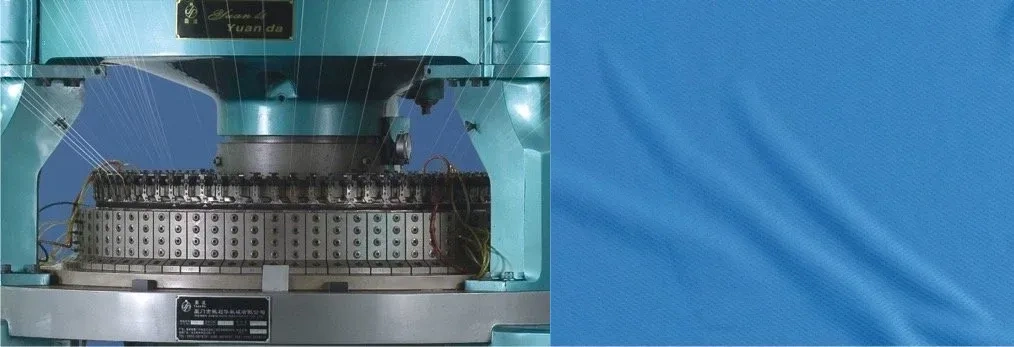
Over the past decade, double jersey circular knitting machines have undergone significant technological advancements. With the integration of electronic controls, servo-driven systems, and high-precision mechanical components, these machines are now capable of operating at higher speeds while maintaining improved fabric consistency.
Their applications span multiple sectors:
- High-end sportswear and compression garments
- Stretchable fashion fabrics
- Thermal underwear and functional textiles
- Upholstery and decorative home fabrics
- Industrial elastic textile components
One of the key advantages of double jersey structures is their ability to maintain balanced fabric tension on both sides, reducing curling and improving garment stability. Additionally, their double-layer construction allows manufacturers to achieve enhanced thickness without sacrificing elasticity.
Despite these advantages, the machine’s performance is highly dependent on the precise alignment of its mechanical systems. The synchronization between the cylinder, dial, yarn feeders, and drive system must remain within extremely tight tolerances.
In industrial practice, even deviations as small as 0.03 mm to 0.05 mm can result in noticeable defects during high-speed production. Therefore, precision control is not optional—it is a fundamental requirement for stable textile manufacturing.
As production speeds continue to increase in modern textile mills, mechanical stress on double jersey circular knitting machines has also intensified. Continuous operation, high yarn tension, and long production cycles contribute to gradual wear and alignment deviation.
The most common mechanical stability challenges include:
- Transmission wear in chain wheel assemblies
- Gradual deformation of cylinder structures
- Dial and cylinder misalignment
- Uneven load distribution during rotation
- Vibrational instability at high RPM
- Heat-induced expansion affecting precision components
Among these, chain wheel abrasion and cylinder flaws are considered the most critical issues because they directly influence the machine’s circular geometry and fabric output quality.
Chain wheel systems serve as a key transmission component in circular knitting machines, responsible for converting motor power into synchronized rotational movement. Due to continuous engagement under load, these components are prone to wear over time.
Several factors contribute to chain wheel deterioration:
- Continuous 24-hour production cycles in textile factories
- Insufficient lubrication or irregular maintenance schedules
- Excessive yarn tension leading to mechanical overload
- Misalignment between drive shafts and transmission gears
- Material fatigue due to long-term operation
- Installation inaccuracies during machine setup
As wear progresses, the chain wheel begins to lose structural integrity, resulting in increased vibration and reduced rotational precision.
If chain wheel abrasion is not addressed promptly, it can lead to:
- Reduced fabric uniformity
- Increased machine noise and vibration
- Higher energy consumption
- Accelerated wear of connected components
- Increased frequency of machine downtime
- Significant reduction in product quality consistency
In high-speed knitting environments, these issues can escalate quickly, making early detection essential.
Modern textile factories employ highly precise measurement techniques to evaluate chain wheel condition. One widely used method involves dial indicator-based testing.
Ensure the machine is fully stopped and isolated from power supply to avoid operational hazards.
A high-precision dial indicator is mounted on the needle plate bracket to detect micro-level movement variations.
A gauge stand is placed on non-moving structural components to eliminate external vibration interference.
The chain wheel and tray are gently pushed and pulled in controlled directions.
Dial indicator fluctuations are recorded and analyzed.
- < 0.001 mm → Excellent mechanical precision
- 0.01 mm – 0.03 mm → Acceptable industrial condition
- 0.05 mm → Critical deviation requiring immediate correction
This structured evaluation allows engineers to identify wear progression before it affects production quality.
Once abrasion is detected, corrective action must be taken immediately to restore mechanical precision.
- Loosen fastening screws gradually to release mechanical stress
- Recalibrate cylinder and dial alignment
- Restore precision tolerance to below 0.03 mm
- Measure structural flatness across multiple axes
- Insert precision spacers in affected areas
- Adjust until flatness deviation is controlled under 0.05 mm
- Analyze multi-point deviation data
- Identify ovality patterns or directional distortion
- Adjust mechanical positioning to restore symmetry
- Loosen structural headers after alignment
- Allow components to settle naturally
- Prevent internal stress accumulation that may cause re-deviation
- Record all adjustment data in maintenance logs
- Schedule periodic inspections based on production load
- Implement predictive maintenance strategies for early detection
Another major issue in double jersey circular knitting machines is cylinder structural irregularity, which can persist even after eliminating external interference factors.
When circular degree deviation remains above 0.05 mm, engineers must investigate deeper structural causes.
Types of Cylinder Flaws
Cylinder irregularities generally fall into three categories:
- Geometric oval deformation
- Localized surface distortion
- Internal structural imbalance due to machining error
Diagnostic Indicators
- If deviations between measurement points are less than 0.02 mm, oval deformation is likely
- If irregularity appears in specific zones, localized structural damage is suspected
- If repeated adjustments fail to correct deviation, internal machining defects may exist
These conditions require systematic mechanical correction rather than simple calibration.
- Loosen all fastening screws completely
- Reset cylinder and dial alignment from base position
- Maintain strict tolerance within 0.03 mm
- Measure flatness in multiple directions
- Apply spacer correction in affected zones
- Continue adjustments until deviation is minimized
- Release mechanical locking pressure after adjustment
- Allow system stabilization under natural load distribution
- Prevent re-deformation caused by internal stress accumulation
- Perform full rotation testing
- Confirm uniform resistance across all angular positions
- Ensure consistent mechanical behavior under operational speed
Once flatness and structural issues are resolved, final circular degree correction ensures full operational precision.
Regulation Procedure
1. Precision Dial Placement
Install dial indicator directly on cylinder contact surface.
2. Controlled Tray Adjustment
Adjust tray position in micro increments to correct alignment.
3. Locating Block Calibration
Fine-tune positioning blocks to eliminate uneven radial force.
4. Final Locking and Verification
Confirm measurements, then secure all locking mechanisms.
5. Rotational Testing
Run low-speed rotation tests to validate symmetry.
Modern textile factories are increasingly adopting digital monitoring systems for circular knitting machines. These systems integrate:
- Real-time vibration sensors
- AI-based predictive maintenance models
- Automated alignment detection systems
- Digital twin simulation of machine geometry
These technologies allow manufacturers to detect chain wheel wear or cylinder deformation before visible defects occur, significantly reducing downtime and production losses.
The double jersey circular knitting machine remains a cornerstone of high-quality textile production, offering unmatched versatility in fabric design and structural performance. However, its efficiency is highly dependent on mechanical precision and continuous maintenance.
Critical issues such as chain wheel abrasion, cylinder structural flaws, and circular degree deviation must be carefully monitored through advanced inspection techniques and corrected using precise engineering adjustments.
As textile manufacturing continues to evolve toward higher speeds and tighter tolerances, the importance of precision maintenance will only increase. Factories that implement rigorous inspection systems, predictive maintenance strategies, and digital monitoring technologies will achieve superior fabric quality, reduced operational costs, and long-term production stability in an increasingly competitive global market.
