Key Parts and Functions of a Circular Knitting Machine
The textile and garment industry has undergone dramatic transformations over the years, with technology playing a central role in redefining efficiency, quality, and production capacity. Among the many machines that form the backbone of this industry, the circular knitting machine stands out as one of the most widely used. Known for its ability to produce seamless tubular fabrics at high speeds, this machine has revolutionized knitwear production, ranging from everyday garments such as T-shirts, socks, and underwear to highly specialized fabrics for industrial applications.
Unlike flat knitting machines, which create fabrics in panels that must later be sewn together, circular knitting machines produce continuous tubes of fabric. This process not only reduces waste but also increases productivity—studies show that energy consumption per piece produced on a circular knitting machine can be nearly five times lower than that of a flat knitting machine with a knit-to-shape function.
The design of a circular knitting machine is remarkably versatile. Manufacturers build these machines in a wide range of diameters, from as small as five inches for hosiery and socks to several meters for large rolls of fabric used in upholstery and industrial textiles. The performance and output quality depend heavily on the arrangement and efficiency of the machine’s components, including the frame, drive, yarn feeders, cam systems, needles, sinkers, tension devices, take-up rollers, and lubrication units.
In this news feature, we will explore the different parts of a circular knitting machine, their specific functions, and how they work together to create fabrics that meet the diverse needs of the modern textile market.
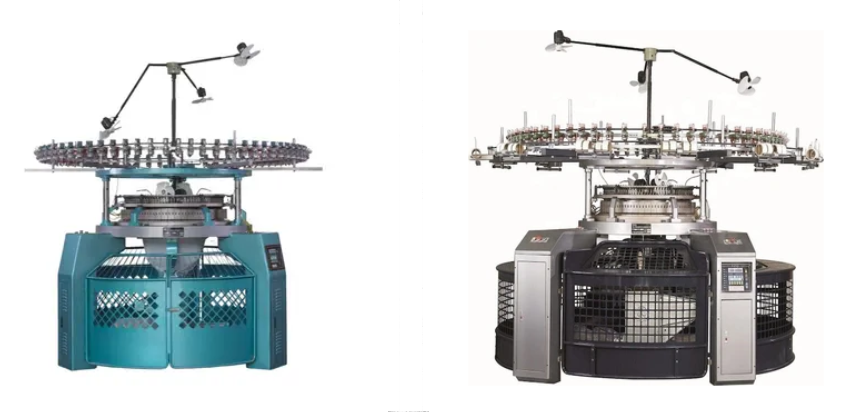
The frame is the backbone of the circular knitting machine. It provides the structure and support for all other components, ensuring that the machine remains stable during high-speed operation. Frames are built from durable, vibration-resistant materials to minimize wear and tear. A sturdy frame also ensures precision alignment of parts, which is critical for producing fabrics with uniform quality.
At the heart of the knitting process is the needle bed, a circular surface where the needles are mounted. The bed rotates continuously, enabling the needles to work in a circular motion. This arrangement allows for uninterrupted knitting and the creation of seamless tubular fabrics. Depending on the size of the machine and the type of fabric being produced, the number of needles in the bed can range from several hundred to several thousand.
Needles are arguably the most crucial part of the circular knitting machine. They hold and manipulate the yarn to form loops, which then interlock to create fabric. The type and gauge of the needles determine the fabric’s density, elasticity, and appearance. Circular knitting machines typically use latch needles, though some machines may use compound needles for specialized fabrics. The precision of these needles directly affects the consistency and quality of the knitted fabric.
The cam system is the brain of the machine, controlling the movement of both needles and sinkers. Cams are specially designed metal tracks that guide the motion of the needles. Two primary cam types exist:
Needle cams, which dictate the upward and downward movement of needles to form stitches.
Sinker cams, which control sinkers to push the newly formed loops down and stabilize the fabric during knitting.
By adjusting cam profiles, operators can modify stitch structures, loop length, and even introduce patterns into the fabric.
Sinkers are thin metal plates positioned between the needles. Their role is to hold the yarn loops in place as new ones are formed. They also help guide the fabric downward, preventing tangling or uneven stitch formation. The sinker’s smooth and precise movement is essential for producing uniform fabric without damage to the yarn.
Yarn feeders supply yarn to the needles in a controlled manner. Modern machines may be equipped with dozens of feeders, each capable of handling a different yarn type or color. This feature enables complex fabric designs, such as multi-colored jacquard or textured patterns. The placement and number of feeders directly affect production speed and fabric quality.
The tensioner regulates yarn tension as it moves from the feeder to the needles. Consistent tension is vital for ensuring uniform stitch size and preventing defects such as loose or overly tight stitches. High-end machines use electronic tension control systems, which adjust automatically based on yarn type and machine speed.
Once knitted, the fabric must be guided away from the needle bed to maintain a continuous process. The fabric take-up roller performs this task, pulling the fabric downward and winding it onto a roll. The speed of the take-up roller can be adjusted to influence fabric tightness and density.
Stitch cams determine stitch length by controlling how far the needles move during operation. Adjusting stitch length is crucial for creating fabrics with different textures, elasticity, and draping characteristics. Longer stitches produce lighter, more breathable fabrics, while shorter stitches create denser, stronger textiles.
The drive system provides the power needed to run the machine. It includes motors, gears, and belts that rotate the needle bed, cams, and feeders in synchronization. Efficiency in the drive system directly impacts machine productivity and energy consumption. Modern circular knitting machines often feature variable-speed drives that allow operators to fine-tune production according to fabric requirements.
Because circular knitting machines operate at high speeds with many moving parts, effective lubrication is essential. The lubrication system ensures that needles, cams, and sinkers remain smooth and friction-free, extending their lifespan and reducing downtime due to wear. Advanced lubrication systems can even monitor and adjust oil distribution automatically.
Modern knitting machines integrate sensors and monitoring devices to detect yarn breaks, dropped stitches, or uneven tension. These automated systems minimize fabric waste and reduce the need for constant human supervision. Servicing devices, such as cleaning brushes and waste removal systems, help maintain machine performance over long production runs.
The knitting process begins when yarn passes through feeders, guided with proper tension. Needles, controlled by the cam system, move up and down to catch the yarn and form loops. Sinkers push the loops down, securing them as new loops are added. This continuous motion creates rows of stitches in a tubular pattern. The take-up roller pulls the finished fabric downward, while monitoring systems ensure consistency throughout production.
The synchronization of these parts is what makes the circular knitting machine highly efficient. Each component must perform flawlessly; even a slight misalignment in tension, cam timing, or needle movement can result in defects.
High Productivity – Capable of producing large volumes of fabric quickly.
Energy Efficiency – Consumes significantly less energy compared to flat knitting machines.
Seamless Fabric Production – Eliminates the need for stitching panels together.
Versatility – Suitable for a wide range of fabrics, from delicate lingerie to heavy-duty upholstery.
Consistency – Produces fabrics with uniform texture and quality.
Advanced Automation – Reduces manual labor and improves precision.
Circular knitting machines are used in nearly every sector of the textile industry:
Apparel: T-shirts, dresses, sweaters, socks, underwear, and sportswear.
Medical textiles: Compression garments, bandages, and support fabrics.
Home textiles: Bed sheets, pillow covers, and upholstery fabrics.
Industrial uses: Filtration fabrics, automotive textiles, and geotextiles.
Their adaptability makes them indispensable to manufacturers who must meet diverse market demands.
The next generation of circular knitting machines is expected to focus on digital integration, sustainable production, and greater customization. Key developments include:
Smart machines with IoT connectivity for real-time monitoring.
Eco-friendly designs to reduce waste and water usage.
AI-driven automation for predictive maintenance and defect detection.
3D knitting technologies enabling complex garment designs without post-processing.
The circular knitting machine remains a cornerstone of textile manufacturing, combining speed, precision, and versatility. Each part—from the humble needle to the advanced electronic monitoring systems—plays an essential role in the knitting process. As demand for sustainable and high-quality fabrics grows, these machines will continue to evolve, shaping the future of textiles.
By understanding the different parts and their functions, manufacturers and operators can maximize efficiency, minimize waste, and produce fabrics that meet the highest industry standards. Circular knitting machines are more than just industrial equipment—they are the lifeblood of modern fabric production.
