Double Knit Fabrics: Manufacturing with Circular Round Knitting Machines
Oct 24, 2025
In the ever-evolving textile industry, double knit fabrics have established themselves as one of the most versatile and functional materials for modern apparel. Made using advanced circular round knitting machines, these fabrics are widely appreciated for their strength, elasticity, and structural stability, making them a favorite among manufacturers of sportswear, casualwear, uniforms, and fashion apparel.
Double knit fabrics can be produced using a wide range of fibers, including polyester, cotton, viscose, spandex, acrylic, bamboo, and nylon. In many cases, a combination of materials—such as cotton/polyester, cotton/acrylic, or cotton/bamboo—is used to enhance fabric performance and aesthetic qualities.
The most distinguishing feature of double knit fabrics is their two-layered structure, which makes them twice as thick as single-jersey fabrics. This additional thickness not only provides greater warmth but also adds softness, stretch, and durability. These qualities make double knits an ideal material for dresses, skirts, blazers, activewear, and hoodies.
Unlike single knits, double knit fabrics are made with two sets of needles that create two interconnected layers of fabric. This construction technique enhances elasticity in both the weft and warp directions, allowing the fabric to comfortably follow body contours while maintaining shape and recovery after stretching.
The result is a compact, durable, and machine-washable fabric that retains its structure and color even after repeated washing and drying cycles. Its resilience, combined with the ability to produce complex textures, patterns, and color effects, gives fashion designers immense creative freedom.
After dyeing and finishing, double knit fabrics exhibit a rich visual depth. When different yarns are used for the front and back, the fabric develops dual-tone or heathered effects, creating visually engaging and tactilely appealing textiles. This unique versatility positions double knits as a central fabric in both functional and high-fashion applications.
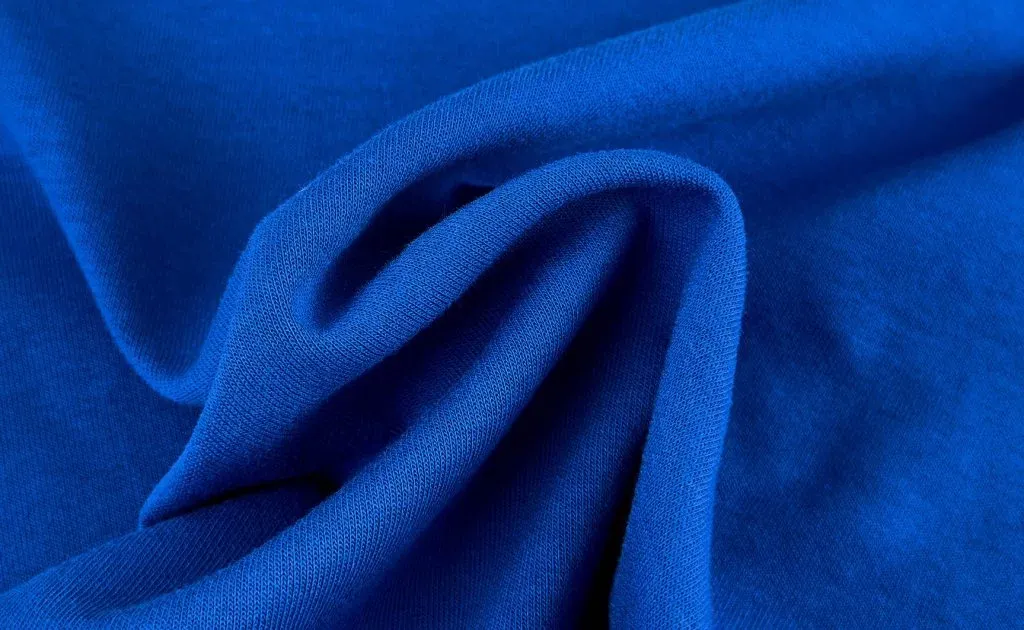
Double knit fabrics are fundamentally different from single knits. While single jerseys have loops formed by one set of needles on one side, double knits involve two complete sets of needles—one for the front layer and one for the back layer—operating simultaneously.
This dual arrangement produces two intermeshed layers that are firmly connected by interlocking stitches. Because of this, the resulting fabric is heavier, more stable, and less likely to curl at the edges than single-knit fabrics.
The structure of double knit fabric can vary depending on the knitting pattern used. Some common types include:
Interlock knits: The most common form of double knit, known for its smooth surfaces on both sides, firmness, and excellent stretch recovery.
Rib knits: Characterized by vertical ribs on both sides, these fabrics are very elastic and commonly used for cuffs, collars, and waistbands.
Ponte di Roma: A stable, heavier-weight double knit often used for dresses, trousers, and blazers due to its structure and drape.
Jacquard double knits: These incorporate complex designs and textures by manipulating needle selection during knitting, offering decorative effects and rich color contrasts.
Regardless of the pattern, all double knits share certain key properties—excellent dimensional stability, smooth appearance, minimal fraying, and the ability to hold prints or dyes exceptionally well.
The production of double knit fabrics is an intricate process that combines mechanical precision and textile craftsmanship. The heart of this process lies in the circular knitting machine, which is specifically designed for double knitting.
The process begins with configuring a specialized circular knitting machine equipped with two needle beds—one in the cylinder and the other in the dial positioned above it. The dual-needle setup is what allows for the simultaneous knitting of two interconnected layers of fabric.
Each needle bed is responsible for creating one surface of the fabric: the cylinder needles knit the back layer, while the dial needles knit the front layer. When properly synchronized, these two systems interlock the layers seamlessly, resulting in a unified, stable textile.
Precision in needle configuration is essential to ensure the correct structure of double knit fabrics. Each needle is equipped with a butt that interacts with the cams in the machine. The cams control the vertical movement of the needles, dictating when they engage or disengage from the yarn.
The machine’s cam design determines the fabric pattern. Adjustments in cam angles or needle selection can produce various effects such as interlock, rib, or jacquard patterns. In modern computerized circular knitting machines, these configurations can be automatically programmed, allowing for efficient pattern customization and consistent production quality.
During operation, the knitting process cycles through three primary motions—knit, tuck, and float:
Knit cycle: The needle hooks the yarn and draws it through an existing loop to form a new stitch.
Tuck cycle: The needle holds the yarn without forming a new stitch, adding density and elasticity to the fabric.
Float cycle: The yarn floats over certain needles without being knitted, creating patterns or textures.
These cycles occur simultaneously in both the dial and cylinder needle beds. The precise synchronization between them ensures a uniform structure and prevents misalignment between the two layers.
As the machine runs, the yarn is fed continuously to both needle sets. Loops form on each side, and these loops interlock at specific intervals, creating a stable bond between the front and back layers. This interweaving is what gives double knit fabrics their distinctive density, stretch resistance, and smooth hand feel.
The degree of interlocking can be controlled by adjusting the knitting settings. A tighter interlock produces firmer fabrics like Ponte di Roma, while looser settings yield softer and more flexible fabrics suitable for activewear.
In single-knit fabric production, sinkers are used to hold the fabric in place and control loop formation. However, in double knitting, the dual-needle system naturally stabilizes the fabric, rendering sinkers unnecessary. This not only simplifies the machine design but also improves production efficiency and reduces maintenance requirements.
Consistent yarn feeding and tension management are crucial to ensure the uniformity of the final fabric. Automated feeders regulate yarn supply, while electronic tension controllers maintain balanced yarn flow to both needle sets. Uneven tension could cause differences in stitch size, resulting in fabric distortion or color irregularities after dyeing.
Modern double-knit machines often feature automatic yarn detectors that halt operation in the event of yarn breakage, preventing fabric defects and material waste.
After knitting, the greige fabric undergoes several post-production processes, including:
Scouring and bleaching: Removes oils, waxes, and impurities from the yarn.
Dyeing: Adds color according to design specifications. When different fibers are used for front and back, dye absorption can vary, producing elegant two-tone effects.
Heat setting: Stabilizes the fabric dimensions and enhances its resistance to shrinkage.
Finishing: Includes softening, brushing, or calendaring to achieve the desired texture and appearance.
The finishing process also determines the final stretch, drape, and hand feel of the fabric. Advanced finishing techniques allow manufacturers to create specialized double knits such as moisture-wicking sports fabrics, anti-bacterial medical textiles, or fire-retardant industrial fabrics.
The enduring popularity of double knit fabrics lies in their balance between functionality and aesthetics. Their production through circular knitting machines enables features that are difficult to achieve with other textiles:
Exceptional Durability – The interlocking loops form a dense structure that resists tearing and pilling.
Enhanced Elasticity – Natural stretch in both directions ensures comfort and adaptability to body movement.
Warmth and Insulation – The dual layers trap air, offering better thermal retention.
Dimensional Stability – Double knits do not curl or deform easily, making them ideal for garment manufacturing.
Versatile Design Options – Capable of supporting jacquard, rib, or interlock patterns with multicolor effects.
Excellent Wash and Wear Performance – The fabric retains shape and color after repeated washing cycles.
Soft and Comfortable Texture – Suitable for garments worn close to the skin.
Eco-Friendly Production Possibilities – Can be made from sustainable or recycled fibers such as bamboo or RPET polyester.
These features have expanded the use of double knit fabrics beyond traditional clothing into automotive interiors, upholstery, medical garments, and technical textiles.
Given their durability and flexibility, double knit fabrics serve a broad range of industries:
Fashion and Apparel: Dresses, skirts, blazers, trousers, and uniforms.
Sportswear: Tracksuits, leggings, compression tops, and performance jerseys.
Home Textiles: Cushion covers, blankets, and upholstery fabrics.
Industrial Use: Flame-retardant and abrasion-resistant materials.
Medical and Healthcare: Stretchable, breathable fabrics for braces and support garments.
The adaptability of double knits to various finishing treatments allows manufacturers to tailor properties such as moisture absorption, UV resistance, or antibacterial protection, depending on the intended end use.
Modern computerized circular knitting machines have revolutionized the double-knit production process. Equipped with electronic needle selection, automatic lubrication systems, and digital control panels, these machines offer superior efficiency, reduced downtime, and enhanced design flexibility.
Brands such as YUANDA, a notable supplier of Single Jersey Computerized Jacquard Circular Knitting Machines, have also introduced double-knit configurations that enable complex fabric designs with minimal manual intervention. These systems ensure consistent quality, faster production speeds, and the ability to switch between patterns seamlessly, meeting the fast-paced demands of today’s textile markets.
The production of double knit fabrics using circular round knitting machines represents the perfect blend of engineering precision and textile creativity. From setup and needle configuration to loop formation and finishing, every stage of the process contributes to creating a fabric that is both technically robust and aesthetically versatile.
With continued advancements in knitting technology, energy efficiency, and sustainable fiber innovation, double knit fabrics are poised to remain at the forefront of the textile industry. Their balance of comfort, structure, and performance ensures that they will continue to define apparel and technical textile trends for years to come.

We have been committed to manufacturing all types of circular knitting machines with great quality and reasonable price for a long time. Our professional team is highly specialized and problem-solving oriented. We put the most effort into meeting your knitting demands, achieving a win-win situation.