Comprehensive Guide to Double Jersey Circular Knitting Machine Types and Functions
Aug 02, 2025
Double jersey circular knitting machines are advanced textile manufacturing tools used to create high-quality double jersey fabrics. As the name implies, these machines are capable of producing fabrics with two distinct faces by utilizing two sets of vertically arranged needle beds. The front and back of the fabric are knitted simultaneously, enabling the creation of fabrics with different textures, patterns, and levels of elasticity on either side. This makes them essential equipment in producing garments that require stretch, durability, and a clean finish on both sides—such as sportswear, casualwear, underwear, and home textiles.
Unlike single jersey machines that rely on a single needle bed, double jersey circular knitting machines use both a needle cylinder and a dial to interlock loops of yarn in a more complex way. This dual arrangement allows for a broader range of fabric structures, including rib knits, interlock fabrics, and intricate jacquard designs.
In this article, we will explore how double jersey circular knitting machines function, break down the mechanics of stitch formation, and examine the various types of double jersey machines used in the modern textile industry.
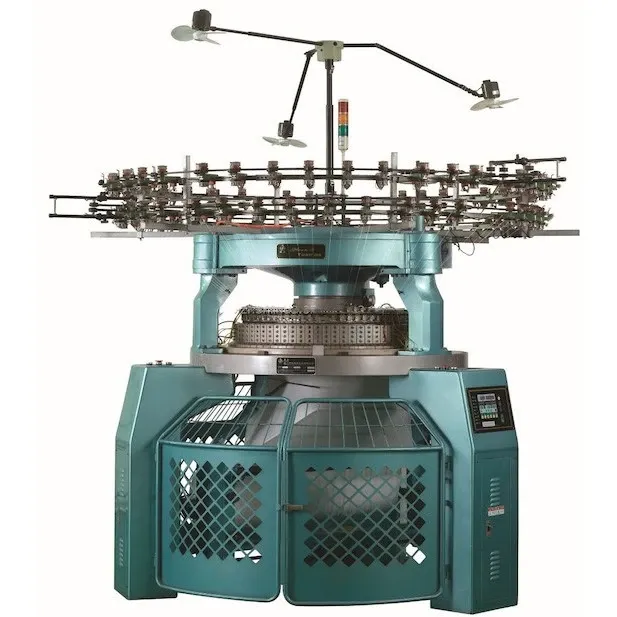
To understand the diversity of double jersey knitting machines, it’s crucial to start with the fundamentals of how they operate.
The heart of a double jersey circular knitting machine lies in its twin needle bed system—comprising a needle cylinder and a dial. The cylinder needle bed is positioned vertically, while the dial bed is placed horizontally above the cylinder. Both beds house an equal number of needles arranged according to the machine gauge. These needles—typically latch-type—play a central role in forming the loops that make up the fabric.
The cylinder needles usually perform the knitting operation for the fabric's inner layer, while the dial needles handle the opposite side. Together, they ensure intermeshing of loops from both sides to create a unified double jersey fabric.
During operation, the cylinder rotates in a clockwise direction while the dial remains stationary. Yarn is continuously fed into the machine through multiple yarn feeders positioned at regular intervals around the circumference. As the cylinder rotates, cams guide the needles in a precise, orchestrated motion to raise, knit, and lower yarns. These cams are specially shaped mechanical tracks that control the movement of needles and sinkers.
Each revolution results in the creation of new loops, with the latch needles on the dial and the spring-loaded or compound needles on the cylinder working together to bind the yarns from both sides. The synchronization of these components ensures consistent loop formation and fabric structure.
The stitch patterns formed on the dial and cylinder can vary depending on the machine settings and yarn type. This allows for a wide range of fabric textures and styles, such as:
Knit stitches – creating smooth, flexible surfaces
Tuck stitches – introducing texture and breathability
Miss or float stitches – enabling pattern effects and structure
Each type of stitch is governed by the position of the needles, the shape of the cams, and the tension of the yarn feed. Modern machines feature programmable controls to regulate these parameters automatically, resulting in higher productivity and fabric consistency.
The finished fabric is drawn downward through the needle bed system and collected on a take-up roller, ready for inspection, cutting, or further processing.
There are several types of double jersey circular knitting machines, each designed to produce different kinds of fabric structures. Let’s delve into the primary machine categories and what makes each one unique.
Rib knitting machines are specialized double jersey machines primarily used to knit ribbed fabrics—commonly seen in cuffs, waistbands, and collars. These machines operate on a (1+1), (2+2), (2+4), or (4+4) needle track system. The numbers refer to the configuration of needles on the dial and cylinder beds.
(1+1) Track: One needle on the dial and one on the cylinder alternate to produce fine rib fabrics.
(2+2) Track: Two needles on the dial alternate with two on the cylinder, offering a thicker and stretchier rib.
(2+4) and (4+4) Track: These configurations allow for creative stitch patterns and are ideal for heavy-duty ribbed fabrics.
The combination of different needle arrangements, cam systems, and yarn guide placements allows rib knitting machines to manufacture various rib-based knits such as 1x1 rib, 2x2 rib, Milano rib, and even waffle-like textures. These machines are often equipped with loop transfer and jacquard attachments for enhanced patterning capabilities.
Sometimes referred to as the cotton wool machine, multi-function machine, or general-purpose machine, the ordinary double jersey circular knitting machine is among the most versatile in the industry. It is capable of producing a wide array of basic to moderately complex double-layered fabrics.
Just like the rib knitting machine, it utilizes a variety of needle track configurations, including:
(1+1), (2+2), (2+4), (4+4): These allow for the development of different textures and densities in the fabric.
Ordinary double jersey machines are favored for producing interlock fabrics—a type of fabric known for its thickness, durability, and smooth texture on both sides. These machines are ideal for manufacturing garments like polo shirts, t-shirts, pajamas, and sportswear.
Modern models often come with advanced control systems, automatic yarn feeding, and motorized stitch adjustment. This makes them highly efficient and suitable for mass production while maintaining consistent quality.
Jacquard double jersey circular knitting machines are high-end models used to create intricate patterns and motifs in fabric. These machines are equipped with electronic or mechanical jacquard systems that allow individual control of each needle or group of needles. This precision makes it possible to knit complex designs, multicolor patterns, and textured effects within the same fabric.
Jacquard double jersey machines come in two major types:
Small jacquard machines include standard rib jacquard models, loop transfer models, and dual-sided jacquard types. These are suitable for producing basic pattern fabrics and relatively smaller design repeats. They are cost-effective and often used for lower-volume custom orders or specialty textiles.
These machines may utilize:
Mechanical jacquard attachments – using punch cards or drum systems
Mini-computer controls – to allow for easy switching of patterns and repeat units
Large jacquard machines are advanced systems with full electronic control, enabling them to produce wide and highly detailed patterns over large fabric widths. With features like servo-driven needle selection and computerized design input, they are perfect for fashion, upholstery, and decorative fabric production.
Common applications include:
Multicolor sportswear
Decorative home textiles
Children’s wear with cartoon or floral motifs
Functional fabrics with variable textures
These machines offer fast changeover between patterns, high productivity, and seamless integration with CAD systems for digital design input. Some models even support automatic color selection for multiple yarn types, expanding their creative possibilities.
The selection of a double jersey circular knitting machine depends on several factors:
Fabric Type: Rib, interlock, jacquard, or specialty textiles
Production Volume: High-speed machines are ideal for mass production, while smaller models suit custom or low-volume runs
Pattern Complexity: Machines with jacquard attachments offer greater patterning flexibility
Yarn Type: Different yarns require varying tension control and feed systems
Automation Needs: Modern digital machines reduce labor and offer higher consistency
When investing in such equipment, textile manufacturers must also consider the availability of technical support, ease of maintenance, spare parts, and compatibility with software for pattern design and programming.
Double jersey circular knitting machines are essential to the modern textile industry, enabling the creation of fabrics with superior structure, elasticity, and aesthetic appeal. From basic rib knits to complex jacquard patterns, these machines offer unmatched versatility and productivity.
The range of machine types—from ordinary double jersey models to advanced large jacquard machines—ensures that there is a solution for every application and design requirement. As automation and digital controls continue to evolve, the capabilities of double jersey circular knitting machines are expected to expand even further, making them indispensable tools in fashion, home textiles, sportswear, and beyond.
Whether you are a garment manufacturer seeking durable interlock fabrics or a designer aiming to produce intricate jacquard textiles, understanding the various types and features of double jersey circular knitting machines will help you make informed decisions and achieve high-quality results.
Next: Single Jersey Auto-Striper Knitting Machine Launches in Indonesia

We have been committed to manufacturing all types of circular knitting machines with great quality and reasonable price for a long time. Our professional team is highly specialized and problem-solving oriented. We put the most effort into meeting your knitting demands, achieving a win-win situation.